Medications & supplements
Acid-Blockers: Why Dr. Diaa Classifies PPIs and H2 Blockers Among the Khaba'ith
Stomach acid is not an enemy to be silenced; it is a tool for digestion, microbial sterilization, and absorption of iron, B12, calcium, and magnesium. Long-term suppression with PPIs (omeprazole, esomeprazole, pantoprazole) or H2 blockers turns against the patient: chronic kidney disease, bacterial overgrowth, C. difficile infection, pneumonia, B12 and magnesium deficiency, hip fractures, microbiome disruption, and excess mortality. Worse, the body becomes drug-dependent through rebound acid hypersecretion after withdrawal.
Dr. Diaa's words
Acid-blocker drugs are permanently banned in my practice — they are poisons that cause fatty liver and irritable bowel, they prevent the body from absorbing food, iron, B12, and minerals, and they treat symptoms only while worsening the underlying problems of bacterial overgrowth and maldigestion.
In every clinic session, Dr. Diaa Al-Awady repeats one core line: stomach acid is not the problem, it is the solution. It digests protein, sterilizes ingested bacteria, and prepares iron and B12 for absorption. When we silence it with a PPI or ranitidine, we are not treating, we are disabling a physiological function and opening the door to a cascade of harms now well-documented in top-tier medical journals.
The most public safety scandal came in 2019-2020 when ranitidine was withdrawn worldwide. Braunstein and colleagues (JAMA Network Open 2021) demonstrated that a single tablet generated the probable carcinogen NDMA under simulated gastric conditions at levels up to 320,000 ng — thousands of times above safety thresholds.
In JAMA Internal Medicine 2016, Lazarus and colleagues followed over 10,000 ARIC participants and found PPI users had a 50% higher risk of incident chronic kidney disease. In BMJ 2019, Xie and Al-Aly followed 157,625 new PPI users versus H2 blockers for five years: 45 excess deaths per 1,000 users, driven by cardiovascular disease, chronic kidney disease, and upper gastrointestinal cancer.
But the key that explains the dependency Dr. Diaa describes is Reimer's trial (Gastroenterology 2009): 120 perfectly healthy volunteers received 40 mg esomeprazole for eight weeks. After withdrawal, 44% developed heartburn and reflux for the first time in their lives, versus 15% on placebo. The drug manufactures the disease it claims to treat. This is the trap Dr. Diaa warns about: start a PPI for a passing complaint, and you cannot stop.
What the research shows
7 / 18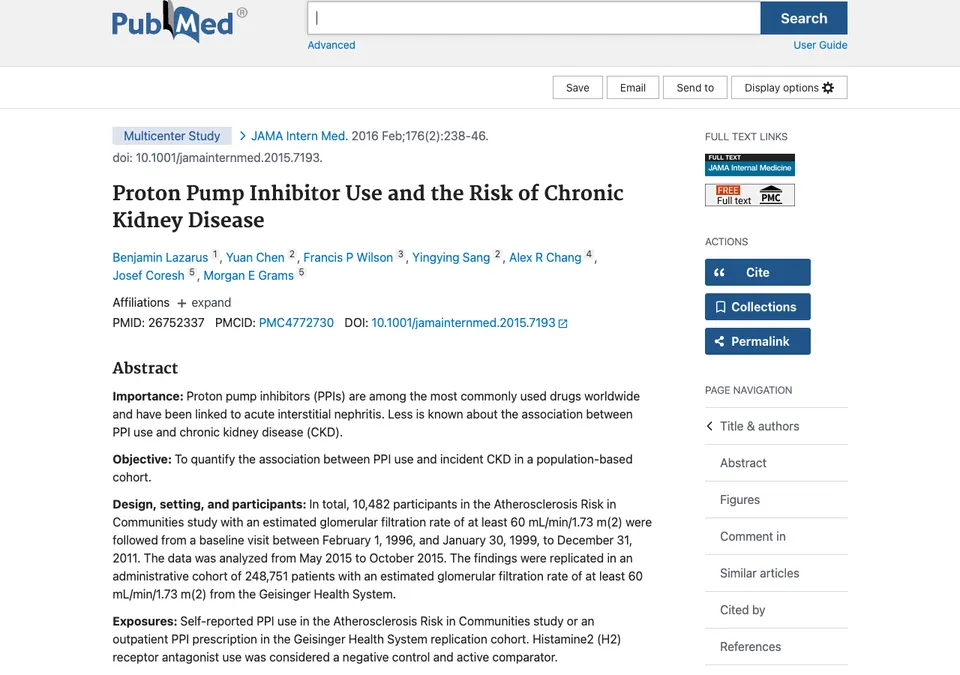
ARIC cohort (n=10,482): PPI use linked to 35-50% higher incident CKD risk; twice-daily dosing nearly doubles risk versus once-daily.
Among 10,482 ARIC participants, PPI use was associated with incident CKD (adjusted HR 1.50), with twice-daily dosing carrying higher risk (HR 1.46) than once-daily (HR 1.15).
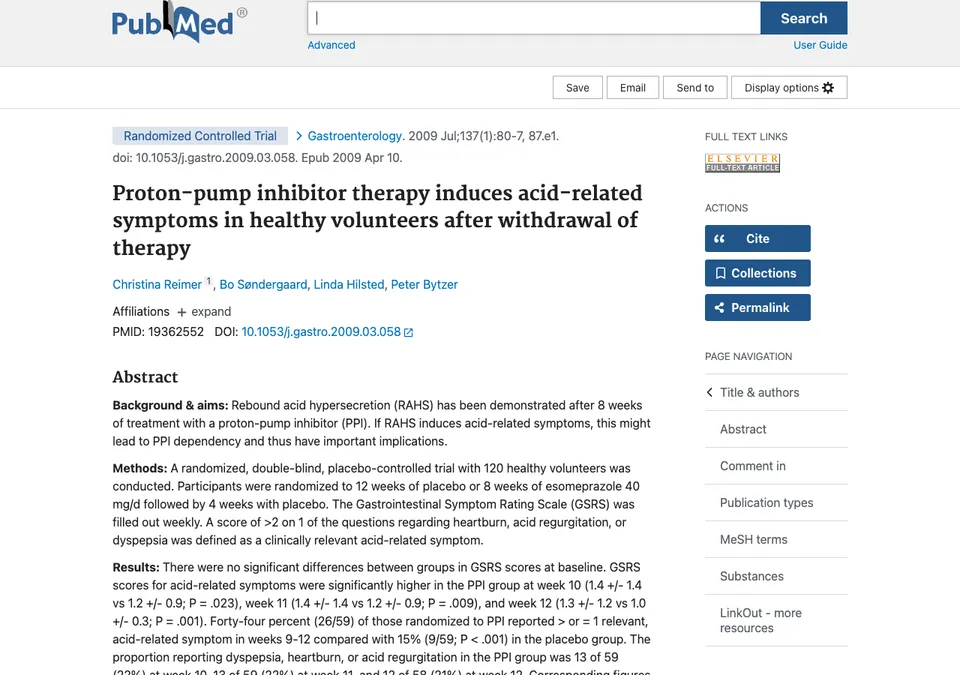
Randomized trial in 120 healthy volunteers: 8 weeks of esomeprazole induced new reflux symptoms in 44% after withdrawal versus 15% placebo — iatrogenic dependency via rebound acid hypersecretion.
In a double-blind randomized trial, 60 healthy volunteers received esomeprazole 40 mg daily for 8 weeks. After withdrawal, 44% (26/59) reported a clinically relevant acid-related symptom, versus 15% (9/59) on placebo (P < .001).
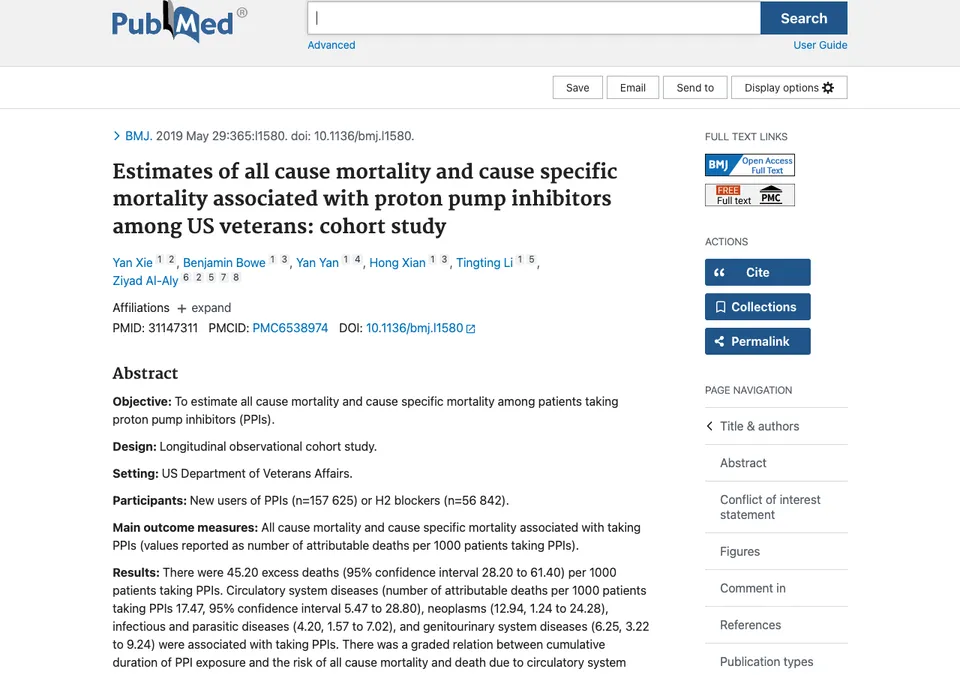
US Veterans cohort: 45 excess deaths per 1,000 PPI users from cardiovascular, kidney, and upper GI cancer causes.
Among 157,625 new PPI users versus 56,842 H2-blocker users in the US Veterans cohort, there were 45.20 excess deaths per 1,000 patients on PPIs, with a graded relation to cumulative exposure.
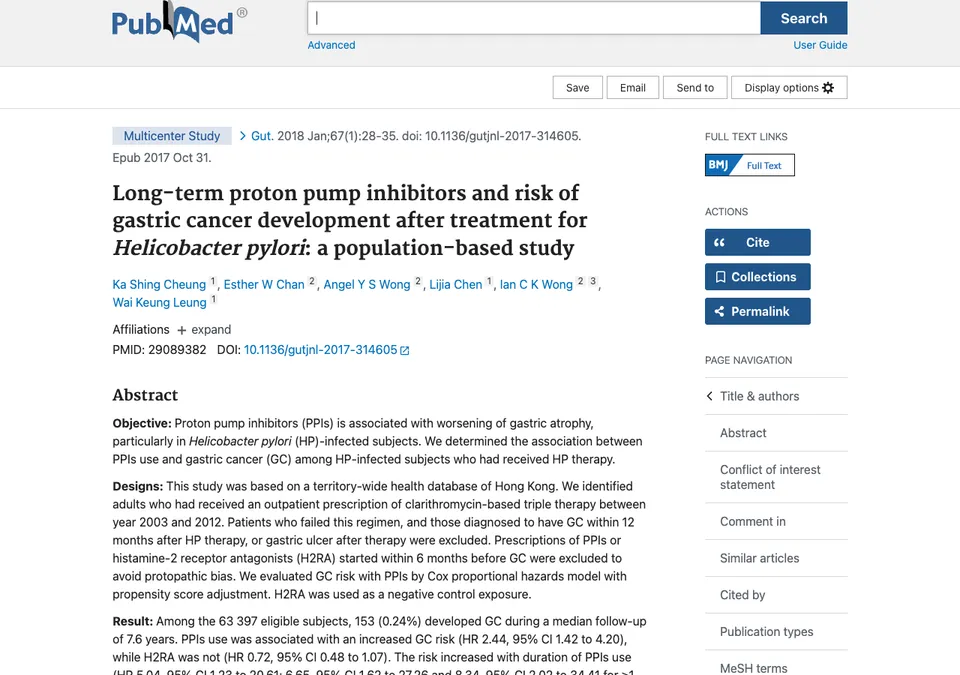
Hong Kong cohort post-H. pylori eradication: long-term PPI use raises gastric cancer risk 2.44-fold, up to 8.34-fold after 3 years.
Among 63,397 patients who completed H. pylori eradication in Hong Kong, long-term PPI use was associated with increased gastric cancer risk (HR 2.44), rising to 8.34 at three years or more.
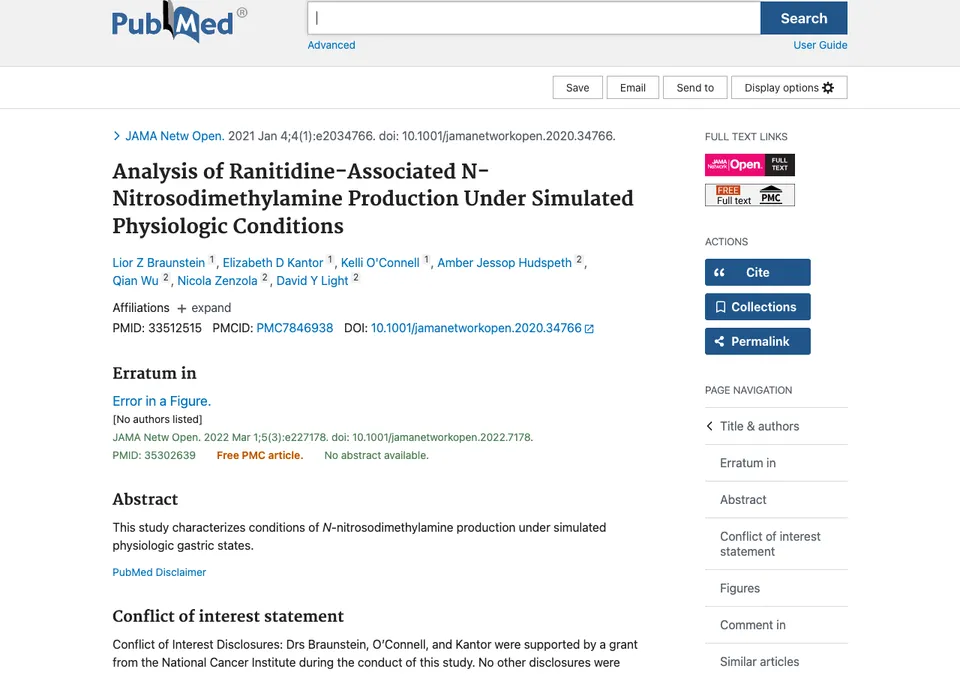
Lab study: ranitidine tablets generated up to 320,000 ng of the probable carcinogen NDMA, supporting the 2020 global recall.
Under simulated physiologic gastric conditions, a single ranitidine tablet generated NDMA (a probable carcinogen) at levels up to 320,000 ng — vastly above the regulatory daily intake limit of 96 ng.
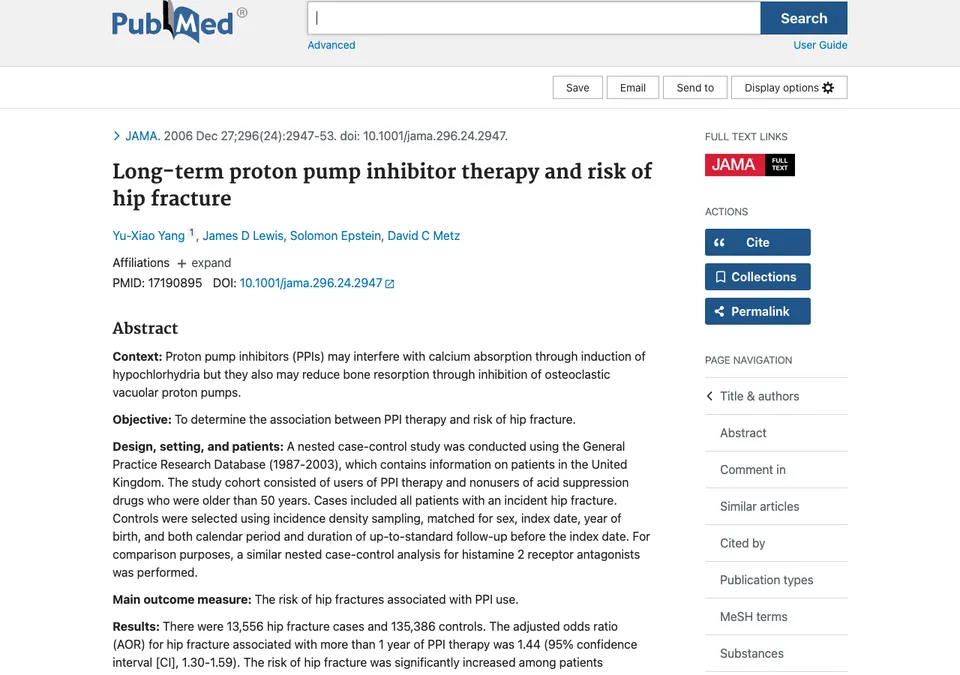
UK GPRD nested case-control: PPI use over 1 year raises hip fracture risk 44%; long-term high-dose raises it 2.65-fold.
Nested case-control study (n=145,000+): long-term PPI therapy beyond 1 year raised hip fracture risk 44%; high-dose, long-term use raised it 2.65-fold.
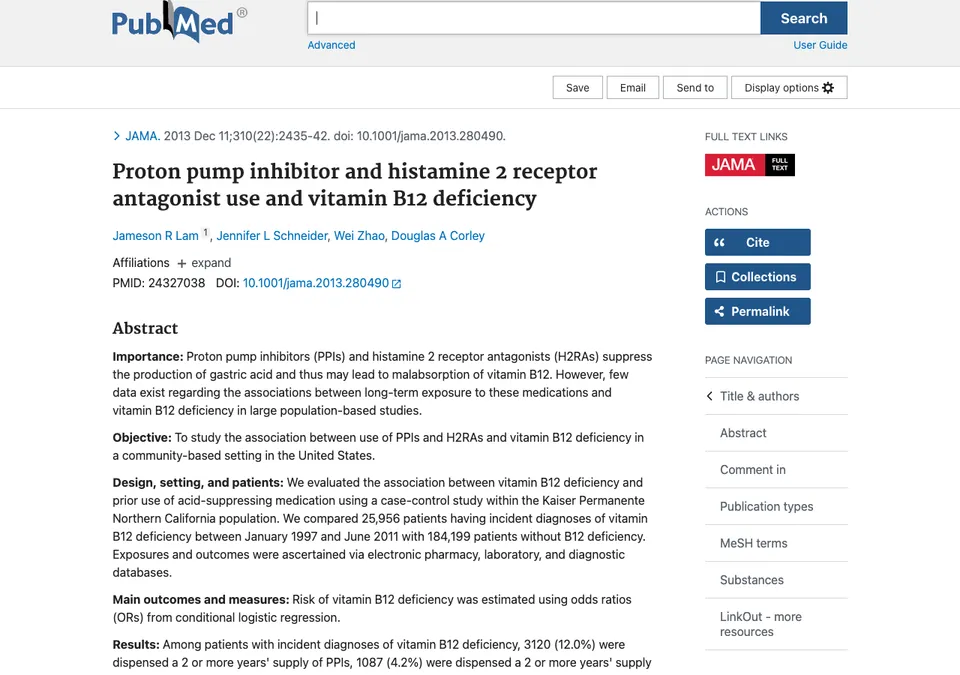
Kaiser case-control: 2+ years of PPI use raises B12 deficiency risk 65%; H2 blockers 25%.
Kaiser case-control study (n=210,155): 2+ years of PPI use raised B12 deficiency risk 65%, H2 blockers 25%, with a clear dose-response.