Medical procedures
The risks of bariatric (sleeve) surgery
Sleeve gastrectomy and its sister bariatric procedures do drop weight and improve some short-term markers, yet they leave a permanent anatomical and physiological footprint: chronic acid reflux, Barrett's esophagus, lifelong deficiencies of iron, B12, vitamin D, calcium and protein, measurable hip and spine bone loss, documented rises in self-harm and alcohol use disorder, and diabetes relapse within a few years. Even the largest long-term trial (SOS) showed that surgery patients still die 5.5 years earlier than the general population.
Dr. Diaa's words
Dr. Diaa Al-Awady calls sleeve gastrectomy 'a physiological transgression against God's creation' and 'lethal'; he labels it 'a crime' and 'a wrong idea,' because it converts the stomach from its natural pouch shape into a tube, stripping it of its vital and hormonal functions.
Bariatric surgery is not merely weight reduction; it is a permanent re-engineering of a digestive tract that was finely designed. The Swedish Obese Subjects (SOS) study found that after roughly a quarter of a century surgery extended median life by three years over usual obesity care — yet patients still died 5.5 years earlier than the matched general population.
Adams' seminal NEJM cohort showed gastric bypass cut overall mortality by 40%, but non-disease deaths — accidents and suicide — were 58% higher in the surgery arm. Bhatti's population study of 8,815 Ontarians documented self-harm emergencies rising about 50% after surgery. In the LABS-2 cohort, alcohol use disorder symptoms climbed in the second postoperative year, especially after Roux-en-Y bypass.
The much-advertised diabetes remission erodes too: SOS reported 72% remission at 2 years collapsing to just 30.4% by 15 years; Adams' 12-year follow-up shows 75% sliding to 51%. Sleeve gastrectomy carries its own anatomical penalty — at 10 years, the randomized SLEEVEPASS trial recorded esophagitis in 31% of sleeve patients versus 7% after bypass, with Barrett's esophagus in 4%. Layer on the measurable hip and spine bone loss, and lifelong dependence on iron, B12, calcium and vitamin D supplements, and the picture is clear: surgery buys time at a non-trivial price.
What the research shows
7 / 24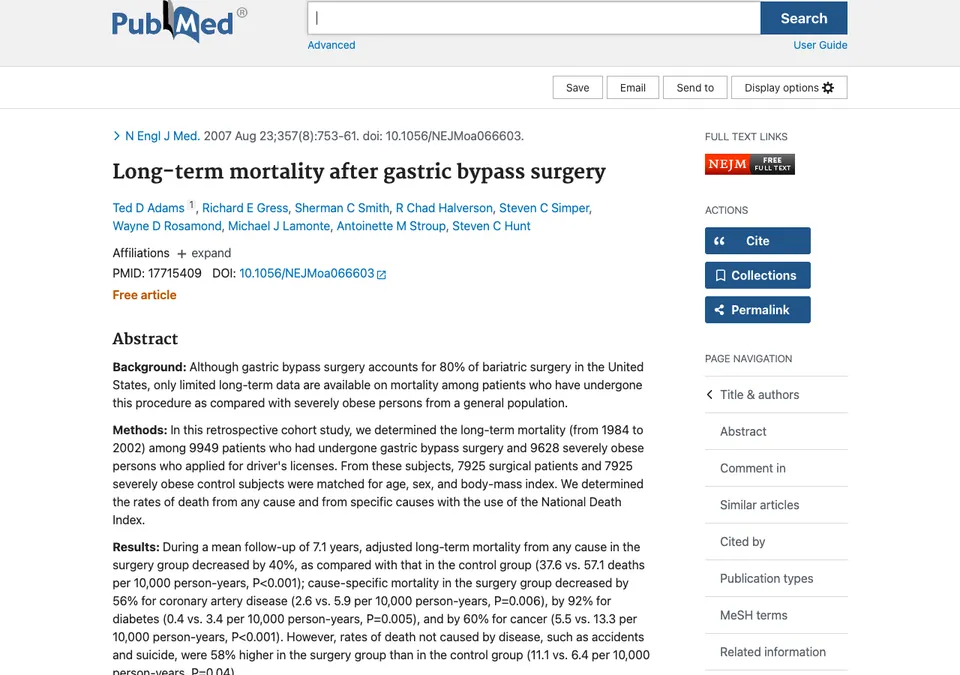
Adams NEJM cohort — gastric bypass reduced disease mortality by 40%, but non-disease deaths (accidents and suicide) were 58% higher.
Adjusted long-term mortality from any cause in the surgery group decreased by 40%. However, rates of death not caused by disease, such as accidents and suicide, were 58% higher in the surgery group than in the control group (11.1 vs. 6.4 per 10,000 person-years).
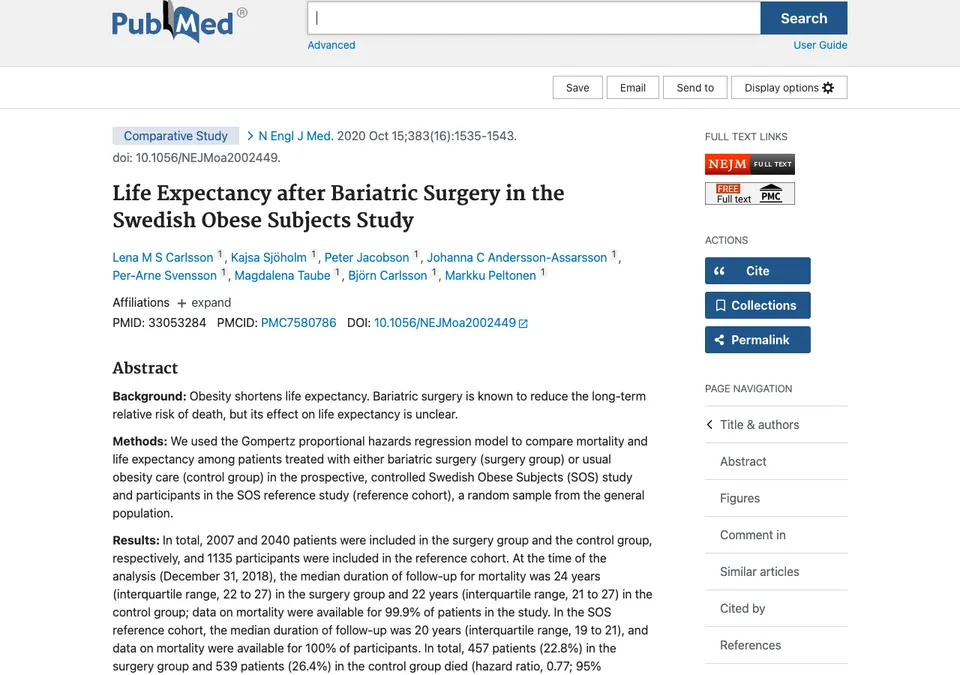
Carlsson NEJM 2020 — SOS surgery patients lived a median 3 years longer than controls, yet still died 5.5 years earlier than the general population.
The adjusted median life expectancy in the surgery group was 3.0 years longer than in the control group but 5.5 years shorter than in the general population.
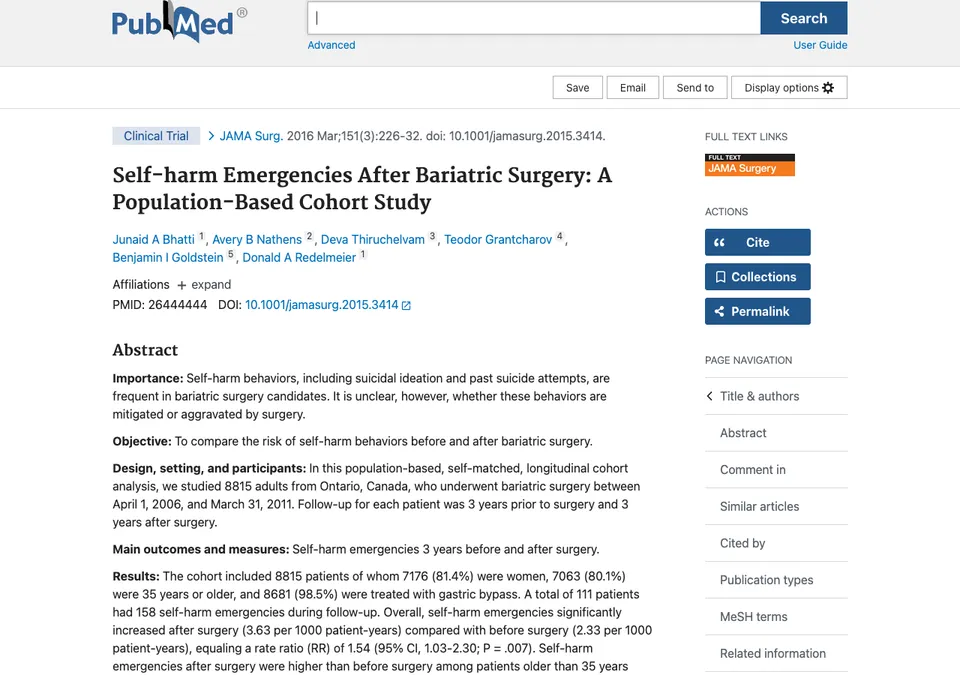
Bhatti JAMA Surgery 2016 — self-harm emergencies rose ~50% after bariatric surgery in 8,815 Ontario adults.
Self-harm emergencies significantly increased after surgery (3.63 per 1000 patient-years) compared with before surgery (2.33 per 1000 patient-years), equaling a rate ratio of 1.54 (P=.007).
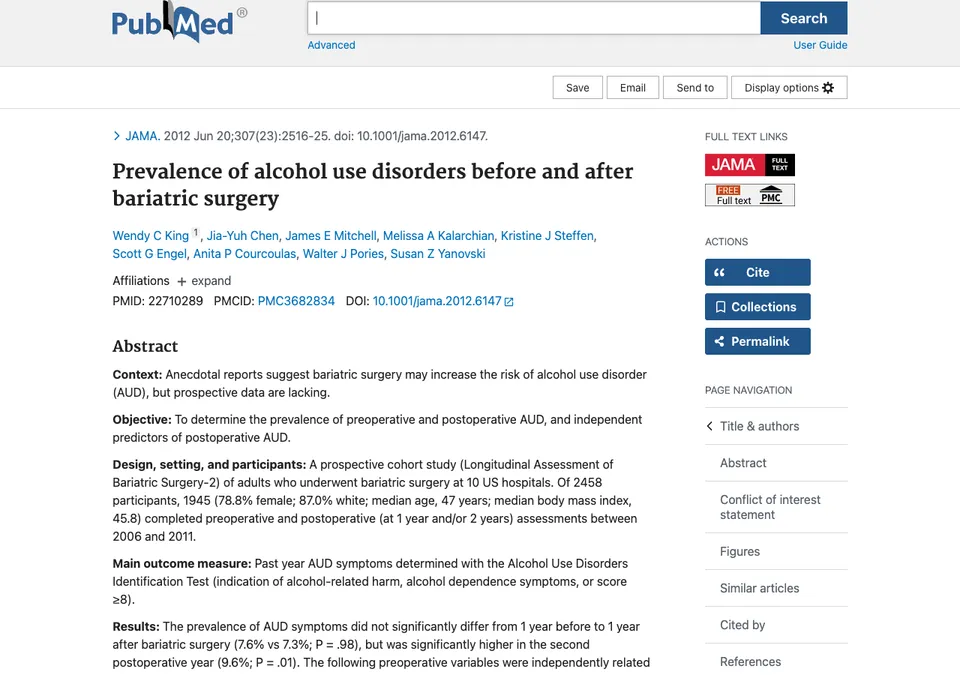
King JAMA 2012 — alcohol use disorder symptoms rose significantly in the second postoperative year (9.6% vs 7.6% baseline), particularly after Roux-en-Y.
The prevalence of AUD symptoms did not significantly differ from 1 year before to 1 year after bariatric surgery (7.6% vs 7.3%), but was significantly higher in the second postoperative year (9.6%; P=.01), associated with undergoing Roux-en-Y gastric bypass.
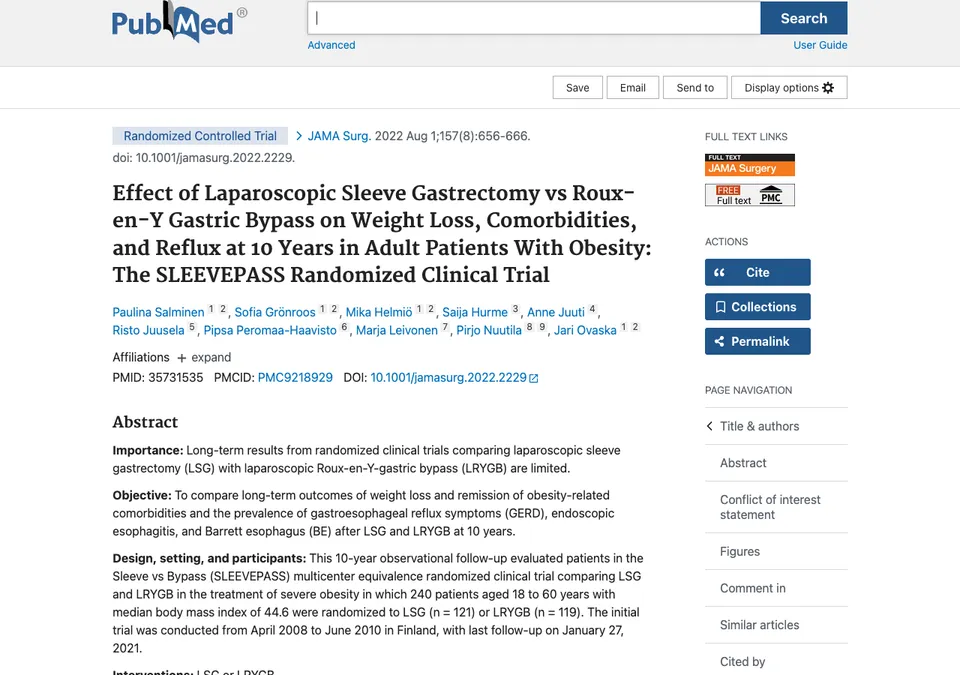
SLEEVEPASS 10-year RCT — esophagitis far more common after sleeve gastrectomy (31% vs 7% bypass), Barrett's esophagus in 4%, weight loss inferior to bypass.
Esophagitis was more prevalent after LSG (31% vs 7%; P<.001) with Barrett's esophagus in 4% of both procedures.
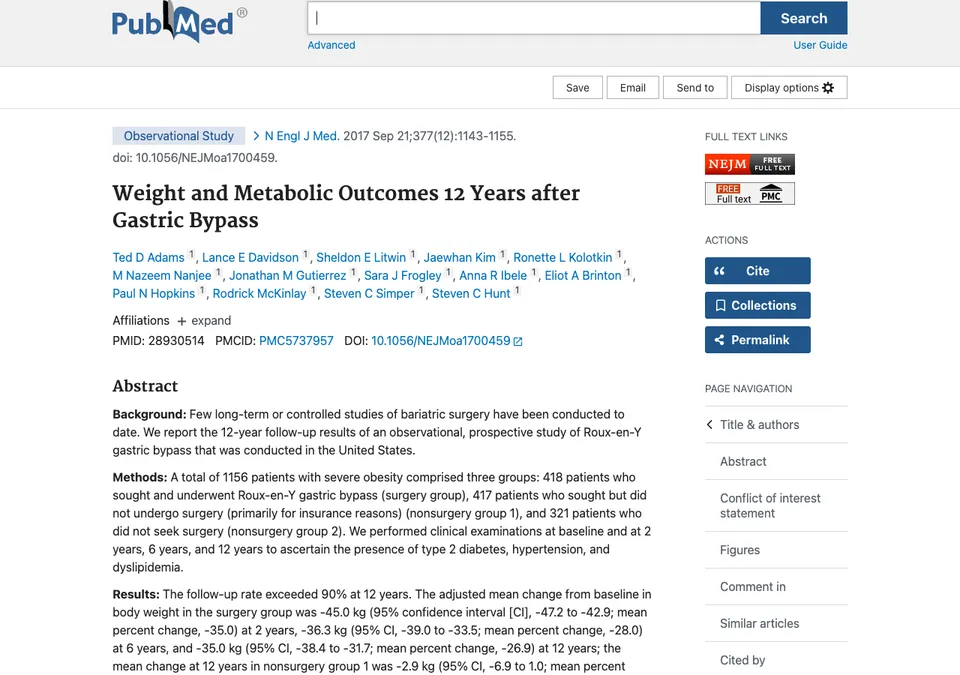
Adams 12-year follow-up — diabetes remission eroded from 75% at 2 years to 51% at 12 years after Roux-en-Y.
Among the patients in the surgery group who had type 2 diabetes at baseline, type 2 diabetes remitted in 75% at 2 years, in 62% at 6 years, and in 51% at 12 years.
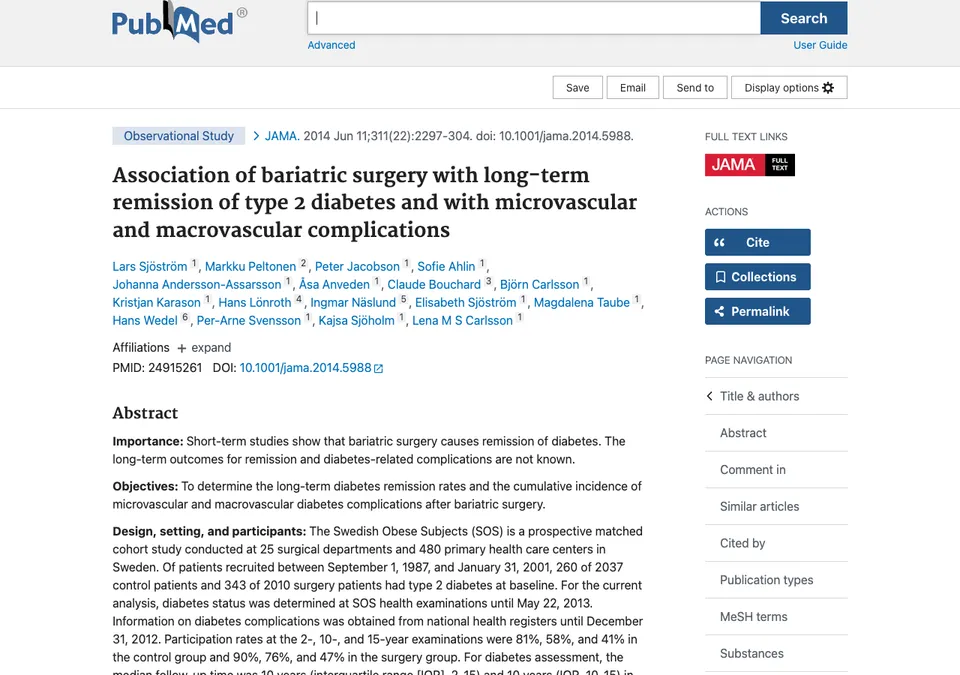
Sjöström JAMA 2014 — SOS 15-year diabetes remission fell to just 30.4%; complications were reduced but not eliminated.
The diabetes remission rate 2 years after surgery was 72.3%. At 15 years, the diabetes remission rate decreased to 30.4%.