Medical procedures
Harms of Chemotherapy and Radiation Therapy
Chemotherapy and radiotherapy save many lives, but the major medical literature documents a heavy price: chronic anthracycline cardiotoxicity, a 7.4 percent per Gray linear rise in ischemic heart disease after breast irradiation, secondary cancers (breast cancer, therapy-related myeloid leukemia) years after cure, persistent cognitive decline ('chemo fog'), permanent cisplatin-induced hearing loss and tinnitus, and a burden of severe chronic conditions in 62 percent of childhood-cancer survivors.
Dr. Diaa's words
Dr. Diaa Al-Awady warns against chemotherapy and tumour-removal surgery, holding that they do not address root causes and that the body will reactivate its defensive plan elsewhere, and he argues that cancer cells resist chemotherapy because of their fibrotic interstitial environment.
Chemotherapy and radiotherapy are not useless. They have saved millions of lives, especially in childhood cancers, early breast cancer, and lymphomas. But fairness requires reading the other side of the ledger too. On cardiotoxicity, Cardinale and colleagues (Circulation 2015) followed 2,625 anthracycline-treated patients and found a 9 percent overall incidence of cardiotoxicity, 98 percent of which appeared within the first year. Long-term, Lipshultz in NEJM 1991 showed that childhood leukaemia survivors who received doxorubicin developed progressive left-ventricular contractile impairment years later.
Then came the heaviest blow. Darby's NEJM 2013 study of 2,168 women treated with radiotherapy for breast cancer demonstrated that for each Gray of mean heart dose, the rate of major coronary events rose by 7.4 percent, linearly, with no apparent threshold. Mulrooney's BMJ 2009 analysis of 14,358 childhood-cancer survivors found hazard ratios of 5.9 for congestive heart failure, 5.0 for myocardial infarction, and 6.3 for pericardial disease compared with siblings.
On secondary cancers, Travis (JAMA 2003) documented that 4 Gy or more delivered to the breast after Hodgkin treatment raised breast-cancer risk 3.2-fold, climbing to 8-fold above 40 Gy. Neurocognitive harm is real, the 'chemo fog' confirmed by Ahles and Jim's meta-analysis, as is permanent cisplatin ototoxicity in Frisina's audiometric cohort, where 18 percent of survivors had severe-to-profound hearing loss.
The cumulative burden is striking. Oeffinger's NEJM 2006 study of 10,397 childhood-cancer survivors found that 62.3 percent had at least one chronic condition and 27.5 percent had a severe or life-threatening one. On the human side, Temel (NEJM 2010) proved that early palliative care in metastatic lung cancer improved quality of life and prolonged survival (11.6 vs 8.9 months) despite less aggressive chemotherapy. This is not a call to refuse treatment, but a call for honest physician-patient conversation about cost and benefit.
What the research shows
7 / 19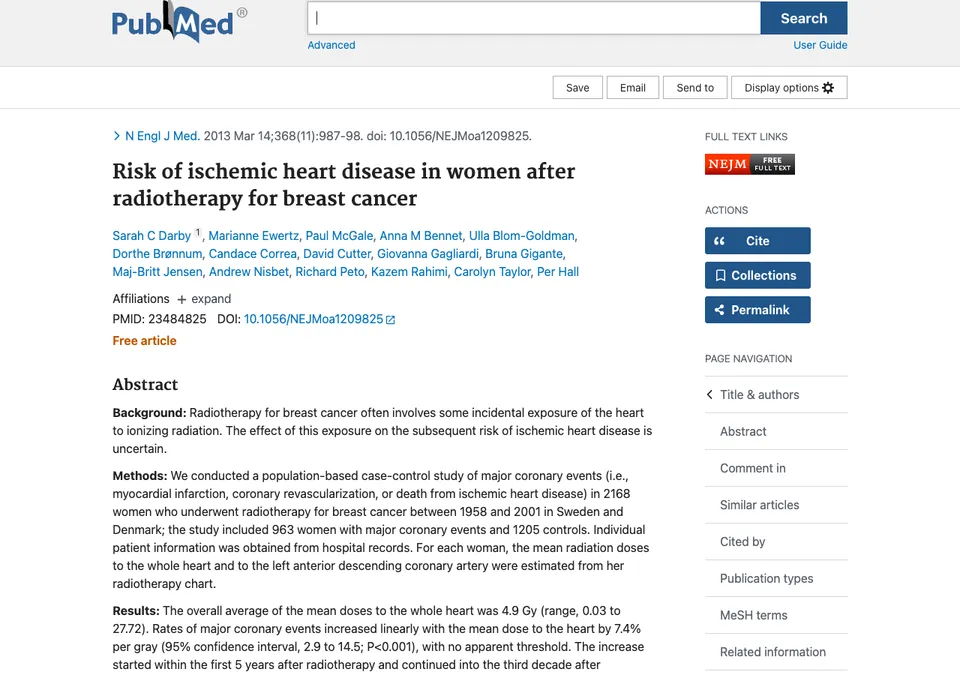
Darby 2013 NEJM: in 2,168 breast-cancer radiotherapy patients, major coronary events rose 7.4% per Gray of mean heart dose, linearly, with no threshold.
Rates of major coronary events increased linearly with the mean dose to the heart by 7.4 percent per Gray (P<0.001), with no apparent threshold. The increase started within the first 5 years after radiotherapy and continued into the third decade.
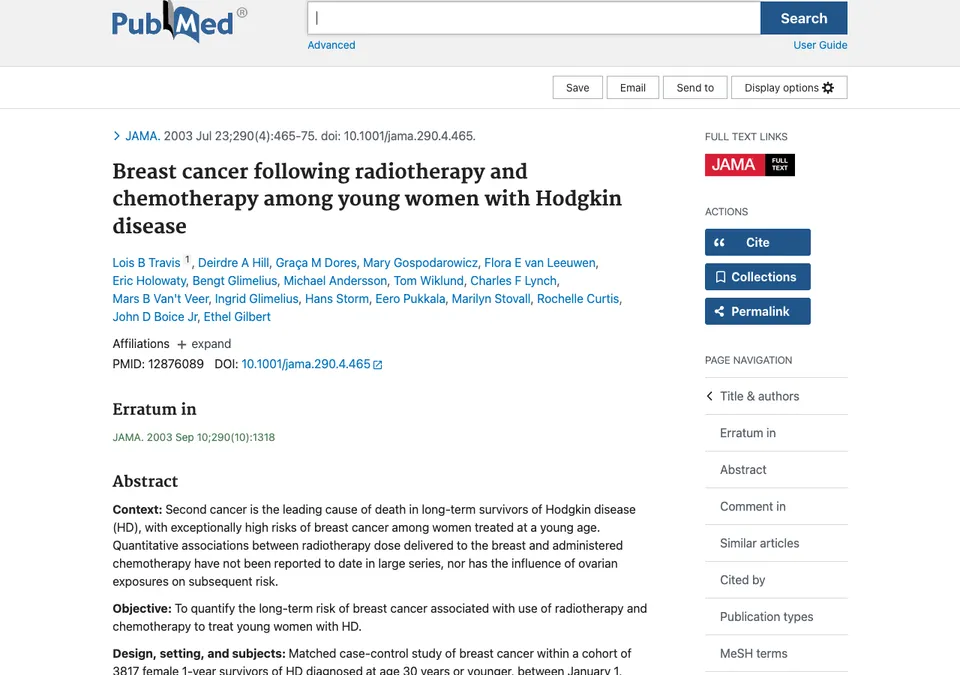
Travis 2003 JAMA: in young women treated for Hodgkin disease, ≥4 Gy to breast raised secondary breast-cancer risk 3.2-fold, rising to 8-fold above 40 Gy.
A radiation dose of 4 Gy or more delivered to the breast was associated with a 3.2-fold increased risk compared with the risk in patients who received lower doses. Risk increased to 8-fold with a dose of more than 40 Gy (P<0.001 for trend).
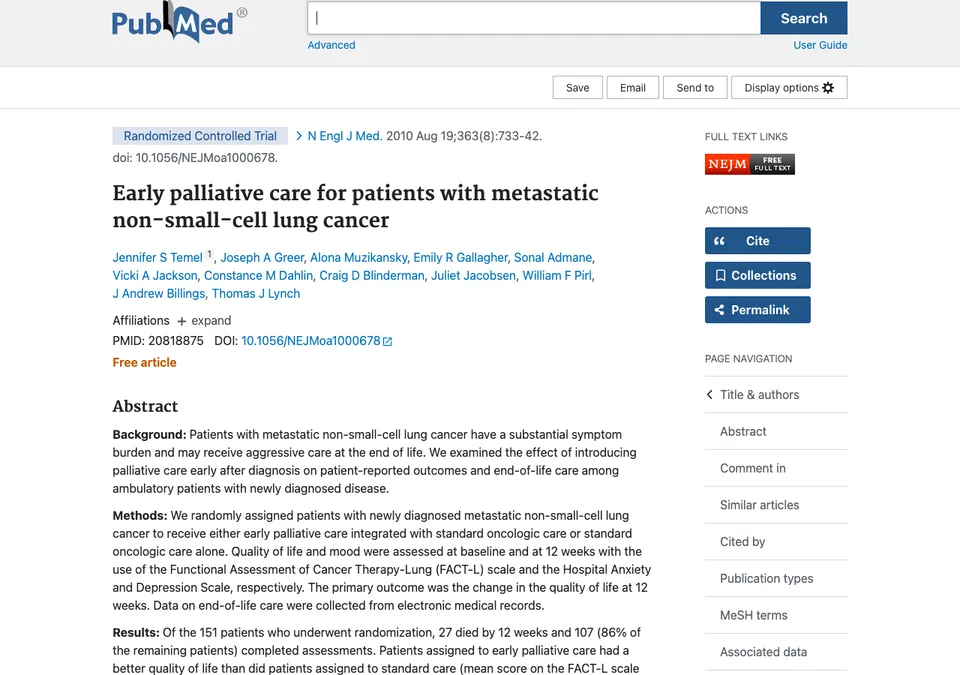
Temel 2010 NEJM: early palliative care in metastatic NSCLC improved quality of life, reduced aggressive end-of-life care, and extended median survival (11.6 vs 8.9 months).
Despite the fact that fewer patients in the early palliative care group received aggressive end-of-life care (33 percent vs. 54 percent, P=0.05), median survival was longer (11.6 months vs. 8.9 months, P=0.02), with improvements in quality of life and mood.
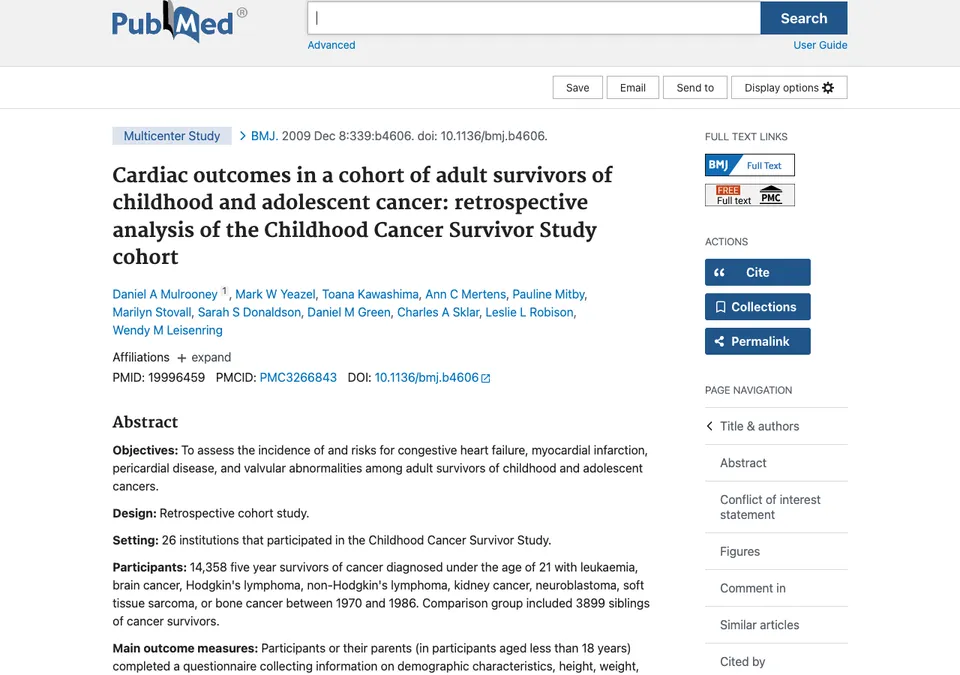
Mulrooney 2009 BMJ: 14,358 childhood-cancer survivors had hazard ratios of 5.9 for CHF, 5.0 for MI, 6.3 for pericardial disease, 4.8 for valvular abnormalities versus siblings.
Survivors of cancer were significantly more likely than siblings to report congestive heart failure (HR 5.9), myocardial infarction (HR 5.0), pericardial disease (HR 6.3), or valvular abnormalities (HR 4.8).
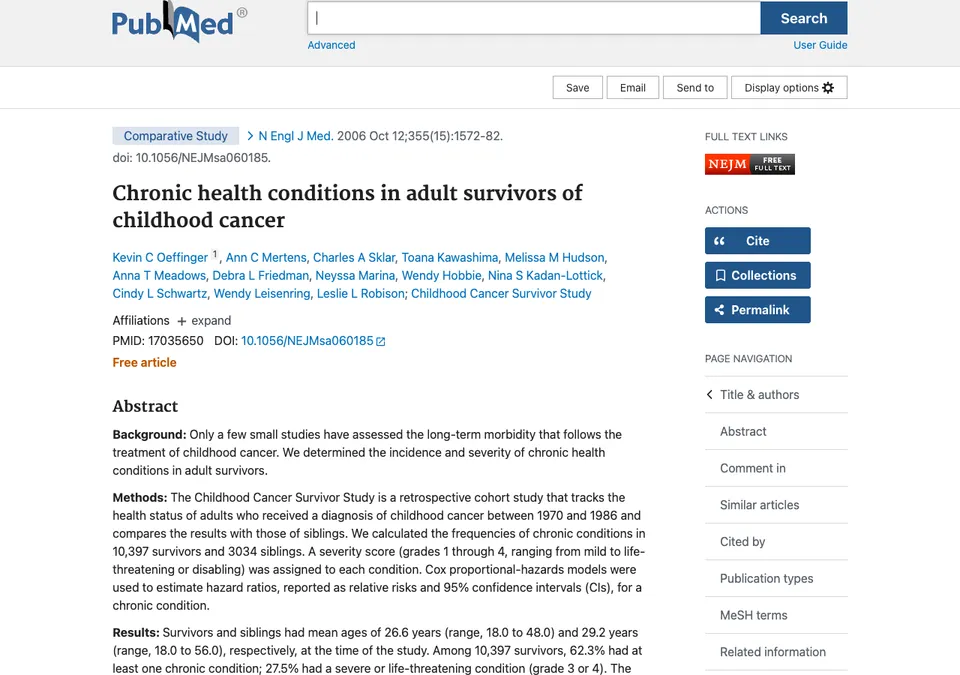
Oeffinger 2006 NEJM: 62.3% of 10,397 adult survivors of childhood cancer had a chronic health condition; 27.5% had a severe one, with RR 8.2 versus siblings.
Among 10,397 survivors, 62.3 percent had at least one chronic condition; 27.5 percent had a severe or life-threatening condition. The relative risk of a severe condition versus siblings was 8.2.
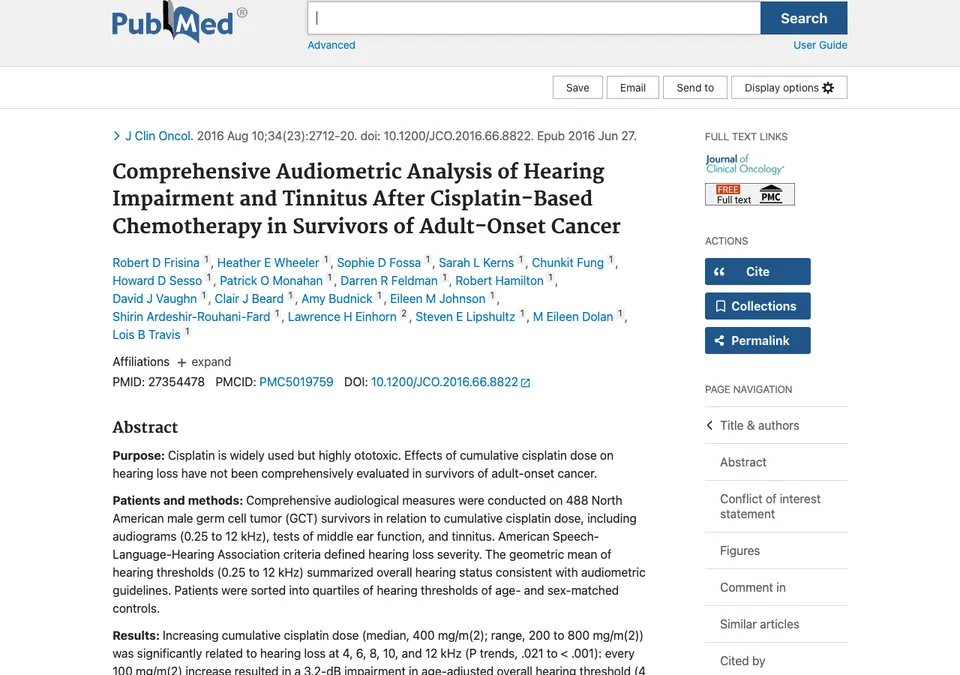
Frisina 2016 JCO: in 488 cisplatin-treated germ-cell tumour survivors, hearing loss worsened 3.2 dB per 100 mg/m² cisplatin; 18% had severe-to-profound hearing loss.
Every 100 mg/m² increase in cisplatin dose resulted in a 3.2-dB impairment in age-adjusted overall hearing threshold (P<0.001). 18 percent of patients had severe-to-profound hearing loss, and tinnitus (40 percent) was correlated with reduced hearing.
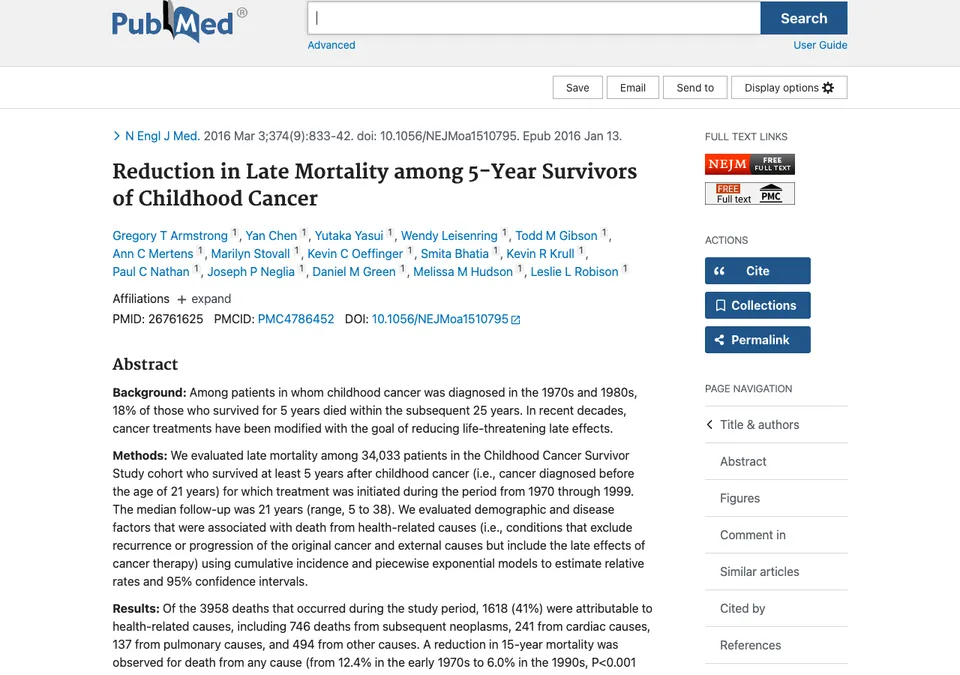
Armstrong 2016 NEJM: among 34,033 childhood-cancer survivors, 41% of deaths beyond 5 years were from health-related late effects.
Of the 3,958 deaths, 1,618 (41 percent) were attributable to health-related causes, including 746 deaths from subsequent neoplasms, 241 from cardiac causes, and 137 from pulmonary causes. Reduction in treatment exposure was associated with reduced late mortality among survivors of ALL and Wilms tumour.