Foods
The Hidden Cost of Industrial Eggs
Today's commercial egg is no longer the clean farmstead food it once was. Contaminated feed, proximity to industrial pollution, and dense caged housing have turned the modern egg into a quiet carrier of dioxins, PCBs, forever-chemicals (PFAS), heavy metals, Salmonella, and antibiotic residues, alongside epidemiological signals linking high intake to cardiovascular disease, lethal prostate cancer, and type 2 diabetes.
Dr. Diaa's words
Eggs are harmful and cause problems like snoring, sinus inflammation, and nightmares. They carry the full components of a living organism, and stopping eggs and chicken can ease many headaches.
The egg coming out of a modern commercial barn is no longer the egg your grandparents ate. It has become a mirror of whatever the hen consumed and whatever surrounded her: contaminated feed, polluted soil, antibiotics, and crowded cages. The 1999 Belgian feed disaster, documented in Environmental Health Perspectives (2001), pushed dioxin levels in eggs to 713 picograms per gram of fat and total PCBs to 46,000 nanograms per gram of fat, with the authors estimating 40 to 8,000 extra cancers across ten million Belgians. In Bull Environ Contam Toxicol (2022), Vietnamese eggs near industrial zones reached 245 pg TEQ per gram of lipid, well above the EU ceiling. In Chemosphere (2024), Danish researchers showed that 5-6 organic eggs per week were enough to push children past more than twice the EFSA tolerable weekly intake of PFAS, solely because the feed contained fishmeal. Salmonella tells the same story: J Food Prot (2019) reported a 44% prevalence in caged production environments versus just 3.2% in cage-free systems. And the epidemiology echoes the contamination data. In JAMA (2019), each additional half egg per day was tied to a 6% rise in cardiovascular disease and an 8% rise in all-cause mortality across 29,615 adults; in Cancer Prev Res (2011), eating 2.5 or more eggs weekly was linked to an 81% higher risk of lethal prostate cancer. Not every egg is dangerous, but the industrial egg, in particular, has become a manufactured product, not a natural food.
What the research shows
7 / 15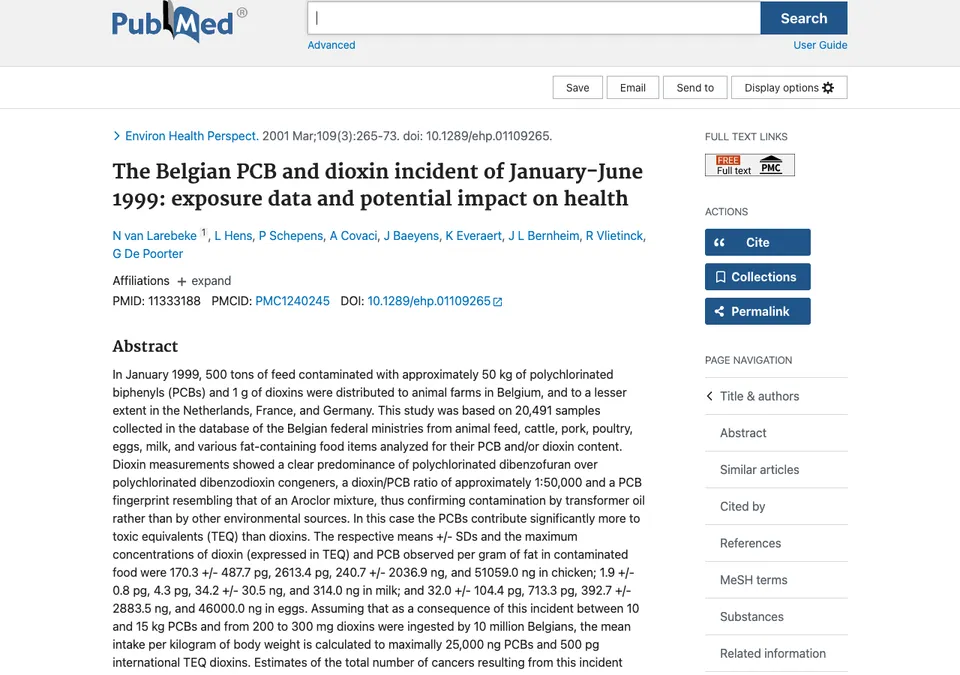
Feed contamination in the 1999 Belgian PCB/dioxin disaster drove egg dioxins up to 713 pg/g fat and PCBs to 46,000 ng/g fat, with an estimated 40-8,000 excess cancers.
Maximum dioxin concentrations in eggs reached 713 pg TEQ per gram of fat and PCBs reached 46,000 ng per gram of fat; total excess cancers from the incident were estimated at between 40 and 8,000.
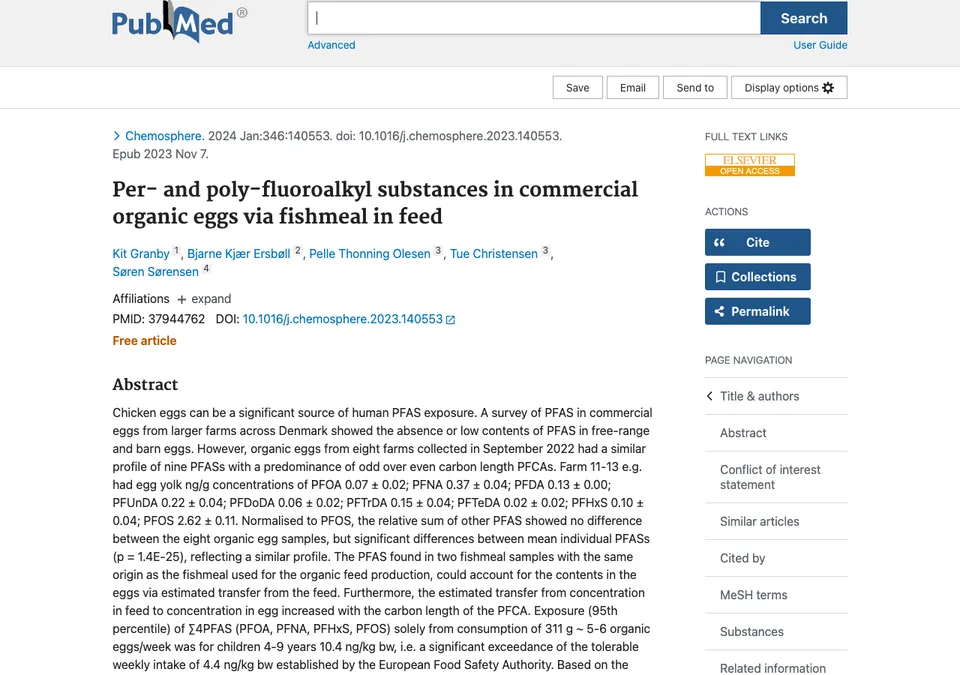
Commercial organic Danish eggs were contaminated with forever-chemical PFAS via fishmeal in feed; 5-6 eggs per week put children over twice the EFSA tolerable intake.
Organic eggs from eight Danish farms contained nine measurable PFAS compounds; consuming roughly 5-6 eggs per week exposed children aged 4-9 to 10.4 ng per kg of body weight — a significant exceedance of the EFSA tolerable weekly intake of 4.4 ng per kg.
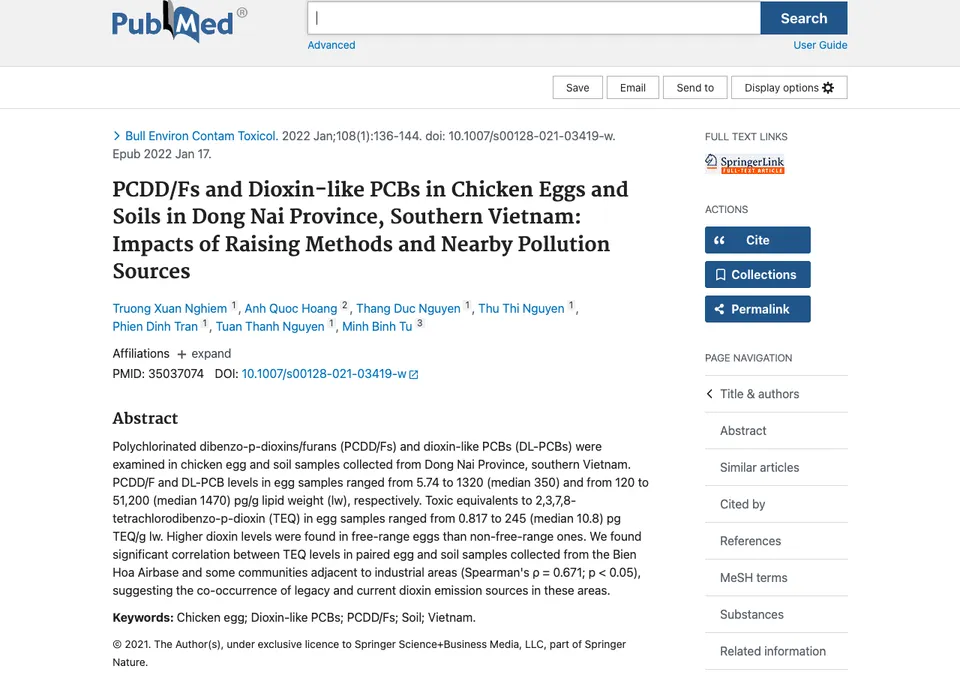
Vietnamese chicken eggs near industrial pollution sources contained dioxin and PCB levels reaching 245 pg TEQ per gram of lipid, far above EU limits.
In Dong Nai Province, dioxin-like PCBs in eggs ranged from 120 to 51,200 pg per gram of lipid, with toxic equivalents reaching 245 pg TEQ per gram, and free-range eggs near airbases and industrial zones carried the highest burdens.
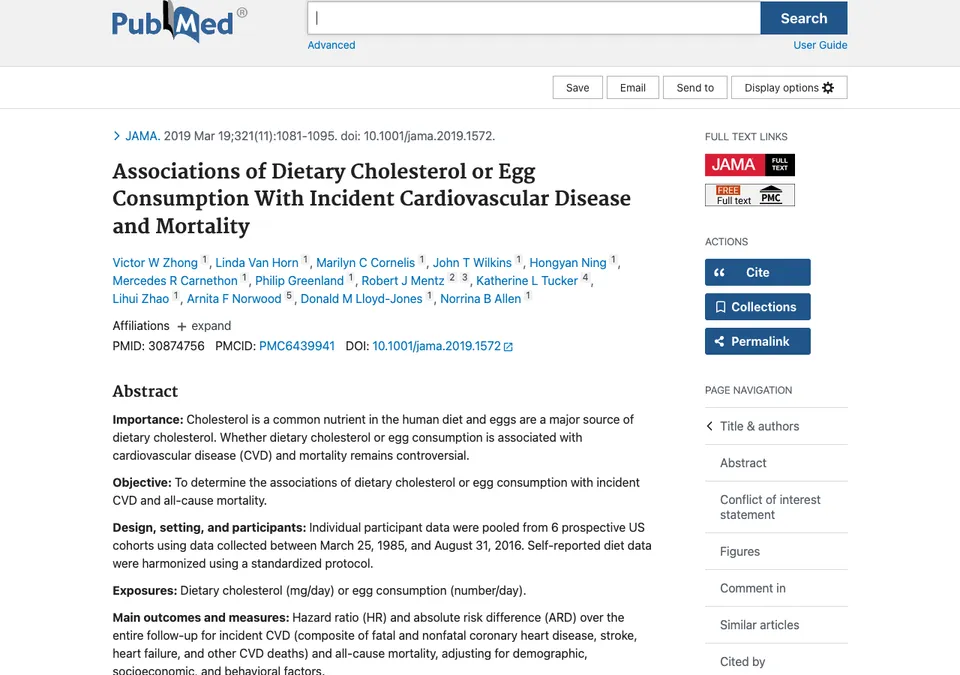
Pooled US cohort data on 29,615 adults showed each extra half egg per day raised CVD risk by 6% and all-cause mortality by 8% in a dose-response pattern.
Across 29,615 US adults, each additional half egg per day was linked to a 6% higher risk of cardiovascular disease (HR 1.06; 95% CI 1.03-1.10) and an 8% higher risk of all-cause mortality (HR 1.08; 95% CI 1.04-1.11).
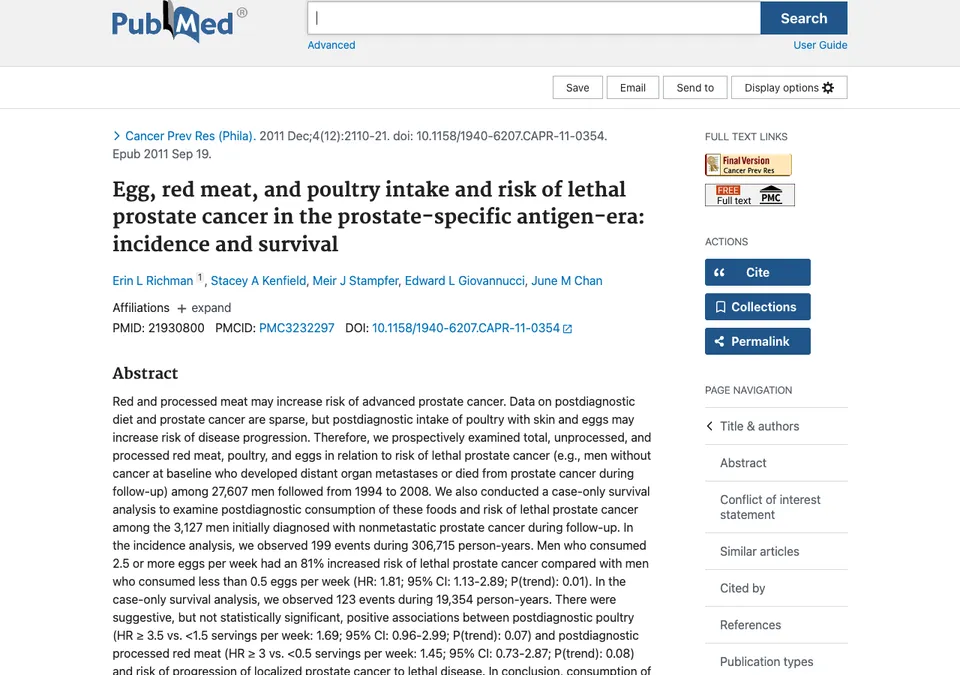
In 27,607 men, eating 2.5 or more eggs per week was associated with an 81% higher risk of lethal prostate cancer compared with rare egg consumption.
Among 27,607 men, consuming 2.5 or more eggs per week was associated with an 81% higher risk of lethal prostate cancer (HR 1.81; 95% CI 1.13-2.89) compared with eating fewer than half an egg per week.
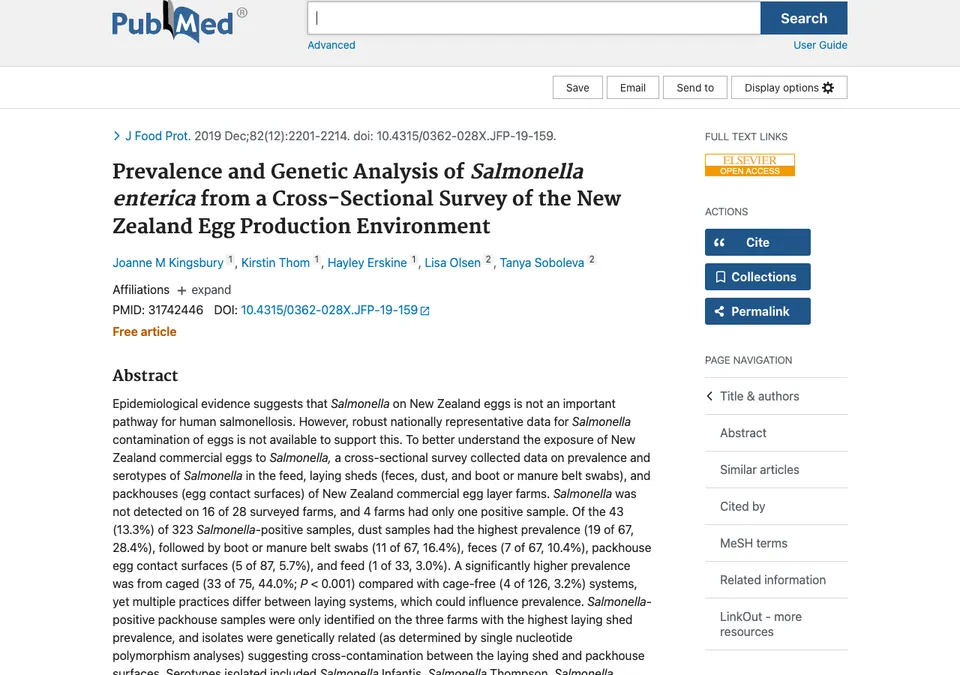
A New Zealand survey found Salmonella in caged egg-production environments (44%) at more than ten times the prevalence of cage-free systems (3.2%).
In a New Zealand survey of 28 commercial egg farms, Salmonella prevalence reached 44% (33 of 75 samples) in caged systems versus just 3.2% (4 of 126) in cage-free systems, with shed dust the single most contaminated source.
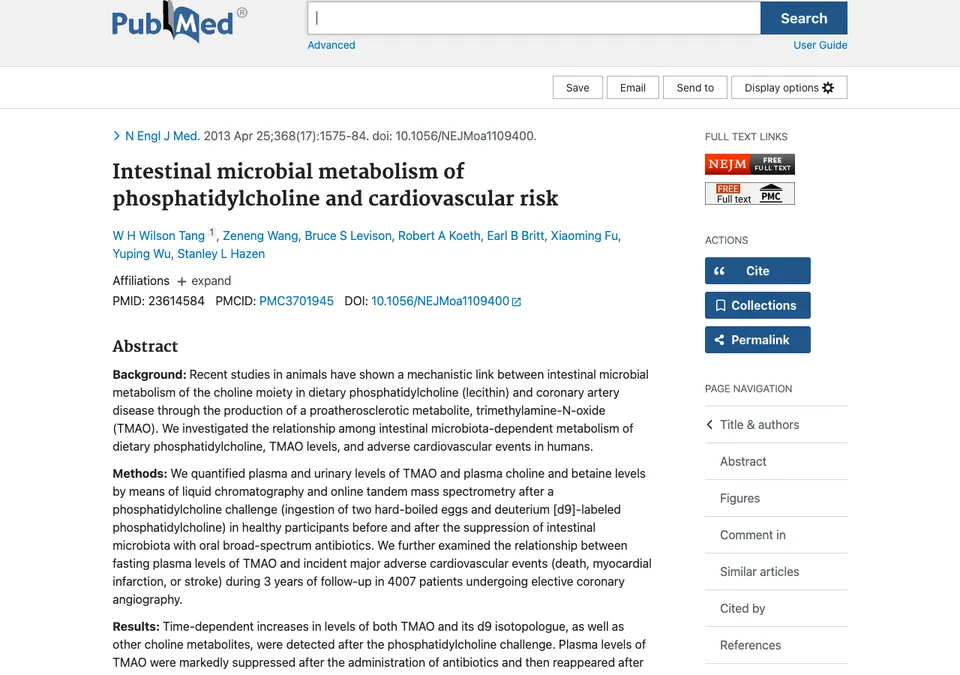
Egg-yolk phosphatidylcholine is converted by gut bacteria into TMAO, and high TMAO levels were tied to a 2.5-fold higher risk of major adverse cardiovascular events.
After a challenge with two egg yolks plus phosphatidylcholine, gut-microbe-derived TMAO rose sharply, was suppressed by antibiotics, and returned when antibiotics were withdrawn; elevated TMAO was tied to a 2.54-fold higher risk of major cardiovascular events (95% CI 1.96-3.28) in 4,007 patients.