Foods
The Harm Hidden in Leafy Greens and Cucurbits
Humans are not ruminants and lack the multi-stomach machinery to ferment cellulose. Leafy greens and cucurbits sit at the centre of the modern fresh-produce outbreak record (E. coli, Salmonella, Listeria) and carry an unusual load of oxalates, nitrates, cucurbitacins, profilin allergens and organophosphate pesticide residues. The same vegetables marketed as cleansing are, mechanistically, the wrong fuel for a single-stomached primate.
Dr. Diaa's words
"Ruminants can digest the cellulose in plants efficiently because of their multiple stomachs and specialised bacteria; a human with a single stomach does not digest cellulose well, and the result is gas and bloating." He adds that "vegetables themselves are often harmful because of the heavy use of pesticides."
Leafy greens and cucurbits are the icons of modern health eating, yet over the past two decades they have headed the league table of fresh-produce outbreaks. The 2006 bagged-spinach outbreak in the United States, reported in the Journal of Food Protection, infected 225 people across 27 states with E. coli O157:H7; 116 were hospitalised, 39 developed haemolytic-uraemic syndrome and five died. Five years later the New England Journal of Medicine documented Germany's O104:H4 epidemic, traced to sprouts and cucumbers, with more than four thousand cases across sixteen countries. Listeria contamination of packaged salads (United States and Canada, 2015–2016) and a 275-case Salmonella Newport outbreak linked to cucumbers in 2014 round out a picture in which the same vegetables most heavily promoted are the same vegetables most often recalled.
The chemistry is no kinder than the microbiology. Spinach, beet greens and chard are oxalate-dense; the Journal of Urology has shown that each 100 mg of dietary oxalate raises urinary oxalate by roughly 2.7 mg, and the American Journal of Medicine describes a juicing-induced oxalate nephropathy case at roughly ten times normal intake. Raw bok choy precipitated myxedema coma in an 88-year-old in the New England Journal of Medicine. Courgette soup fed to infants under three months produced severe methaemoglobinaemia from nitrate conversion. Bitter zucchini and ornamental pumpkin carry cucurbitacins capable of causing hemorrhagic colitis, shock and even a documented hair-loss syndrome in JAMA Dermatology.
The deepest support for Dr. Diaa's ruminant argument arrived only in 2024. A Science paper by Moraïs and colleagues mapped cellulose-degrading Ruminococcus species across human populations and found them abundant in hunter-gatherers, rural communities and ancient human samples — yet almost vanished from industrialised guts. Westernised humans simply no longer carry the microbial machinery to ferment plant cell walls; one of those species appears to have entered the human gut from ruminants and then disappeared again with industrial diets. Add to this the pesticide problem: in EHP studies, switching school-age children to organic food drove urinary chlorpyrifos and malathion metabolites to undetectable within days, and conventionally fed preschoolers showed roughly six-fold higher organophosphate metabolite levels than their organic peers.
None of this denies that greens contain folate and vitamin K; the Medicine (Baltimore) review even shows their vitamin K destabilises warfarin therapy. The honest accounting, however, places leafy greens and cucurbits on the harm side of the ledger: outbreaks, kidney stones, thyroid suppression, cucurbitacin poisoning, profilin cross-allergy to melon, watermelon, cucumber and zucchini, and a gut that — per the 2024 evidence — was never built to digest cellulose in the first place. That is why the Tayyibat protocol classifies them as forbidden.
What the research shows
7 / 17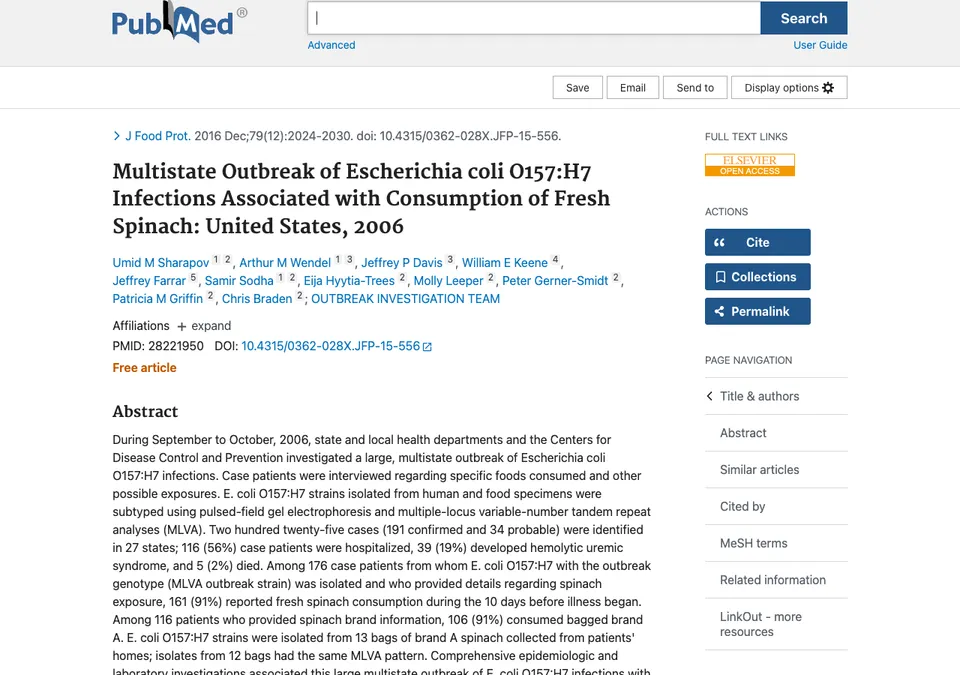
A 2006 US multistate outbreak of E. coli O157:H7 traced to bagged fresh spinach caused 225 cases across 27 states, with 116 hospitalised, 39 cases of HUS and 5 deaths.
The CDC investigated a 2006 multistate outbreak of E. coli O157:H7 traced to bagged spinach. 225 cases were identified in 27 states; 116 (56%) hospitalised, 39 (19%) developed HUS and 5 (2%) died. 161 of 176 patients (91%) had eaten fresh spinach in the 10 days before illness, and E. coli O157:H7 was isolated from 13 bags.
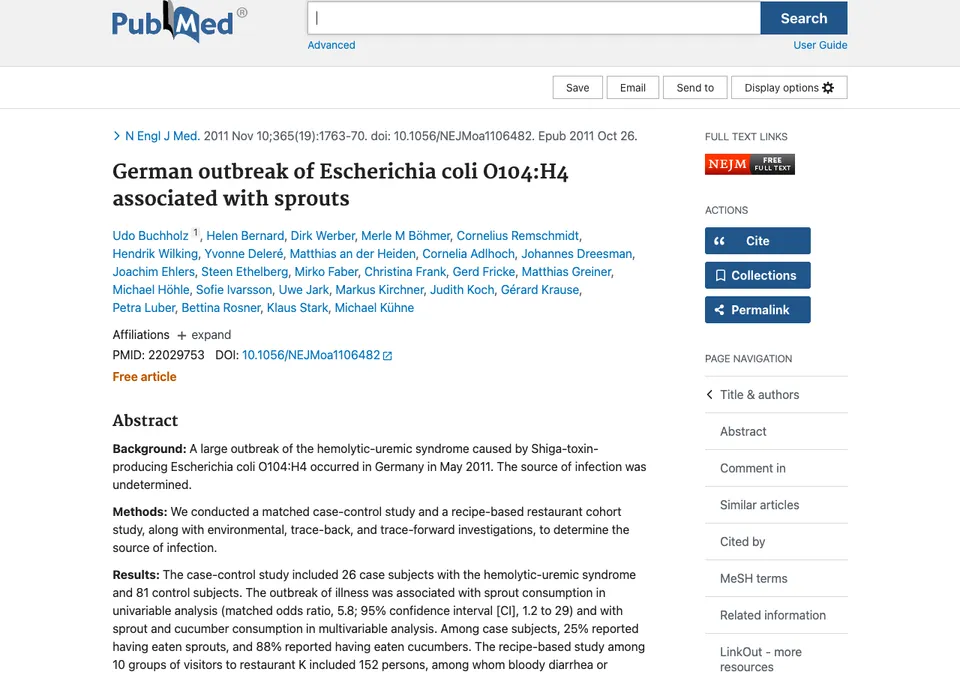
Germany's 2011 outbreak of Shiga-toxin-producing E. coli O104:H4, linked to sprouts and cucumbers, affected more than 4,000 people across 16 countries.
In May 2011 Germany experienced a large outbreak of HUS caused by Shiga-toxin-producing E. coli O104:H4. A case-control study linked illness to sprout consumption (matched OR 5.8, 95% CI 1.2-29) and to sprouts plus cucumbers in multivariable analysis; 88% of cases reported eating cucumbers.
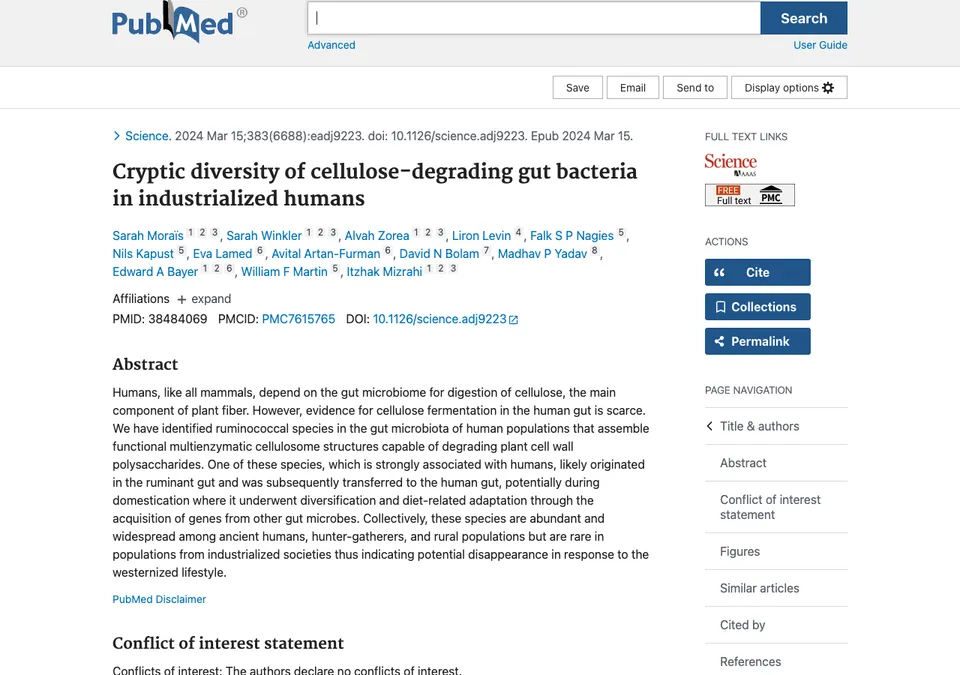
A 2024 Science paper shows that industrialised humans have almost entirely lost the cellulose-degrading Ruminococcus species still abundant in hunter-gatherers, rural populations and ancient human samples — molecular evidence that the modern human gut is no longer equipped to ferment cellulose like a ruminant.
This 2024 Science paper identified ruminococcal species in the human gut microbiota that assemble functional multi-enzyme cellulosome structures capable of degrading plant cell-wall polysaccharides. One species — strongly associated with humans — likely originated in the ruminant gut and was transferred to humans during domestication. Cellulose-degrading species are abundant among ancient humans, hunter-gatherers and rural populations but rare in industrialised societies.
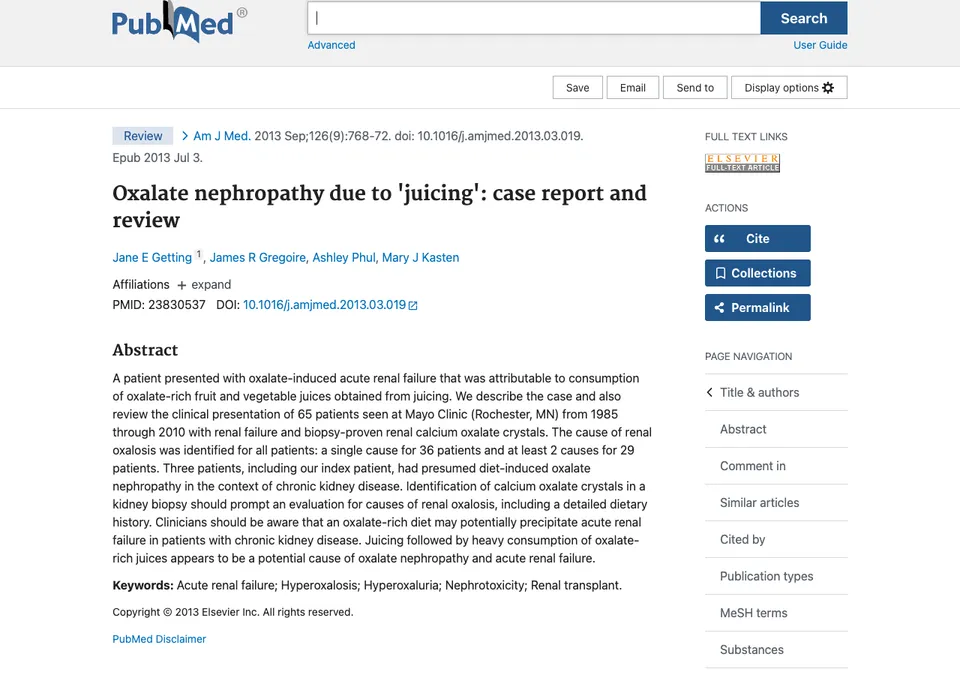
Acute oxalate nephropathy progressing to chronic kidney failure was caused by heavy juicing of oxalate-rich greens (about 1,500 mg oxalate per day, roughly ten times average intake).
A patient developed oxalate-induced acute renal failure attributable to oxalate-rich juiced fruits and vegetables. Review of 65 Mayo Clinic patients (1985–2010) with biopsy-proven renal calcium oxalate crystals identified a cause in every case. The authors warn an oxalate-rich diet can precipitate acute renal failure in CKD patients.
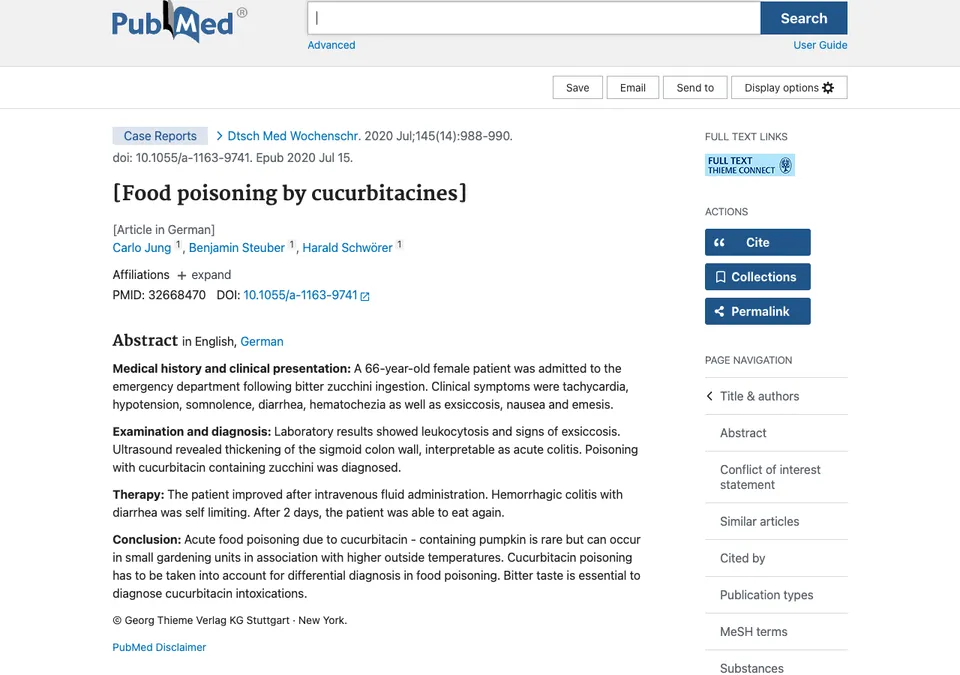
A 66-year-old woman developed acute cucurbitacin food poisoning from bitter zucchini with tachycardia, hypotension, hematochezia and acute colitis.
A 66-year-old woman presented to the ED after eating bitter zucchini with tachycardia, hypotension, hematochezia and acute haemorrhagic colitis. Cucurbitacin poisoning was diagnosed. Bitter taste is essential to the diagnosis.
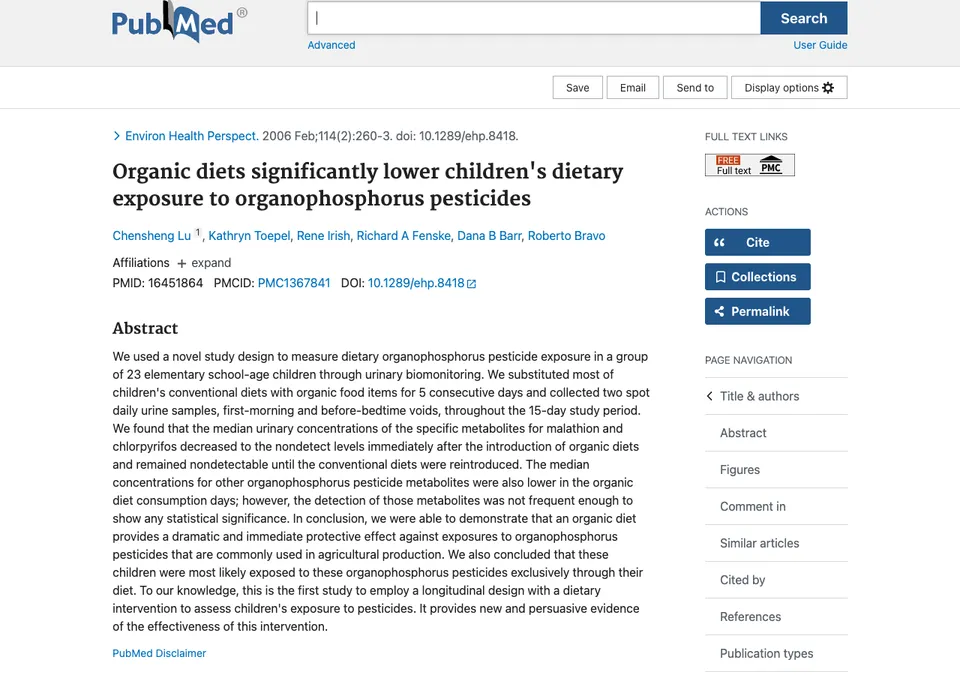
Switching school-age children to an organic diet dropped urinary chlorpyrifos and malathion metabolites to undetectable within days; food was the dominant exposure route.
This study measured organophosphate exposure in 23 elementary-school children. Replacing the conventional diet with organic food for five days drove urinary metabolites of malathion and chlorpyrifos to non-detect levels immediately, and they remained undetectable until conventional food was reintroduced.
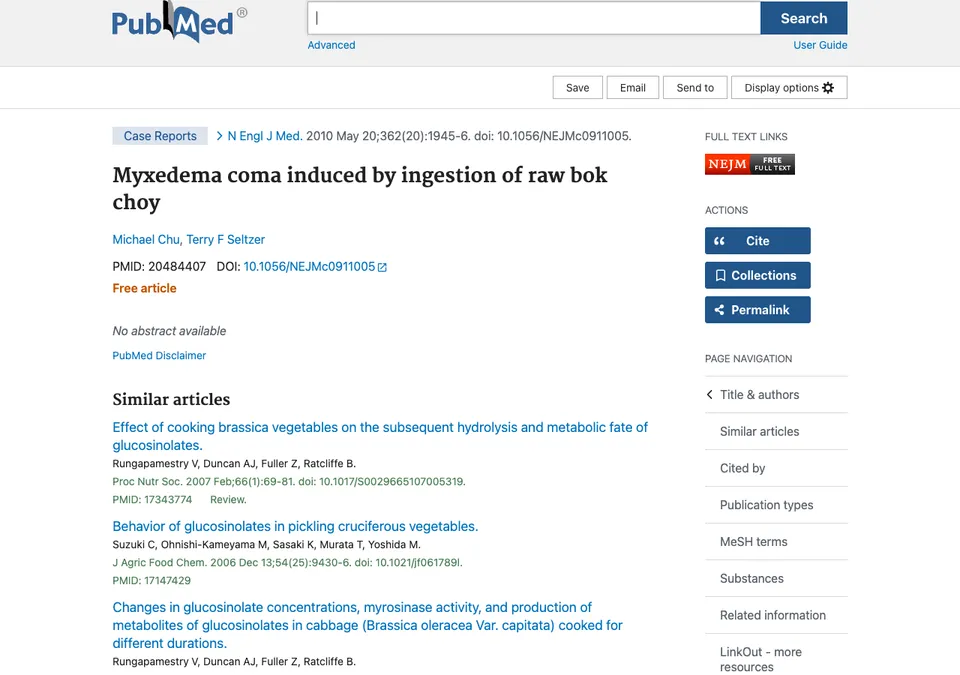
An 88-year-old woman developed myxedema coma after a daily habit of eating large amounts of raw bok choy, whose glucosinolates blocked thyroid function.
This 2010 NEJM letter reported an 88-year-old woman admitted in myxedema coma after a daily habit of eating large quantities of raw bok choy. Glucosinolates in raw cruciferous vegetables release thyroid-blocking compounds that produced profound hypothyroidism with cardiac and neurological collapse.