Foods
The Danger of Ultra-Processed Foods
A landmark NIH randomized inpatient trial and prospective cohorts spanning millions of adults converge on a single message: ultra-processed foods — instant noodles, sausages, ready meals, breakfast cereals, industrial baked goods, sweetened beverages — drive overeating and weight gain and raise the risk of cardiovascular disease, type 2 diabetes, cancer, depression, inflammatory bowel disease, and all-cause mortality, through mechanisms that include synthetic emulsifiers, artificial sweeteners, and a cocktail of additives.
Dr. Diaa's words
Dr Diaa Al-Awady attacks injected meats and industrial foods such as 'Indomie' by name, arguing they cause sudden spikes in intra-abdominal pressure and serious problems including intestinal obstruction. He warns that processed foods drive autoimmune disease, digestive and cardiac disorders, and repeats that 'food is behind every one of your problems.'
'Ultra-processed food' is not a loose insult but a precise category: Group 4 of the NOVA classification developed by Monteiro and colleagues in Brazil. These are industrial formulations made mostly from substances extracted from foods or synthesized in a lab, combined with cosmetic additives. The shopkeeper's test is brutally simple: if the label lists anything you would never have in your kitchen, you are holding an ultra-processed product.
The single most important piece of evidence is Kevin Hall's randomized inpatient crossover trial at the NIH Clinical Center (Hall 2019, Cell Metabolism). Twenty adults lived on the ward and alternated between two diets matched for presented calories, sugar, sodium, fat and fibre. On the ultra-processed arm they spontaneously ate 508 extra kilocalories per day and gained 0.9 kg in two weeks; on the unprocessed arm, the same people lost 0.9 kg.
Large prospective cohorts then mapped the consequences. In France's NutriNet-Santé study, every 10% increase in the dietary share of ultra-processed food raised the risk of overall cancer by 12% (Fiolet 2018), cardiovascular disease by 12% (Srour 2019 BMJ), type 2 diabetes by 15% (Srour 2020). Spain's SUN cohort found that consuming more than four servings a day was associated with a 62% higher risk of dying from any cause (Rico-Campà 2019).
The most recent BMJ umbrella review (Lane 2024) synthesised 45 meta-analyses covering almost ten million participants. It graded the evidence as 'convincing' for cardiovascular mortality, type 2 diabetes, and common mental disorders. The mechanisms are no longer mysterious: industrial emulsifiers such as carboxymethylcellulose erode the protective mucus layer of the gut (Chassaing 2015, Nature). In 2023 the IARC classified aspartame as 'possibly carcinogenic to humans' (Group 2B).
What the research shows
7 / 23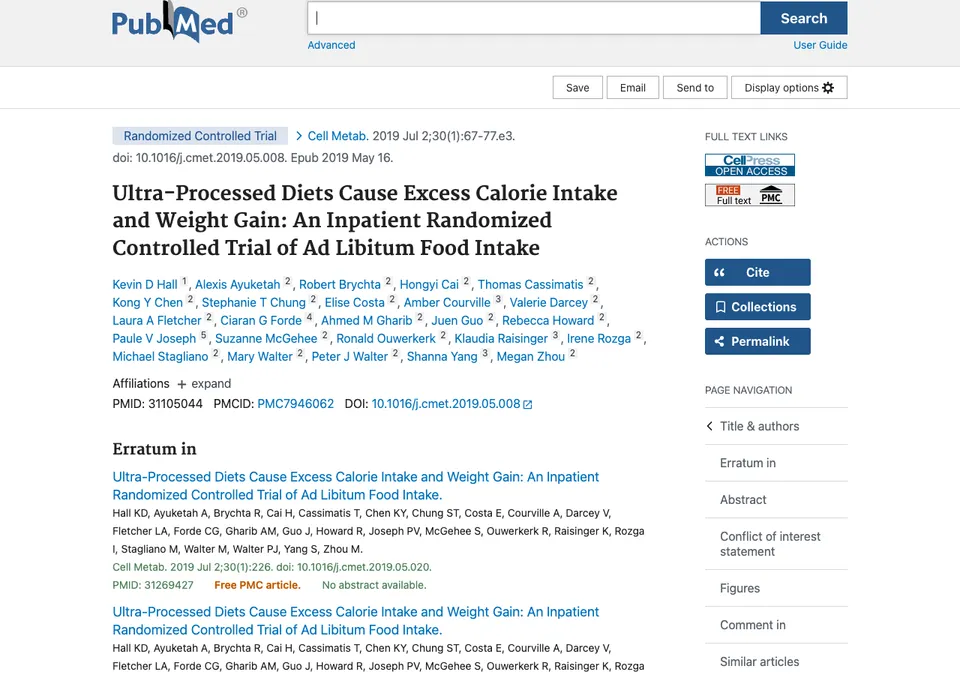
NIH inpatient RCT — an ultra-processed diet caused ~500 extra kcal/day and weight gain versus a matched unprocessed diet.
Energy intake was greater during the ultra-processed diet (508 ± 106 kcal/day; p=0.0001), with participants gaining 0.9 ± 0.3 kg during the ultra-processed diet and losing 0.9 ± 0.3 kg during the unprocessed diet.
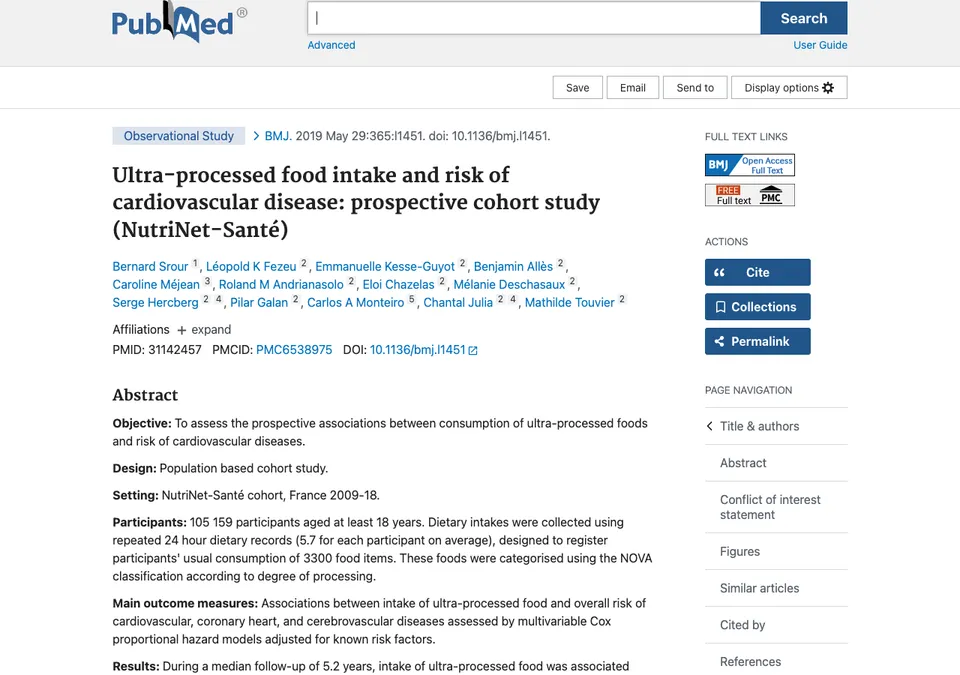
NutriNet-Santé cohort of 105,159 — each 10% rise in ultra-processed food share raised cardiovascular disease risk by 12%.
Among 105,159 NutriNet-Santé participants, every absolute 10-point increase in the share of ultra-processed foods was associated with a 12% higher risk of overall cardiovascular disease (HR 1.12, 95% CI 1.05-1.20).
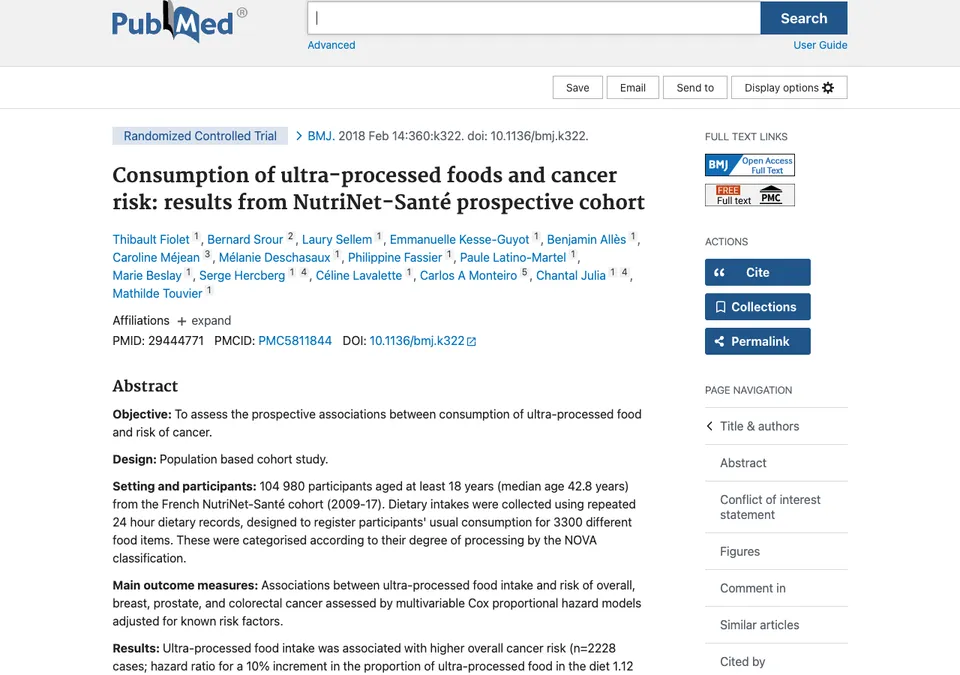
NutriNet-Santé cohort of 104,980 — each 10% rise raised overall cancer risk 12% and breast cancer 11%.
Among 104,980 NutriNet-Santé adults, every 10% increase in the share of ultra-processed foods was associated with a 12% rise in overall cancer risk (HR 1.12) and an 11% rise in breast cancer (HR 1.11).
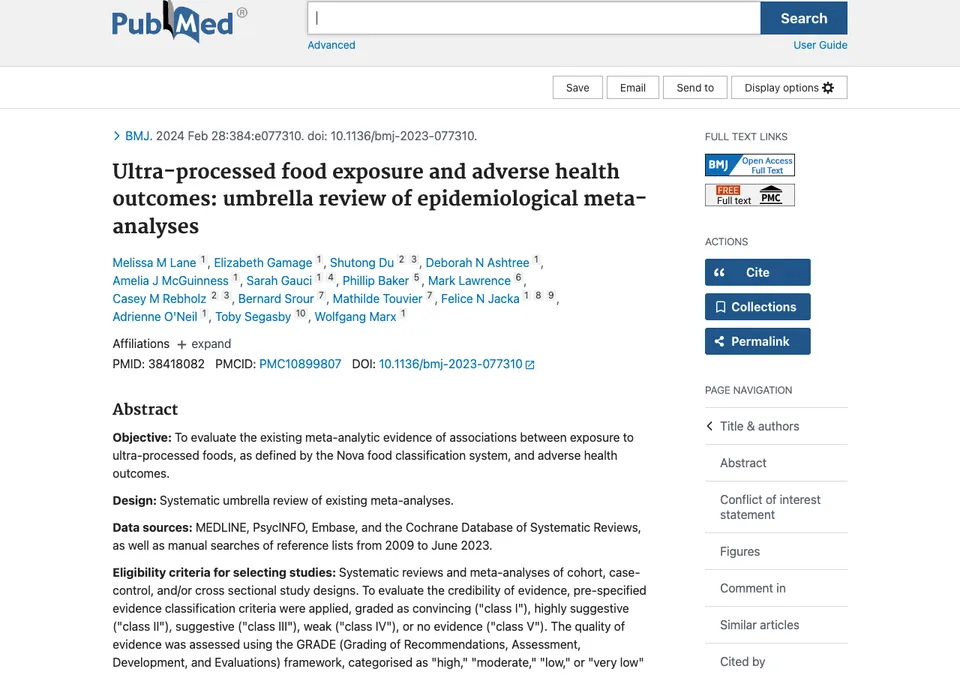
Umbrella review of 45 meta-analyses (~9.8 million participants) — convincing evidence linking UPF to cardiovascular mortality, type 2 diabetes, mental disorders and obesity.
Umbrella review of 45 meta-analyses (n=9,888,373) found convincing evidence linking greater ultra-processed food exposure to cardiovascular mortality (RR 1.50) and type 2 diabetes (RR 1.12), and highly suggestive evidence for a 21% higher all-cause mortality and 55% higher obesity risk.
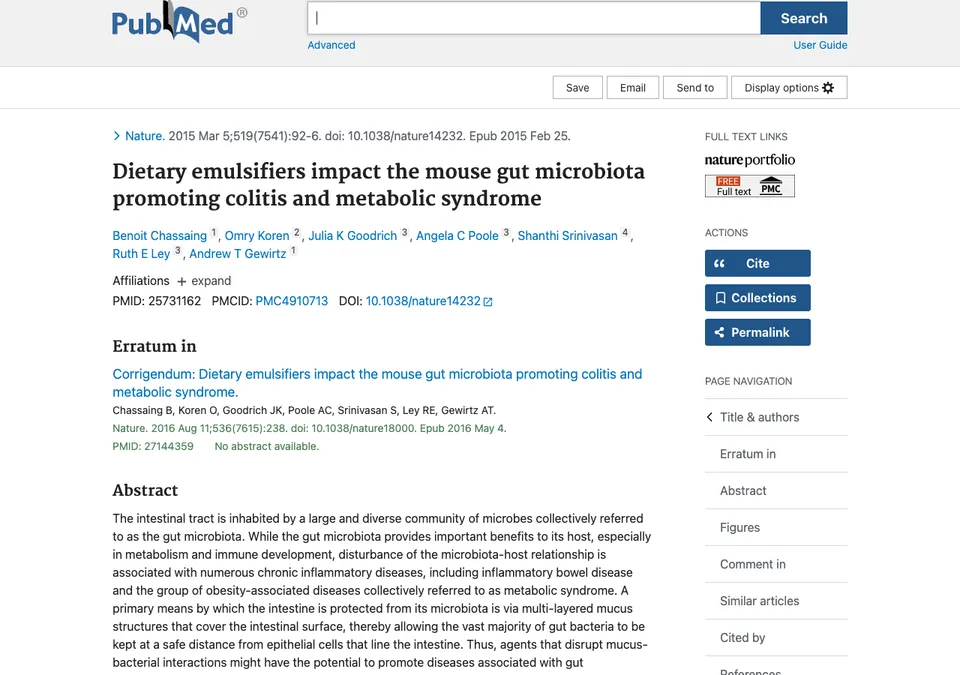
Synthetic emulsifiers (carboxymethylcellulose, polysorbate-80) alter gut microbiota and drive intestinal inflammation, colitis and metabolic syndrome in mice.
In mice, relatively low concentrations of two commonly used emulsifiers — carboxymethylcellulose and polysorbate-80 — induced low-grade inflammation, obesity and metabolic syndrome in wild-type hosts and promoted robust colitis in genetically predisposed mice.
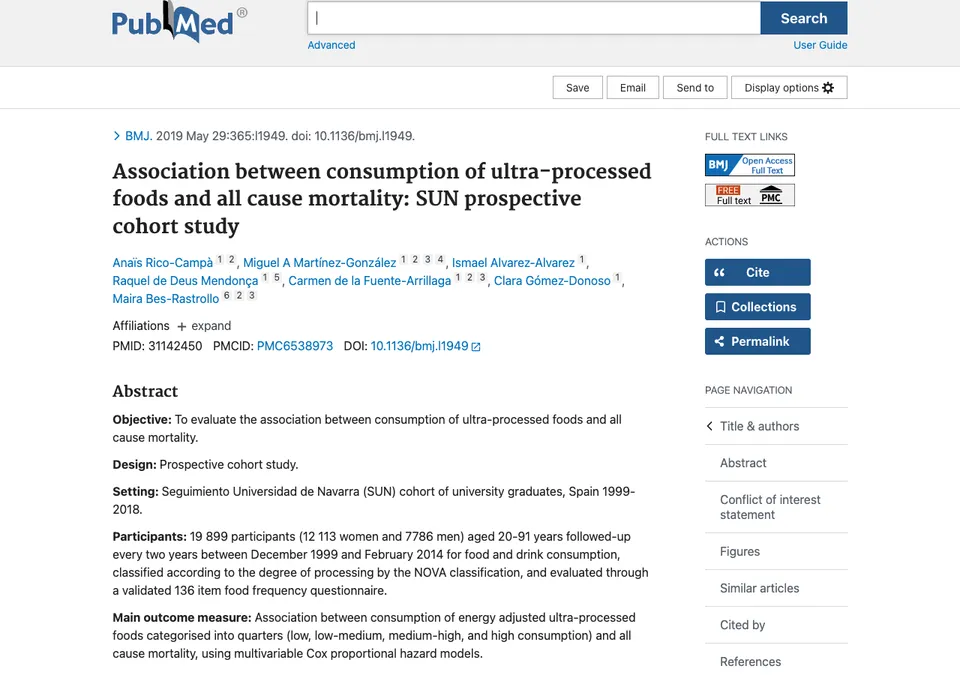
Spanish SUN cohort of 19,899 — more than four daily servings of ultra-processed food associated with a 62% rise in all-cause mortality.
In the Spanish SUN cohort, the highest quartile of ultra-processed food consumption carried a 62% higher hazard for all-cause mortality (HR 1.62), and each additional daily serving raised mortality by 18%.
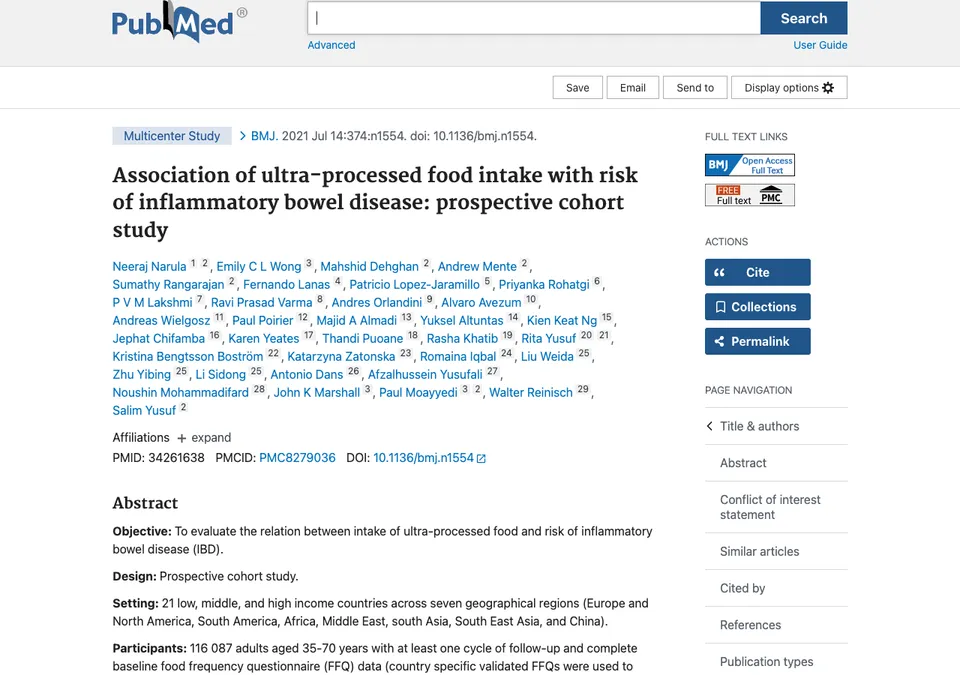
PURE study across 21 countries (116,087 adults) — higher UPF intake associated with greater risk of inflammatory bowel disease.
In PURE, covering 116,087 adults across 21 countries, consuming five or more daily servings of ultra-processed food was associated with a substantially higher risk of inflammatory bowel disease (HR 1.82).