Medications & supplements
The Hazards of Antibiotic Overuse
Antibiotics save lives when used for confirmed bacterial infections, yet overprescribing devastates the gut microbiome in critical developmental windows, fuels an antimicrobial-resistance epidemic now estimated to cause 1.27 million deaths a year, and is linked to obesity, asthma, inflammatory bowel disease and cardiovascular death.
Dr. Diaa's words
Overusing antibiotics and antiseptics disrupts the natural balance of beneficial bacteria; antibiotics contribute to obesity and cultivate fungi at the expense of bacteria, producing chronic health problems.
The discovery of penicillin transformed medicine and saved millions of lives from lethal bacterial infections, and antibiotics remain indispensable when used appropriately. The issue is not the drug itself, but the scale of overprescribing. Fleming-Dutra and colleagues, writing in JAMA in 2016, estimated that roughly 30% of antibiotic prescriptions in US ambulatory care were unnecessary — about 47 million prescriptions a year handed out for viral infections that antibiotics cannot touch.
The deepest of those marks falls on the gut microbiome. Cox and Blaser's 2014 Cell study showed that low-dose penicillin given in a critical developmental window in mice produced durable shifts in body composition. In humans, Bailey's 2014 JAMA Pediatrics cohort of 64,580 children found that four or more courses of broad-spectrum antibiotics before age two raised early-childhood obesity risk by 11%, and clarithromycin, clindamycin and fluoroquinolones can leave a fingerprint on the gut microbiome up to four years after the course ends.
Consequences extend far beyond weight. Ungaro's 2014 meta-analysis linked antibiotics to a near-doubling of new-onset Crohn's disease in children, while Ray's 2012 NEJM study showed a five-day course of azithromycin carried a 2.49-fold higher risk of cardiovascular death versus amoxicillin, translating to 245 extra deaths per million courses in higher-risk patients. The most sobering figure came from Murray and the GBD AMR Collaborators in The Lancet in 2022: 4.95 million deaths associated with antimicrobial resistance in a single year, 1.27 million directly attributable to bacterial AMR — a toll that now exceeds HIV and malaria combined. The answer is not to abandon antibiotics; it is to reserve them for the infections that genuinely demand them.
What the research shows
7 / 21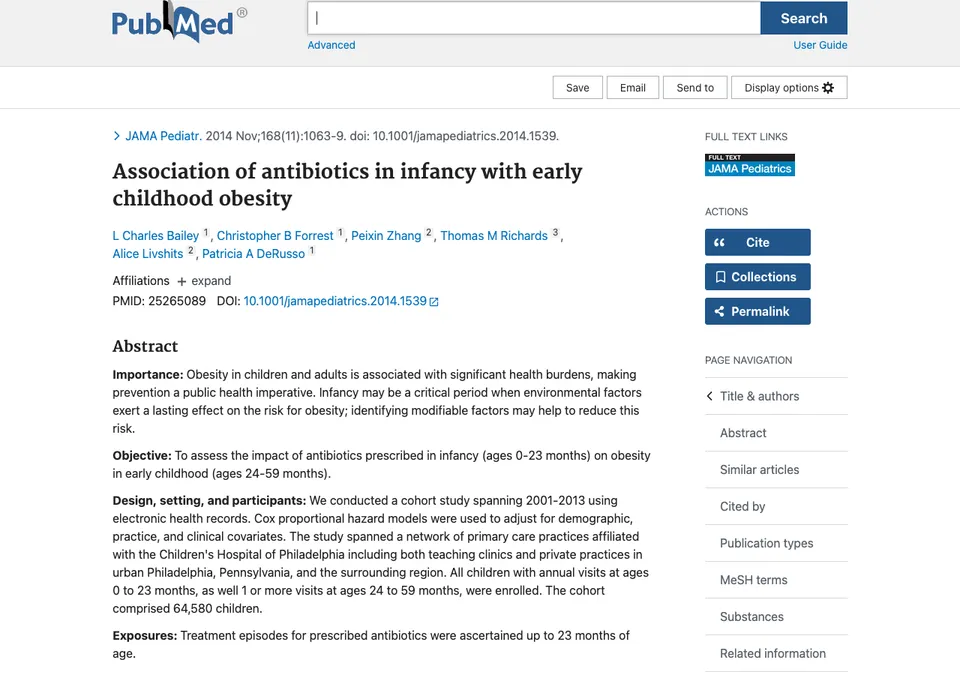
Bailey 2014 JAMA Pediatrics: In 64,580 children, ≥4 courses of broad-spectrum antibiotics before age two raised early-childhood obesity risk by 11-16%.
In a cohort of 64,580 children, cumulative antibiotic exposure was associated with later obesity (rate ratio 1.11 for ≥4 episodes), and the effect was stronger for broad-spectrum agents (1.16).
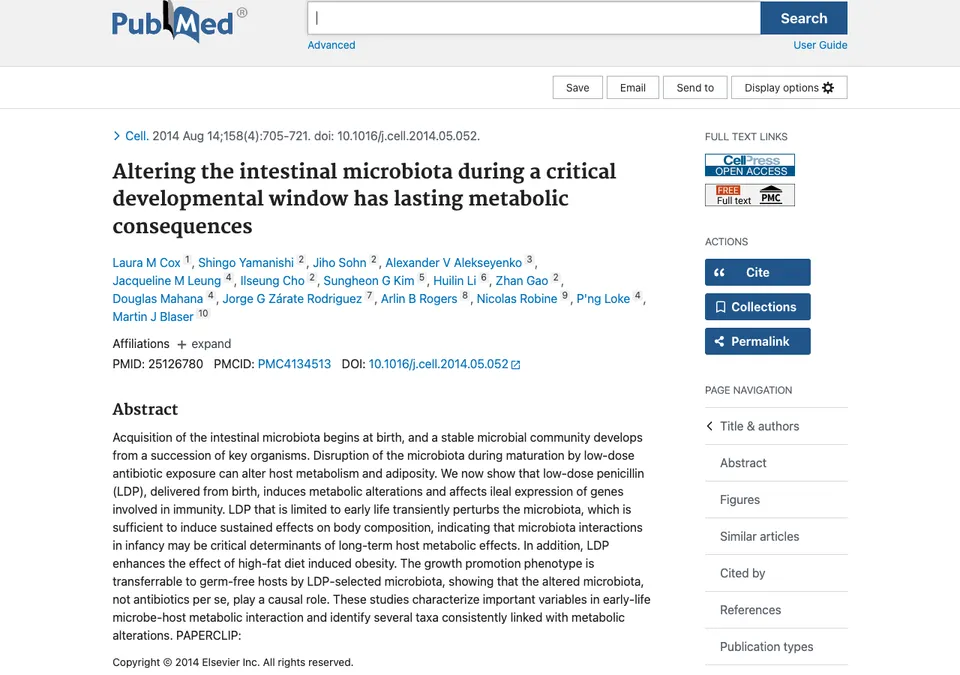
Cox 2014 Cell: Low-dose penicillin in a critical developmental window altered the murine microbiota and caused lasting metabolic and adiposity changes — transferable to germ-free hosts.
Low-dose penicillin limited to early life transiently perturbs the microbiota, which is sufficient to induce sustained effects on body composition; the growth-promotion phenotype is transferable to germ-free hosts by the antibiotic-selected microbiota.
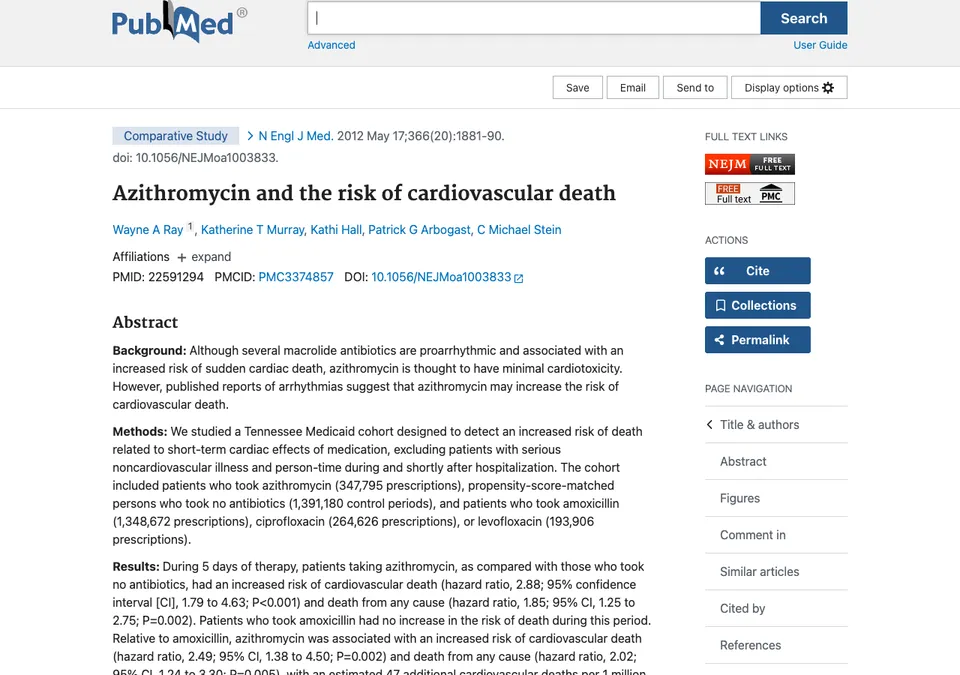
Ray 2012 NEJM: Five days of azithromycin carried a 2.49-fold higher cardiovascular death risk versus amoxicillin.
During 5 days of therapy, azithromycin versus amoxicillin carried a hazard ratio of 2.49 for cardiovascular death, with an estimated 47 additional cardiovascular deaths per million courses, rising to 245 per million in patients in the highest decile of cardiovascular risk.
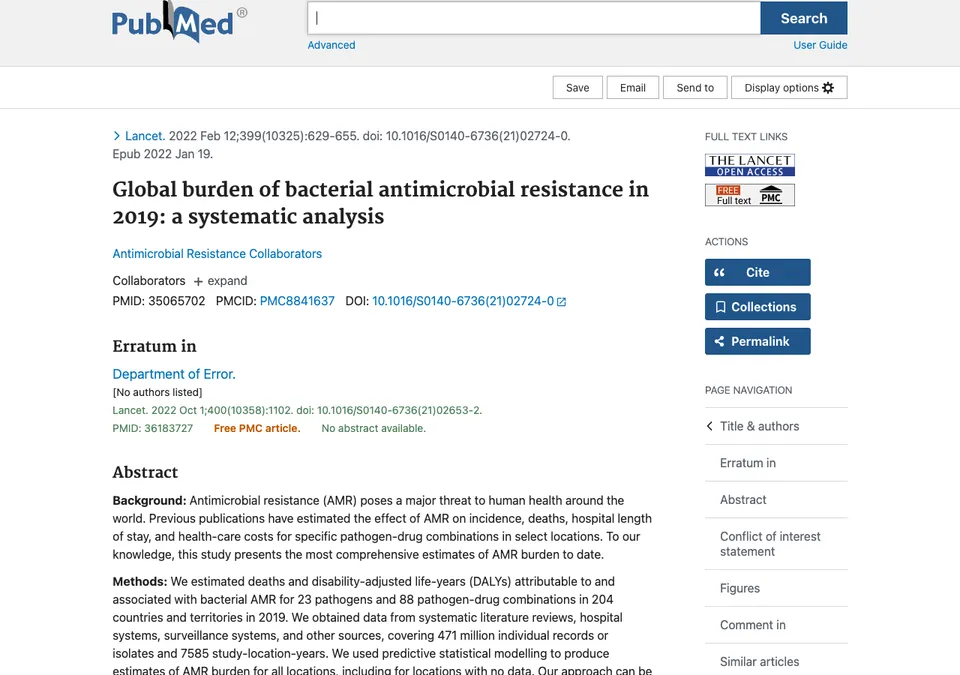
Murray 2022 Lancet: 4.95 million deaths were associated with bacterial AMR in 2019, with 1.27 million directly attributable — exceeding HIV and malaria combined.
There were an estimated 4.95 million deaths associated with bacterial AMR in 2019, including 1.27 million deaths directly attributable to resistance; MRSA alone caused more than 100,000 attributable deaths.
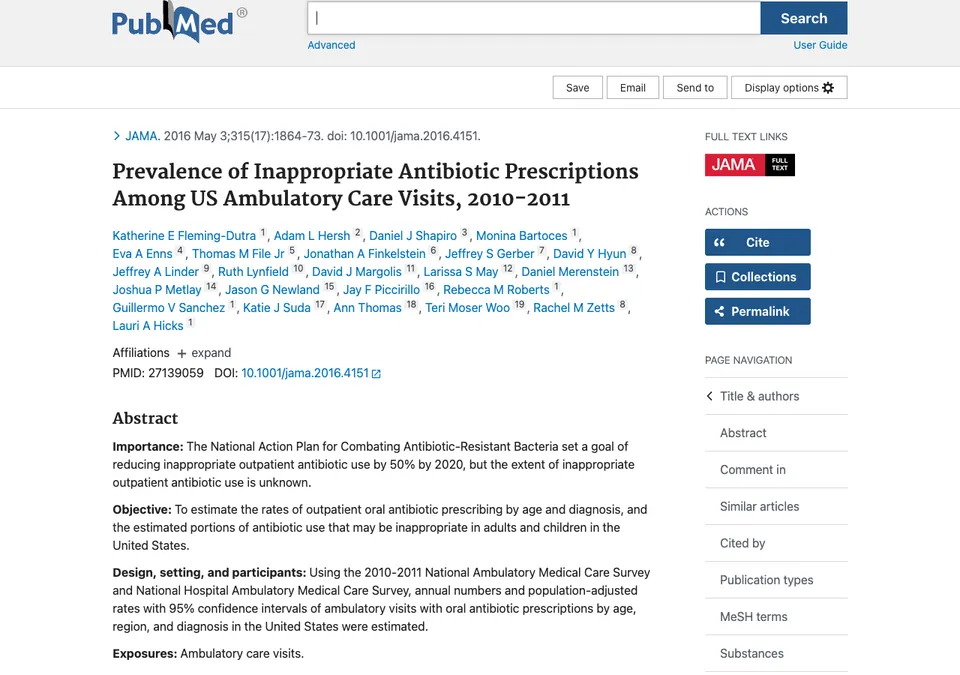
Fleming-Dutra 2016 JAMA: About 30% of US outpatient antibiotic prescriptions in 2010-2011 were inappropriate, mostly for viral respiratory infections.
Of 506 antibiotic prescriptions per 1,000 population per year in the US (2010-2011), only about 353 were estimated to be appropriate — roughly 30% of all prescriptions were unnecessary, with most of the excess written for viral respiratory conditions.
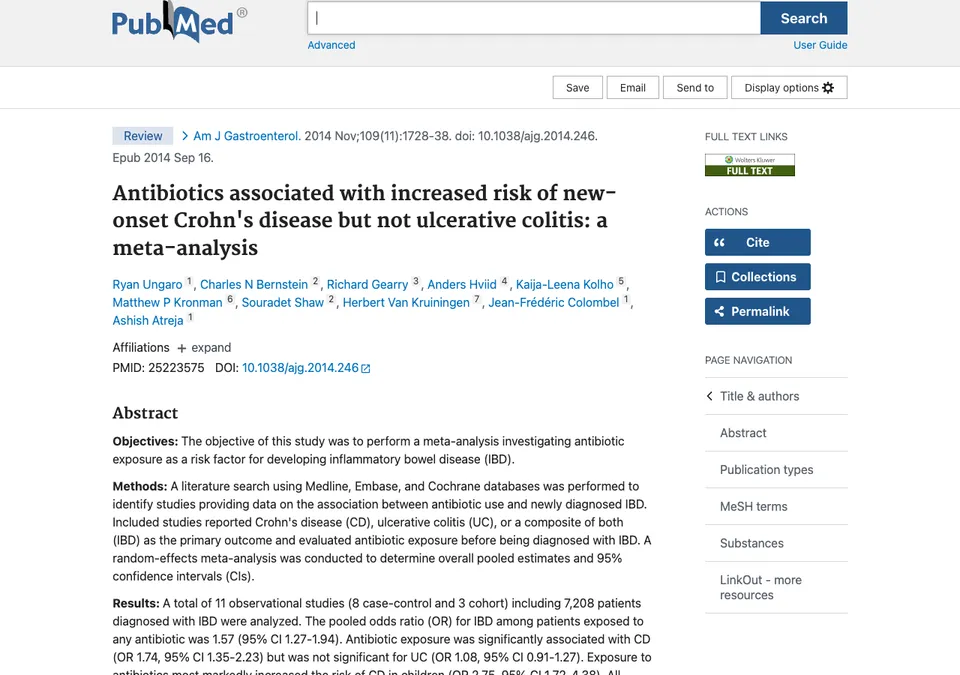
Ungaro 2014 Am J Gastroenterol: Meta-analysis linking antibiotic exposure to a 74% increase in new-onset Crohn's disease, rising to 2.75-fold in children.
In a meta-analysis of 7,208 IBD patients, any antibiotic exposure was associated with an odds ratio of 1.74 for Crohn's disease, rising to 2.75 in children.
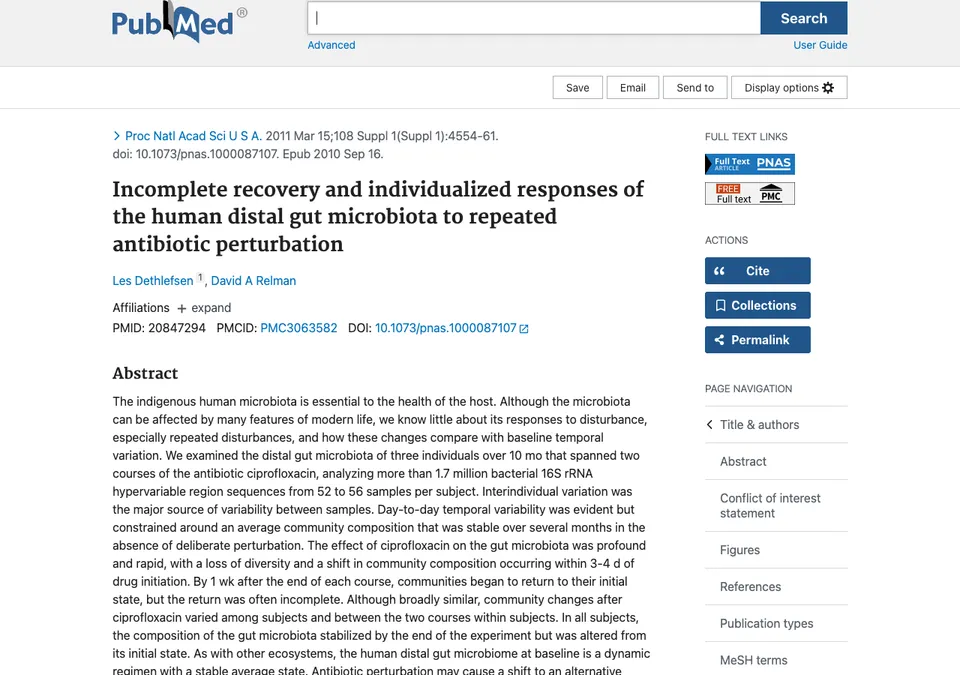
Dethlefsen & Relman 2011 PNAS: A single course of ciprofloxacin caused rapid, profound loss of gut microbial diversity that did not fully recover months later.
Ciprofloxacin's effect on the gut microbiota was profound and rapid, with loss of diversity and a shift in community composition occurring within 3-4 days of drug initiation; although communities began to return toward their initial state after a week, recovery was incomplete in every subject.