Foods
The Dairy Problem
Dairy is linked to prostate and ovarian cancer, Parkinson's disease, higher fracture and mortality rates, acne, elevated IGF-1, and A1 beta-casein-driven gut inflammation.
Dr. Diaa's words
Milk is a substitute for blood and carries every hormone and pesticide the animal received; consuming foods like fava beans and dairy products harms health and causes inflammation, and dairy must be avoided because of its hormones and antibiotics.
Milk is not a neutral beverage. It is a biological fluid engineered to multiply a calf's body weight within months, and it carries growth signals and hormones the adult human body was never built to receive. When a major Swedish cohort followed in BMJ 2014 tracked more than 100,000 men and women for two decades, women drinking three or more glasses a day showed a 93% higher mortality and, paradoxically, more hip fractures rather than fewer.
The signals extend well beyond bone. The large AJCN 2015 meta-analysis of 32 cohorts found a 7% rise in prostate cancer risk for every 400 g/day of dairy, and the Physicians' Health Study reported a 34% increase among men consuming more than 2.5 servings daily. For ovarian cancer, a pooled analysis of 12 cohorts covering 553,000 women showed roughly a 19% risk increase per additional 10 g of lactose. The Swedish Mammography Cohort doubled the risk of serous ovarian cancer in heavy drinkers.
The mechanism is not mysterious. A 2017 Cancer Causes & Control systematic review documented that milk intake raises circulating IGF-1, and higher IGF-1 in turn raises prostate cancer risk — the very hormone that lets a calf double in size. Layer on top the A1 beta-casein found in most commercial milk: a 2016 randomized trial in Nutrition Journal showed it releases beta-casomorphin-7, triggering gut inflammation, slowed transit and worse symptoms. The acne signals in teenagers and the Parkinson's risk tied to low-fat milk all fit the same picture: a fluid loaded with growth and inflammatory signals the post-weaning human body does not need.
What the research shows
7 / 15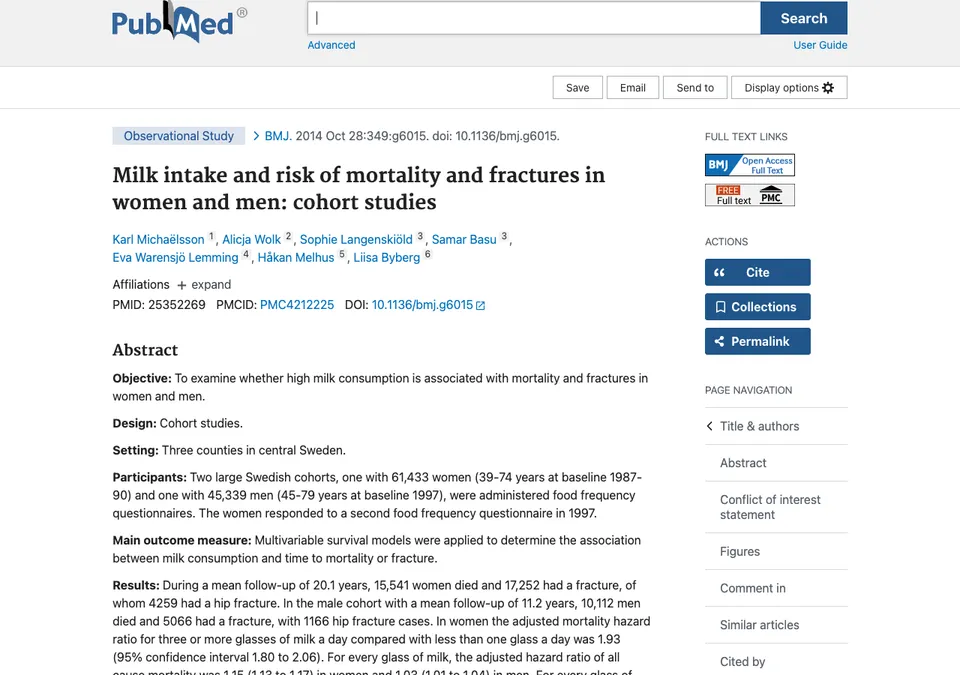
Swedish cohort of 100,000+ adults: women drinking 3+ glasses of milk daily had 93% higher mortality and more hip fractures, with markers of oxidative stress and inflammation rising in parallel.
In the Swedish BMJ 2014 cohort, 61,433 women and 45,339 men were followed for a mean 20.1 years. The adjusted mortality hazard ratio for women drinking three or more glasses of milk daily versus less than one was 1.93 (95% CI 1.80-2.06), with no reduction in fracture risk — hip fracture hazard rose to 1.09 per additional glass in women.
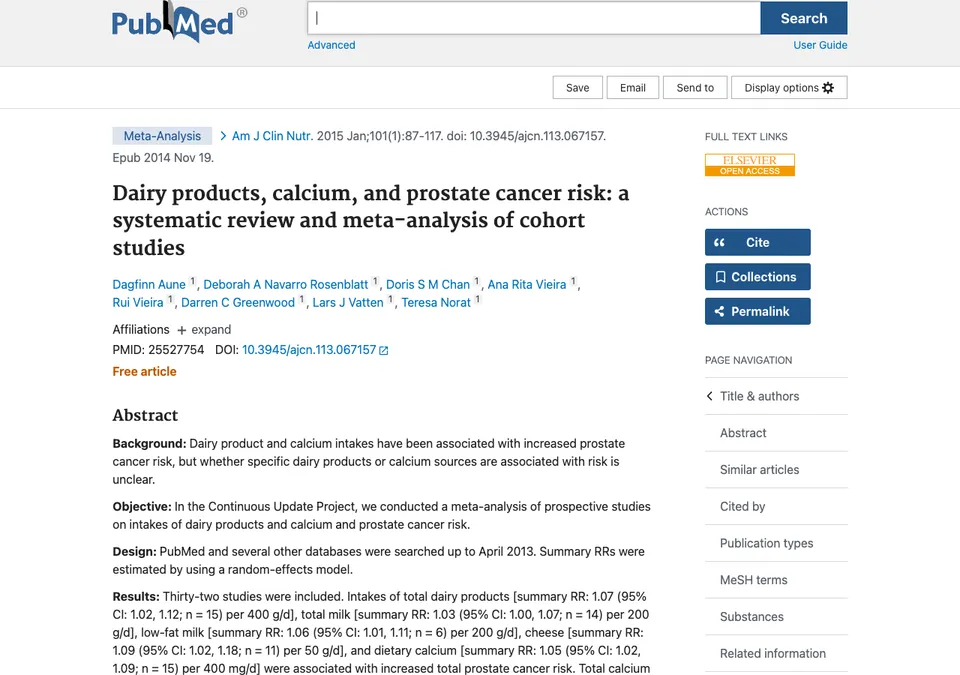
Meta-analysis of 32 cohorts (AJCN 2015): each 400 g/day of dairy raised prostate cancer risk by 7%, with cheese and low-fat milk driving similar increases.
The AJCN 2015 meta-analysis pooled 32 prospective studies. Summary RR for total prostate cancer was 1.07 per 400 g/d of total dairy, 1.09 per 50 g/d of cheese, and 1.06 per 200 g/d of low-fat milk. Dairy calcium — but not non-dairy or supplemental calcium — drove the association.
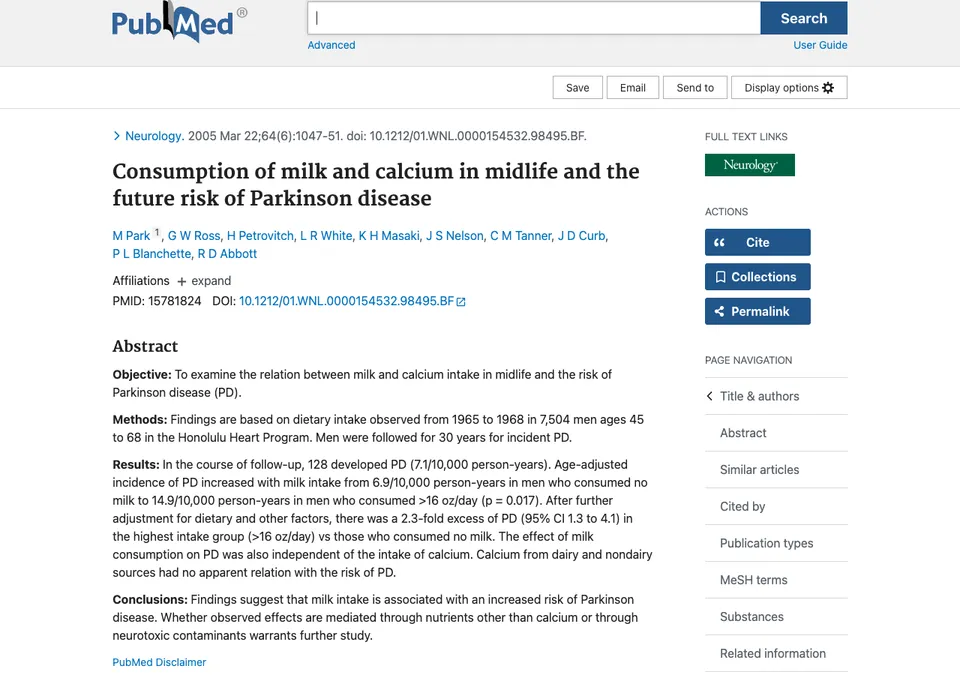
Honolulu Heart Program (Neurology 2005): men drinking more than 16 oz of milk daily in midlife had a 2.3-fold higher risk of Parkinson's disease over 30 years, independent of calcium.
The Honolulu Heart Program (Neurology 2005) followed 7,504 men aged 45-68 for 30 years. Age-adjusted Parkinson's incidence rose from 6.9 per 10,000 person-years among non-milk-drinkers to 14.9 among men consuming more than 16 oz/day; the highest-intake group carried a 2.3-fold excess, independent of calcium.
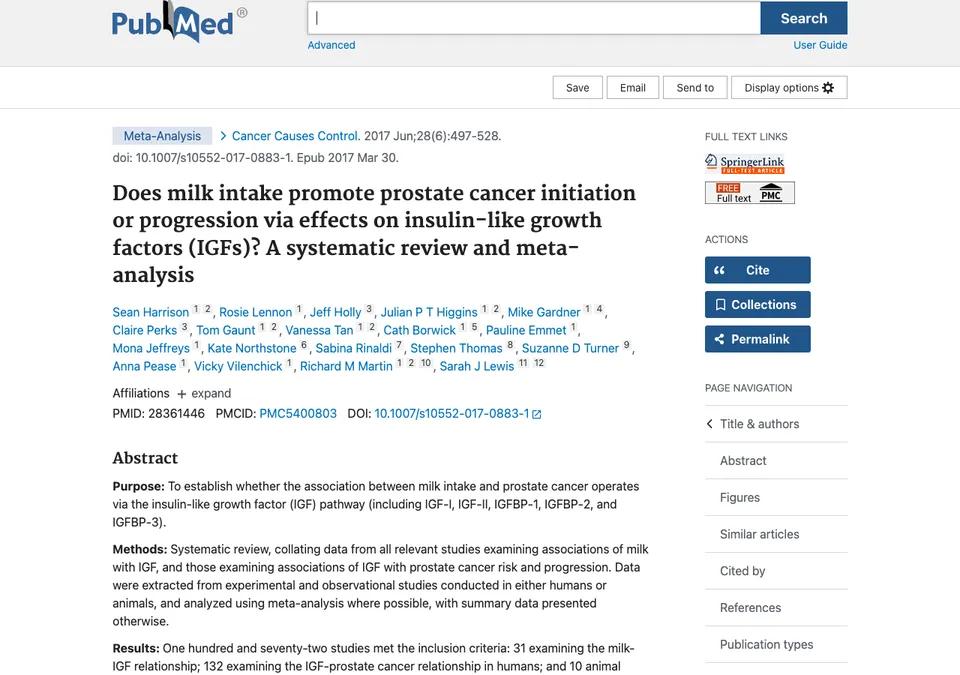
Systematic review of 172 studies: milk intake raises circulating IGF-1, and higher IGF-1 in turn increases prostate cancer risk.
The 2017 Cancer Causes & Control systematic review screened 172 studies. It found moderate evidence that milk intake raises IGF-I (0.10 SD increase per 1 SD of milk). Across 51 human studies, higher IGF-I tracked with greater prostate cancer risk (OR 1.09). The authors conclude IGF-I is a plausible mechanism underlying the milk-prostate cancer link.
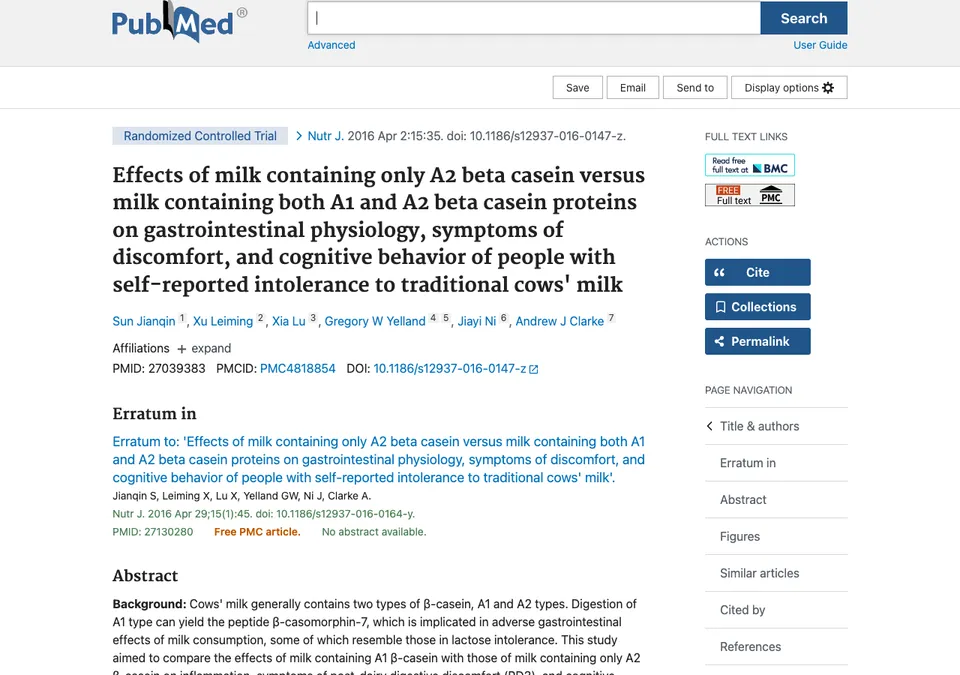
Randomized crossover trial: A1 beta-casein milk produced more gut inflammation, slower transit, beta-casomorphin-7, and worse cognitive performance than A2-only milk.
The double-blind 2×2 crossover trial in Nutrition Journal 2016 enrolled 45 subjects. Compared with milk containing only A2 beta-casein, milk with both A1 and A2 caused significantly worse post-dairy digestive symptoms, higher inflammatory biomarkers and beta-casomorphin-7, longer gastrointestinal transit, and lower short-chain fatty acids.
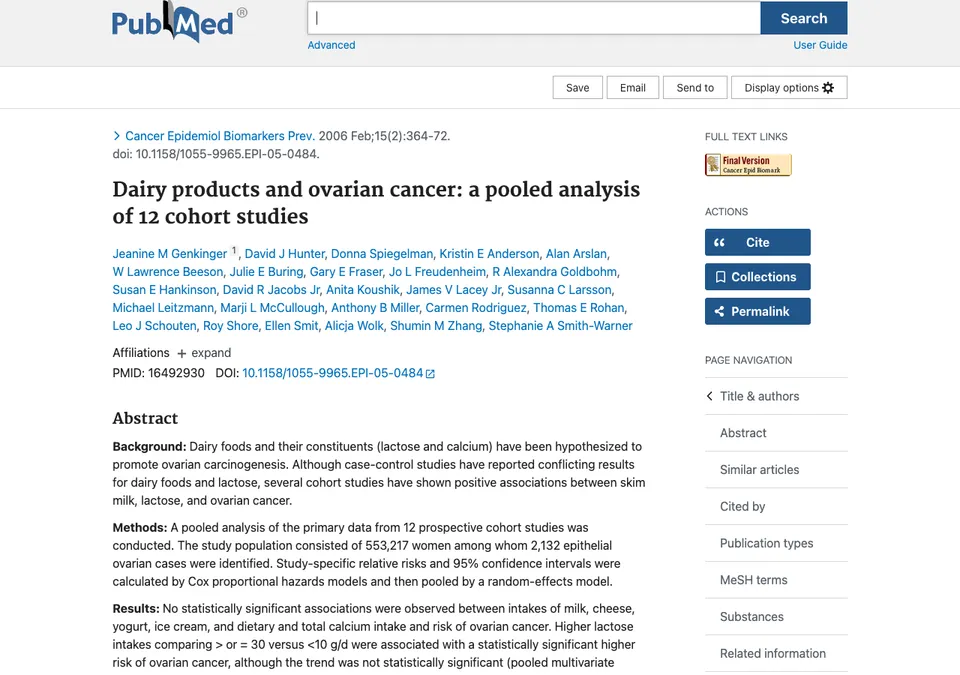
Pooled analysis of 12 cohorts and 553,000 women: lactose intake ≥30 g/day raised ovarian cancer risk by 19% compared with <10 g/day.
The 2006 Cancer Epidemiology, Biomarkers & Prevention pooled analysis combined 12 prospective cohorts covering 553,217 women and 2,132 epithelial ovarian cancer cases. Lactose intake ≥30 g/day versus <10 g/day was associated with a statistically significant higher risk of ovarian cancer (pooled RR 1.19) — a level equivalent to three or more milk servings per day.
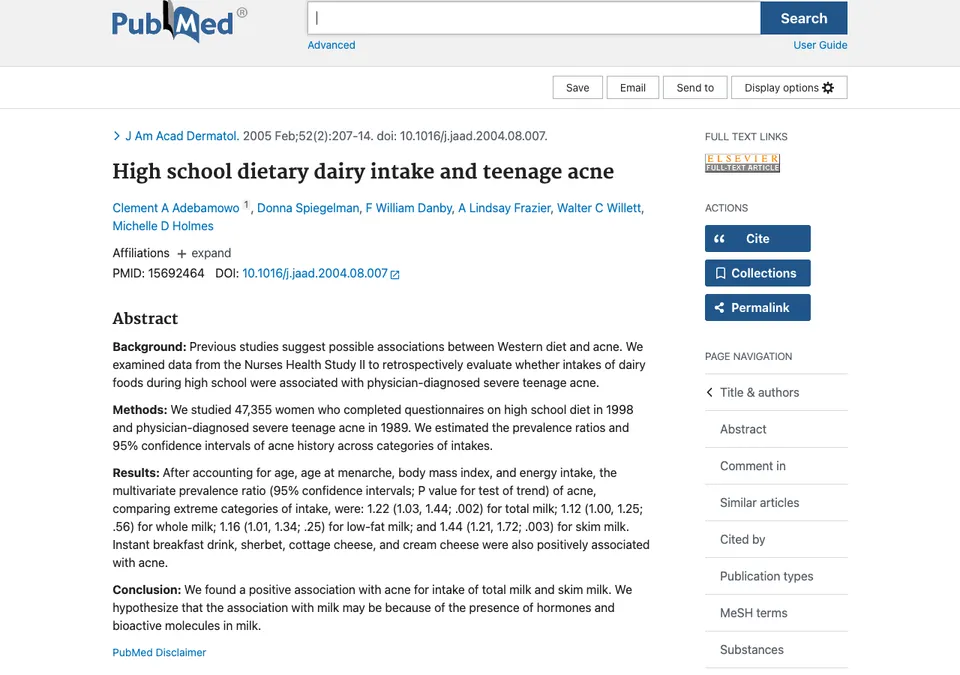
Nurses' Health Study II: high school milk intake was linked to severe teenage acne, with skim milk showing a 44% higher prevalence ratio.
In a retrospective analysis of 47,355 women in the Nurses' Health Study II, the multivariate prevalence ratio for severe teenage acne comparing extreme categories was 1.22 for total milk and 1.44 for skim milk. The authors attributed the association to hormones and bioactive molecules in milk.