Foods
The Hazards of Industrial Chicken
The bird sold under the name 'chicken' today is a different animal from the one our grandparents ate. It is raised on routine antibiotics and (until recently) arsenical drugs, carries multidrug-resistant bacteria that leak into the human food chain, delivers more energy as fat than as protein, and forms potent carcinogens when grilled or pan-fried.
Dr. Diaa's words
Because of intensive production methods and antibiotics, modern chicken breast has turned into something like wood — indigestible — and it causes serious physical and psychological harm in children and adults, including nightmares and panic attacks.
The chicken on today's plate is not the bird our grandparents knew. It has lived a few weeks in a crowded shed, eaten feed laced with routine antibiotics, and — until very recently — feed dosed with arsenical drugs. In Clinical Infectious Diseases (2011), Waters and Price tested 136 US meat and poultry samples and found Staphylococcus aureus on 47 percent of them, with 52 percent of the isolates multidrug-resistant. The same year, Dutch researchers reported in Clinical Microbiology and Infection that 94 percent of retail chicken samples carried ESBL-producing E. coli, and 39 percent of those strains were genetically indistinguishable from bacteria isolated from human blood cultures.
In Environmental Health Perspectives (2013), Nachman's team showed that conventional chicken contained two to three times the inorganic arsenic of organic chicken, and cooking concentrated it further. A 2017 NHANES analysis of 3,329 Americans then linked poultry intake to measurably higher urinary arsenic. The pressure is global: Van Boeckel and colleagues estimated in PNAS (2015) that 63,151 tons of antibiotics were used in food animals in 2010, projected to climb 67 percent by 2030. The plasmid-borne colistin-resistance gene mcr-1 — breaching our last-resort antibiotic — was found by Liu and colleagues in 21 percent of sampled Chinese animals before reaching human patients. Meanwhile, in Public Health Nutrition (2010), Wang documented that the modern broiler now delivers more calories from fat than from protein, with an omega-6 to omega-3 ratio as high as 9:1 rather than the recommended 2:1. Grilling or pan-frying that breast then generates the carcinogen PhIP at concentrations reaching 480 ng/g. This is not the tayyib food of tradition.
What the research shows
7 / 19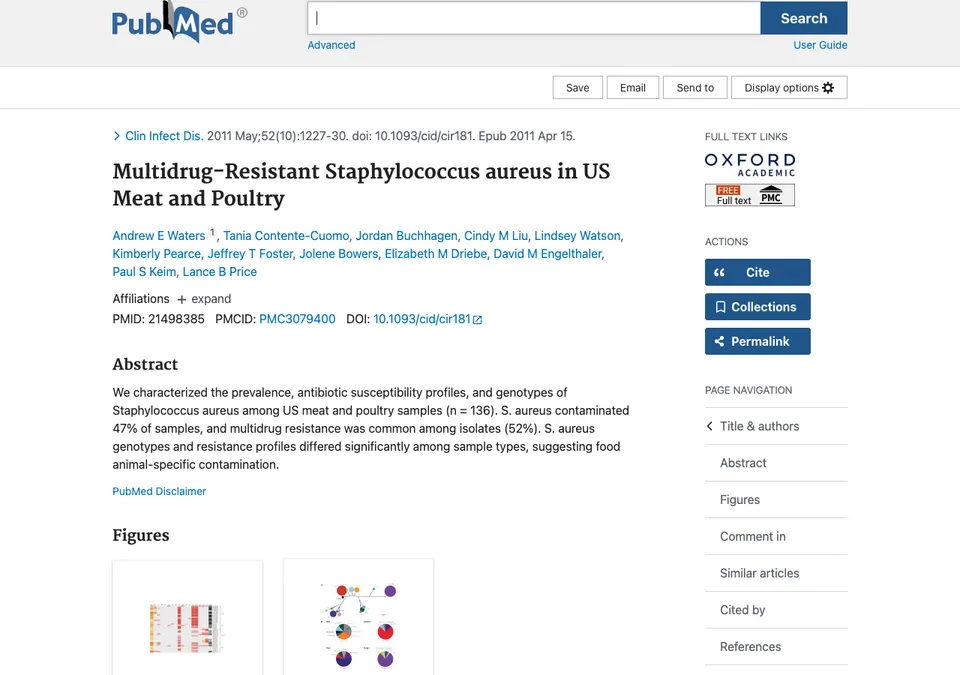
Staphylococcus aureus contaminated 47% of US retail meat and poultry samples; 52% of isolates were multidrug-resistant.
S. aureus contaminated 47% of samples, and multidrug resistance was common among isolates (52%); genotypes differed by sample type, suggesting food-animal-specific contamination.
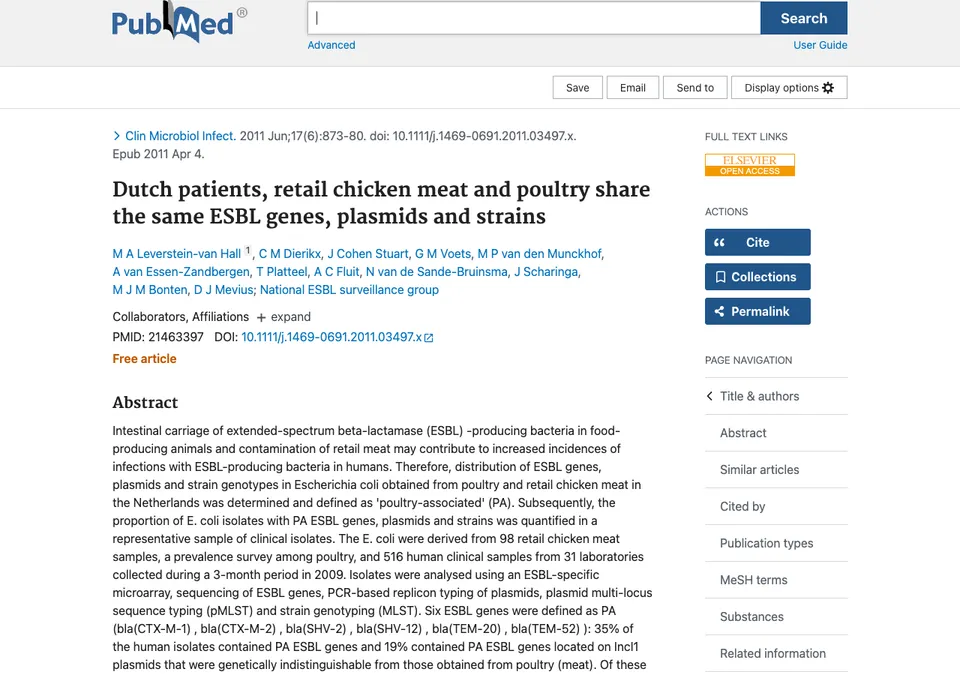
94% of Dutch retail chicken carried ESBL-producing E. coli, with 39% of strains genetically identical to those in human clinical isolates.
94% of retail meat samples contained ESBL-producing isolates; 39% belonged to E. coli genotypes also present in human samples — suggestive of transmission of ESBL genes, plasmids and strains from poultry to humans through the food chain.
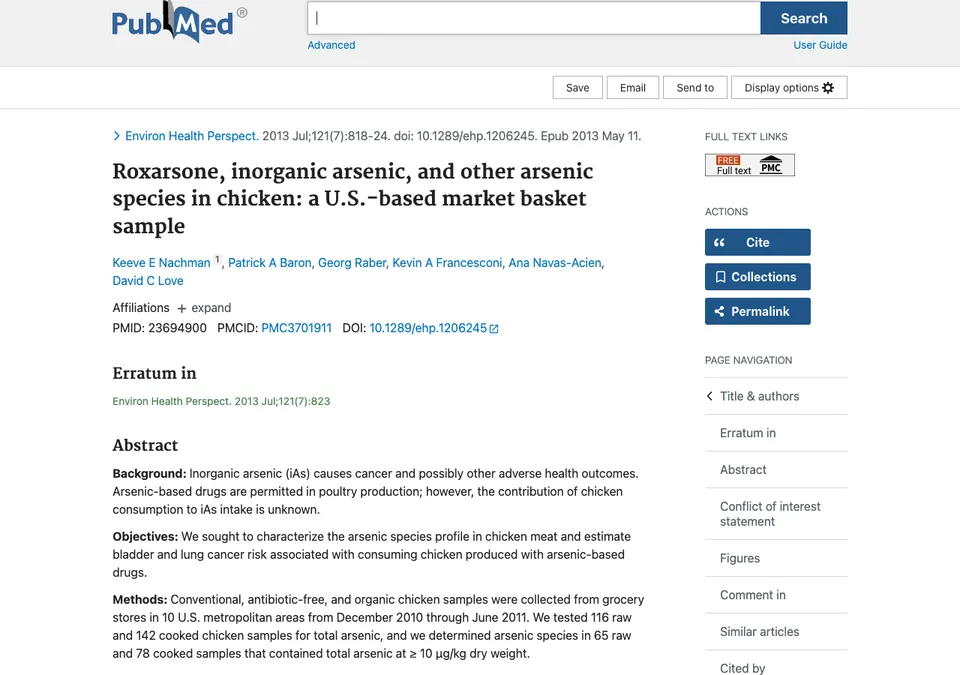
Conventional US chicken contained two to three times the inorganic arsenic of organic chicken; roxarsone-positive samples had significantly higher carcinogenic arsenic, and cooking raised concentrations further.
Inorganic arsenic was higher in conventional samples (geometric mean 1.8 µg/kg) than organic (0.6 µg/kg); roxarsone was detected in 20 of 40 conventional samples, and cooking increased inorganic arsenic concentrations.
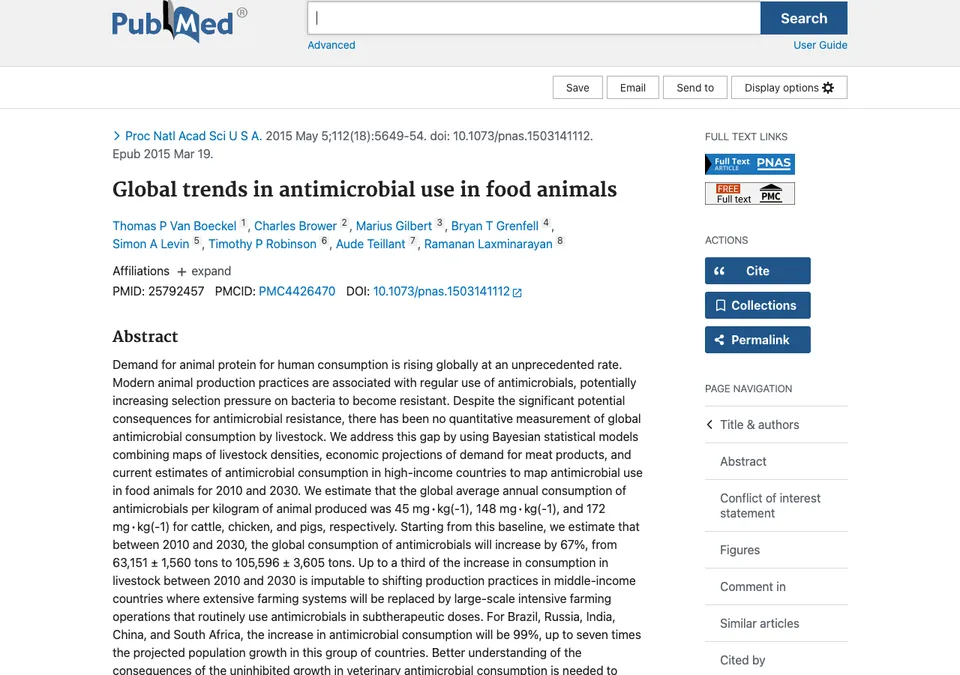
Global antibiotic use in livestock was 63,151 tons in 2010 and projected to rise 67% by 2030, driven largely by intensive poultry and pig farming.
Global antimicrobial use in food animals averaged 148 mg/kg for chicken, with consumption projected to rise 67% between 2010 and 2030 (from 63,151 to 105,596 tons); up to one-third of the rise is from middle-income countries shifting to intensive farming.
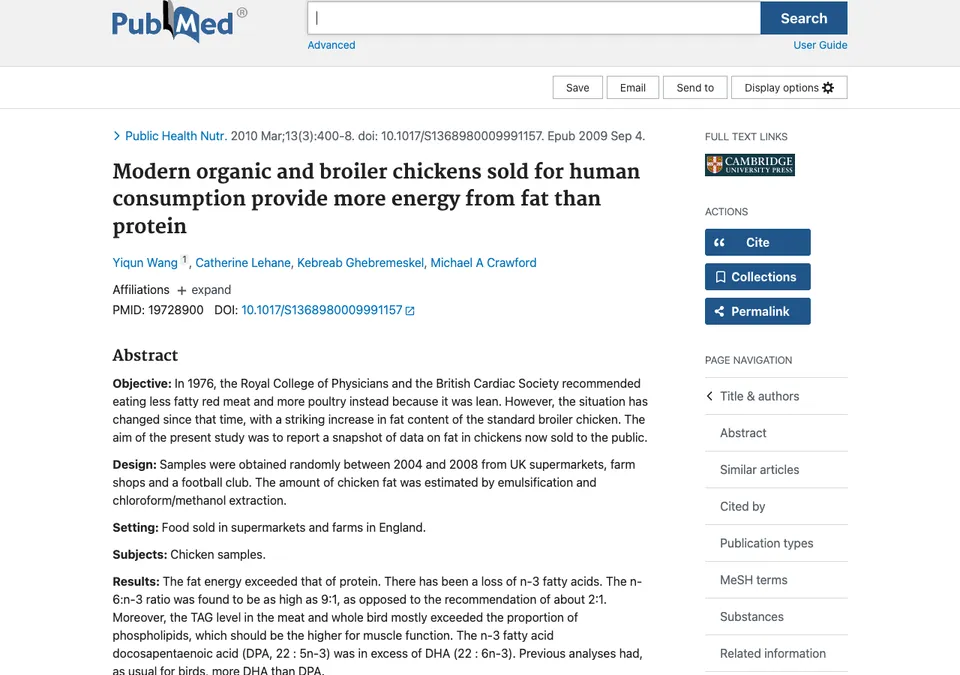
Modern broiler chicken now provides more energy from fat than from protein, with an omega-6 to omega-3 ratio reaching 9:1 versus the recommended 2:1.
Fat energy exceeded protein energy in the modern broiler, n-3 fatty acids were lost, and the n-6:n-3 ratio reached 9:1 instead of the recommended 2:1.
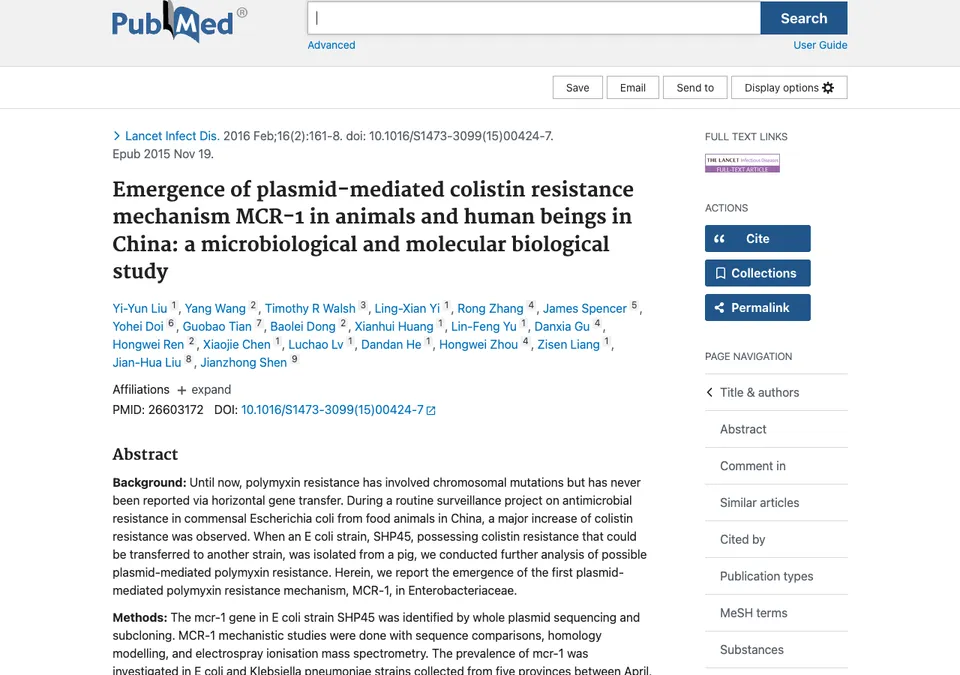
Plasmid-borne mcr-1, conferring resistance to the last-resort antibiotic colistin, was found in 21% of Chinese livestock and 15% of raw meat, then in human patients.
The plasmid-mediated mcr-1 gene appeared in 21% of sampled animals and 15% of raw meat in China, then in human isolates — heralding the breach of our last-resort antibiotic class, the polymyxins.
![High concentrations of the carcinogen 2-amino-1-methyl-6-phenylimidazo-[4,5-b]pyridine (PhIP) occur in chicken but are dependent on the cooking method](/papers/7553619.webp)
Pan-fried, broiled, or grilled chicken breasts contained the carcinogen PhIP at 12 to 480 ng/g, rising with cooking time and surface browning; boiled/stewed chicken contained none.
PhIP, a colon and breast carcinogen, was found in chicken breasts at 12 to 480 ng/g when pan-fried, broiled, or grilled — but not in stewed or roasted chicken — and rose with longer cooking time and surface browning.