Medications & supplements
Insulin Injections: When Intensification Harms
Insulin is life-saving in type 1 diabetes, but in type 2 diabetes large randomized trials and long-term cohorts have linked aggressive dosing and tight-control targets to higher mortality, severe hypoglycemia, weight gain, cardiovascular events, and signals of cancer risk.
Dr. Diaa's words
Dr Diaa Al-Awady calls injected insulin the single hormone that causes obesity and blocks fat breakdown, claims it halts the Krebs cycle, blocks protein and DNA synthesis, and triggers clots and seizures. He describes it as the principal cause of obesity and a driver of atherosclerosis.
Dr Al-Awady's blanket condemnation of insulin injections contains a kernel of truth for type 2 diabetes but ignores that type 1 diabetes is an absolute insulin-deficiency disease that is uniformly fatal without injected insulin. The literature he cites against insulin is real: the ACCORD trial was halted early after intensive glucose lowering raised all-cause mortality 22 percent in 10,251 type 2 patients, and Bonds' ACCORD sub-analysis tied symptomatic severe hypoglycemia to roughly double the mortality in both arms.
Currie's 84,622-patient UK cohort found insulin monotherapy carried more than double the all-cause mortality of metformin (HR 2.20) along with higher cancer, renal, and cardiovascular events. Holden then showed a clean dose-response: every additional unit per kg per day raised mortality 54 percent. Hemkens' 127,031-patient German cohort detected a dose-dependent rise in cancer with glargine versus human insulin, and Roumie's JAMA analysis found adding insulin after metformin raised the composite of cardiovascular events and death 30 percent compared with adding a sulfonylurea.
Bottom line: in type 1 diabetes insulin is non-negotiable. In type 2 diabetes the evidence supports caution with intensive dosing, prioritising metformin, weight loss and dietary change before escalation, and aiming for moderate rather than near-normal HbA1c. That is not the same as Al-Awady's claim that injected insulin is a poison.
What the research shows
6 / 23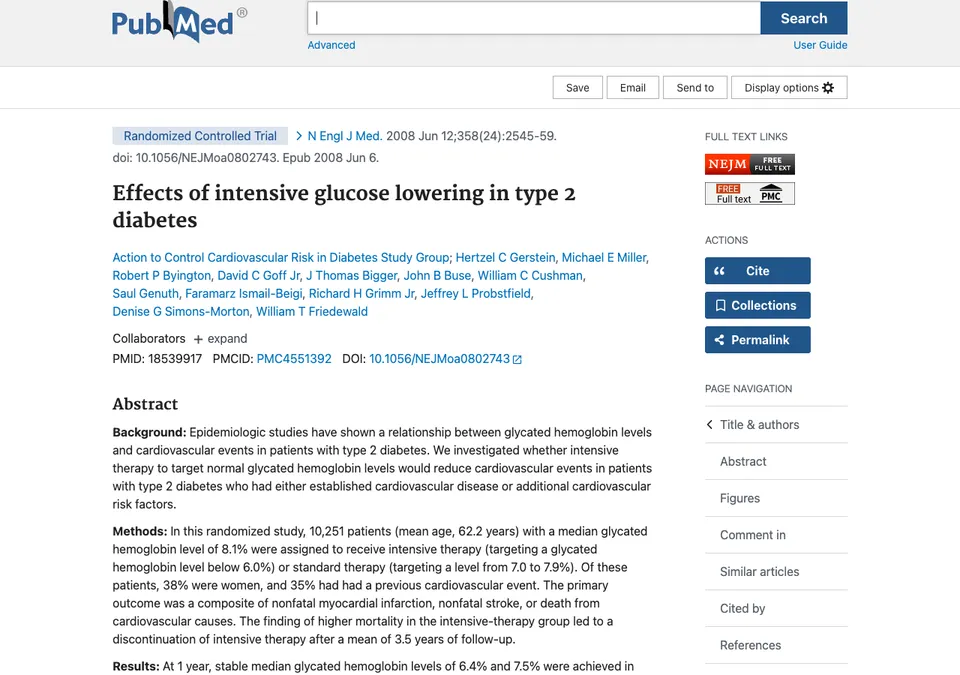
ACCORD (NEJM 2008): intensive glucose lowering raised all-cause mortality 22% in 10,251 type 2 patients, prompting early trial stop.
257 patients in the intensive-therapy group died, as compared with 203 patients in the standard-therapy group (HR 1.22; P=0.04). The finding of higher mortality in the intensive-therapy group led to discontinuation of intensive therapy after a mean of 3.5 years.
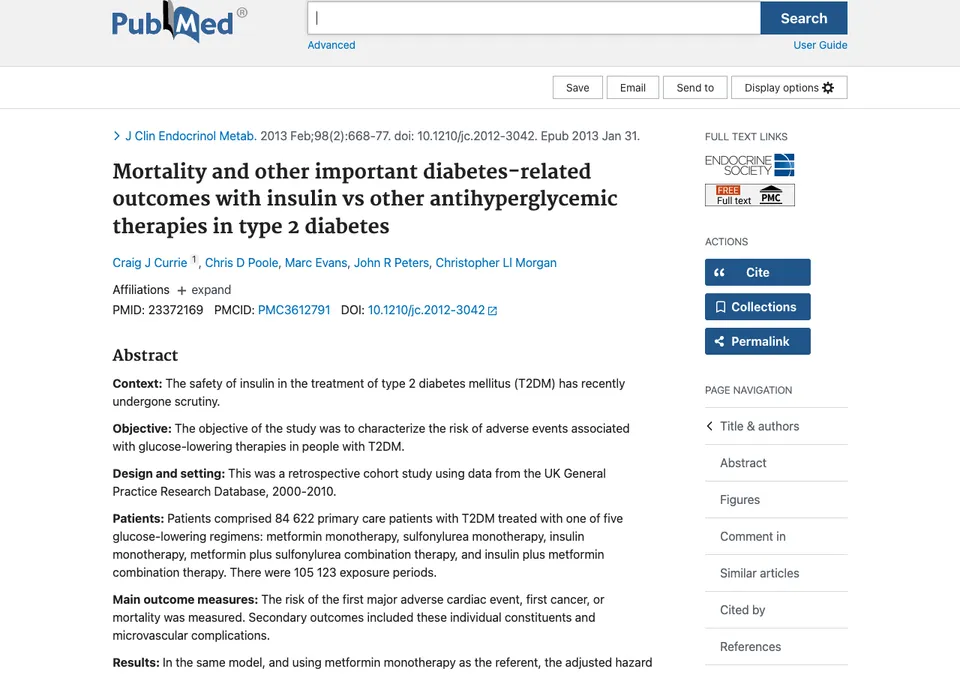
Currie (JCEM 2013): in 84,622 UK patients, insulin monotherapy roughly doubled all-cause mortality (HR 2.20) and raised MI, stroke, renal failure and cancer vs metformin.
Insulin monotherapy had increased adjusted hazard ratios: myocardial infarction 1.954, stroke 1.432, renal complications 3.504, neuropathy 2.146, cancer 1.437, and all-cause mortality 2.197.
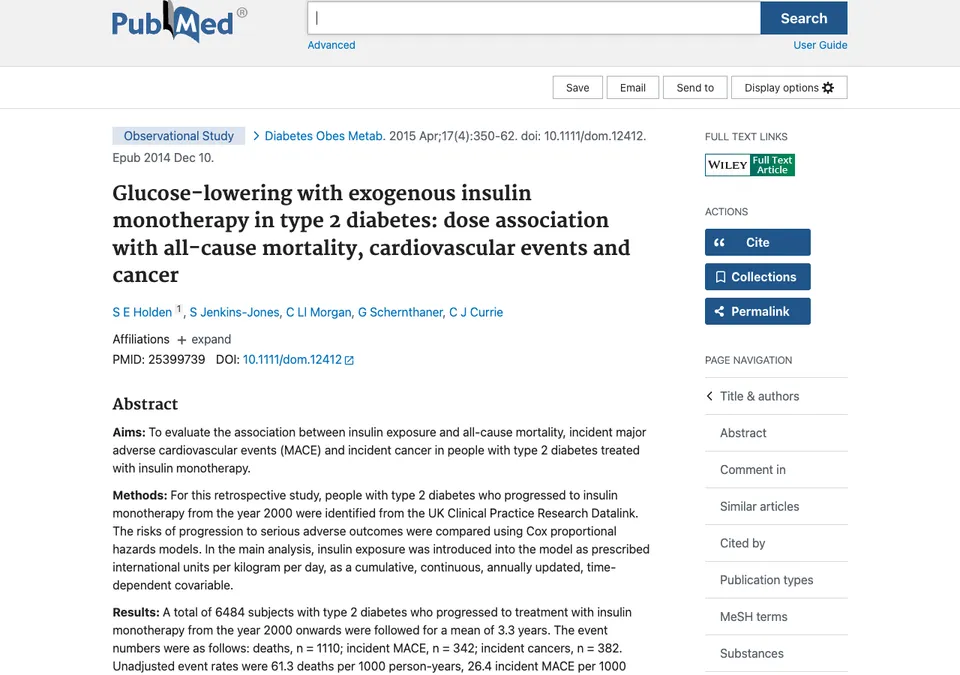
Holden (DOM 2015): in 6,484 insulin-monotherapy patients each extra IU/kg/day raised mortality 54%, MACE 37%, and cancer 35%.
The adjusted hazard ratios in relation to 1-unit increases in insulin dose were 1.54 for all-cause mortality, 1.37 for MACE and 1.35 for cancer in 6,484 type 2 patients progressing to insulin monotherapy.
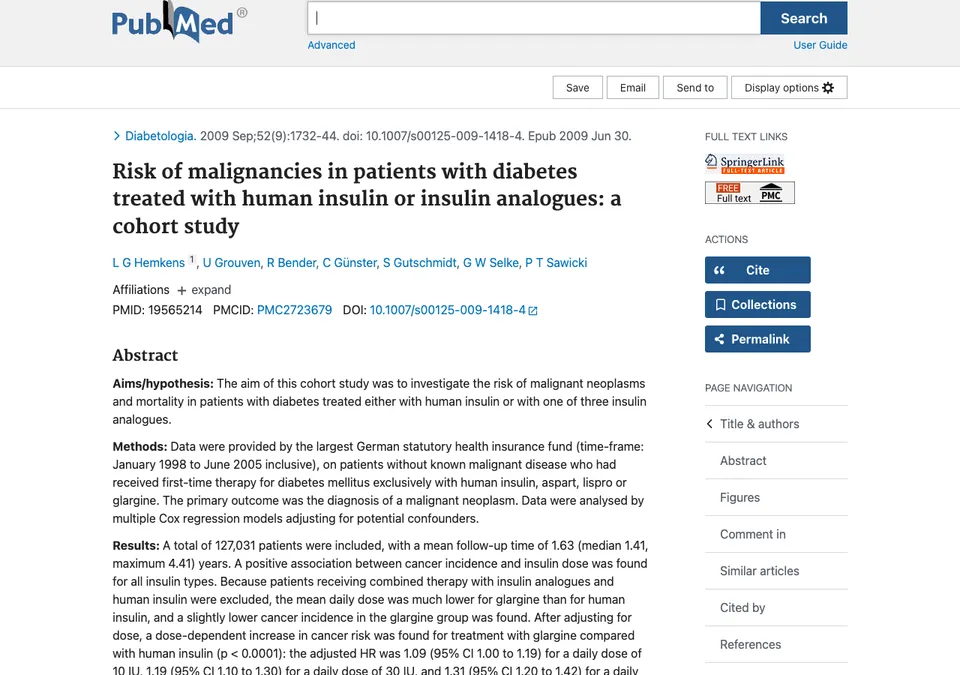
Hemkens (Diabetologia 2009): in 127,031 German patients, insulin glargine showed a dose-dependent rise in cancer incidence vs human insulin.
After adjusting for dose, a dose-dependent increase in cancer risk was found for treatment with glargine compared with human insulin: adjusted HR 1.09 for 10 IU/day, 1.19 for 30 IU/day, and 1.31 for 50 IU/day.
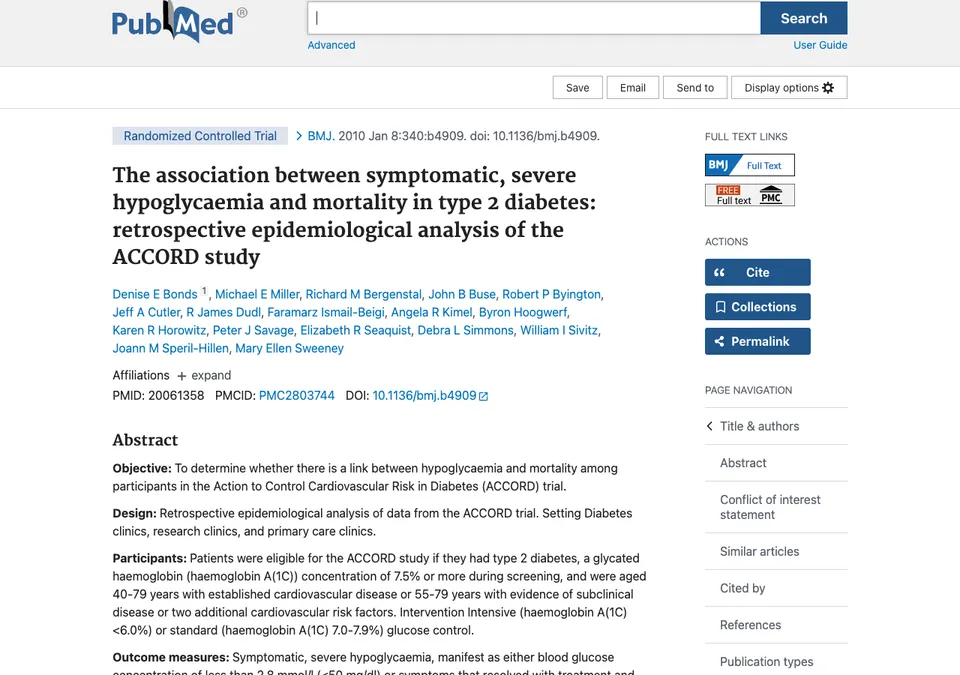
Bonds (BMJ 2010): in ACCORD's 10,194 patients, symptomatic severe hypoglycemia was tied to higher mortality in both arms.
Unadjusted annual mortality in the intensive arm was 2.8% in those who had one or more hypoglycemic episodes requiring assistance vs 1.2% in those without (HR 1.41); a similar pattern was seen in the standard arm (3.7% vs 1.0%, HR 2.30).
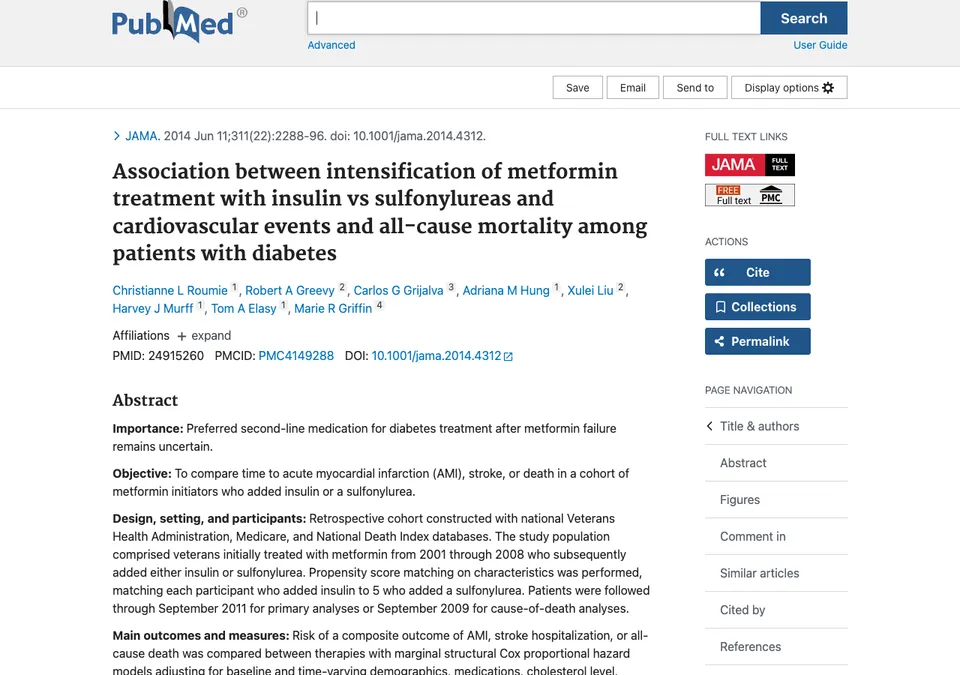
Roumie (JAMA 2014): adding insulin to metformin raised the composite of MI/stroke/death 30% and all-cause mortality 44% vs adding a sulfonylurea.
Among 178,341 metformin patients, addition of insulin vs a sulfonylurea was associated with a 30% increase in the composite of AMI, stroke, or all-cause death (adjusted HR 1.30).