Medications & supplements
Oral and Injectable Diabetes Drugs: Class-by-Class Documented Harms
Every major class of glucose-lowering drug — metformin, sulfonylureas, thiazolidinediones, DPP-4 inhibitors, SGLT-2 inhibitors and GLP-1 agonists — carries a documented signal of serious harm in the peer-reviewed literature: FDA black-box warnings, trials halted early for excess deaths, amputations, gastroparesis, Fournier gangrene, heart failure, and vitamin B12 depletion.
Dr. Diaa's words
Drugs like Glucophage (metformin) and Forxiga (dapagliflozin) disrupt the body's normal metabolic processes and cause complications such as lactic or ketotic acidosis. Insulin and diabetes drugs pull glucose out of the blood and cells, producing an internal famine; injectable diabetes and weight-loss drugs can trigger pancreatitis and cysts.
Read drug by drug, the diabetes pharmacopoeia reveals a pattern impossible to dismiss: every class carries a pharmacovigilance scar. Rosiglitazone (Avandia) raised myocardial infarction by 43% across Nissen and Wolski's 42-trial meta-analysis (NEJM 2007), prompting an FDA black-box warning, and RECORD later confirmed a doubling of heart-failure events (HR 2.10). On the opposite shelf, the BMJ population cohort of 145,806 patients (Tuccori 2016) tied pioglitazone (Actos) to a 63% rise in bladder cancer.
Sulfonylureas, in Roumie's 253,690-veteran cohort (Annals 2012), produced 21% more myocardial infarctions, strokes and deaths than metformin. The CANVAS Program (Neal, NEJM 2017) showed canagliflozin (Invokana) nearly doubled lower-limb amputations (HR 1.97), and Bersoff-Matcha's FDA review found 55 Fournier-gangrene cases with SGLT-2 inhibitors in six years versus only 19 with every other antiglycemic combined across 35 years.
Metformin itself — the Glucophage that Dr. Diaa names by brand — was shown by de Jager's randomized trial (BMJ 2010) to drop serum B12 by 19% with a 7.2 percentage-point absolute deficiency excess over 4.3 years (NNH 13.8); the 13-year DPPOS follow-up confirmed the cumulative risk. And the ACCORD trial — halted early because intensive glucose lowering raised all-cause mortality 22% and cardiovascular death 35% — stands as the field's own warning that 'lower the number at any cost' is itself a documented harm.
What the research shows
7 / 18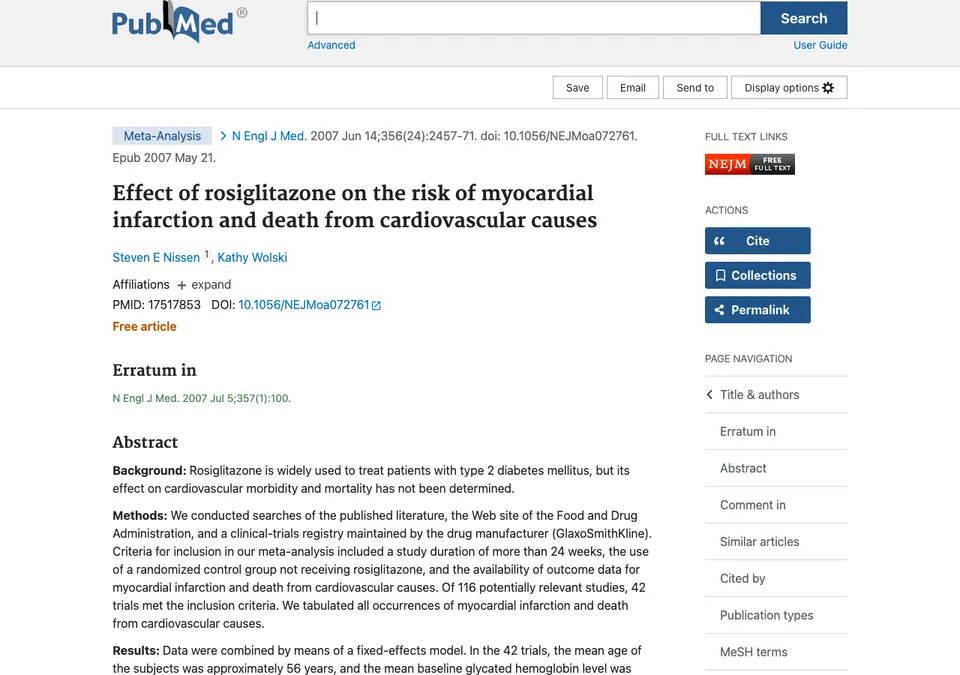
Nissen & Wolski meta-analysis of 42 trials: rosiglitazone raised myocardial infarction risk 43% and cardiovascular mortality 64% — basis for FDA black-box warning.
In the rosiglitazone group, the odds ratio for myocardial infarction was 1.43 (P=0.03), and for death from cardiovascular causes 1.64. Patients and providers should consider the potential for serious adverse cardiovascular effects of treatment with rosiglitazone for type 2 diabetes.
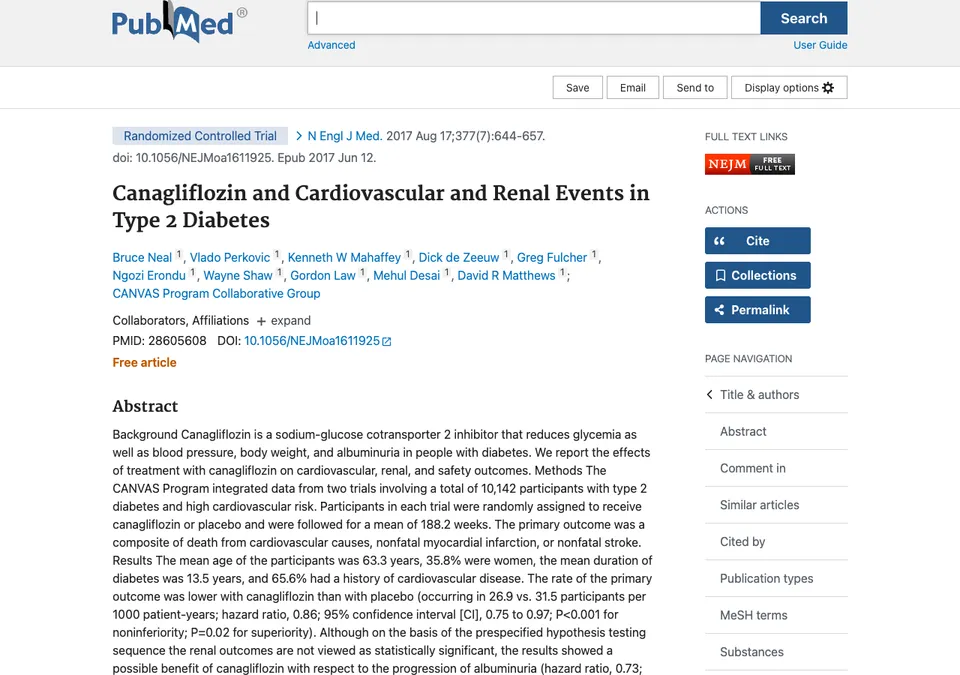
CANVAS Program (10,142 patients): canagliflozin nearly doubled lower-limb amputations (HR 1.97).
Adverse reactions were consistent with the previously reported risks except for an increased risk of amputation (6.3 vs 3.4 participants per 1000 patient-years; HR 1.97); amputations were primarily at the level of the toe or metatarsal.
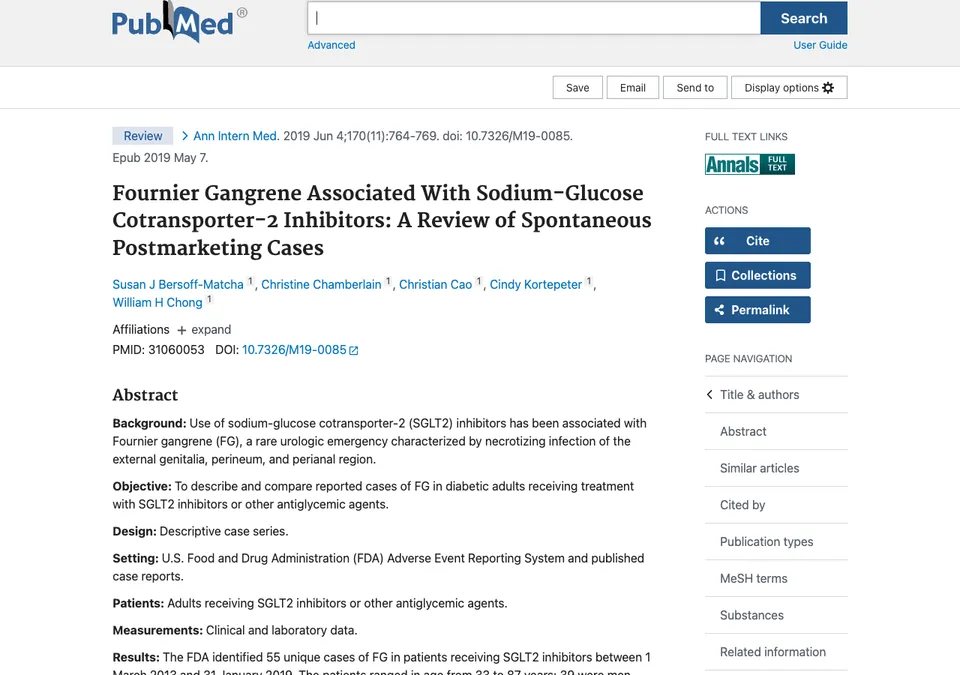
FDA review: 55 Fournier-gangrene cases in SGLT-2 users between 2013–2019 versus only 19 cases across all other diabetes drugs combined over 35 years; three deaths.
The FDA identified 55 unique cases of Fournier gangrene in patients receiving SGLT2 inhibitors between 2013 and 2019. For comparison, the FDA identified 19 FG cases associated with other antiglycemic agents between 1984 and 2019. All patients had surgical debridement; three died.
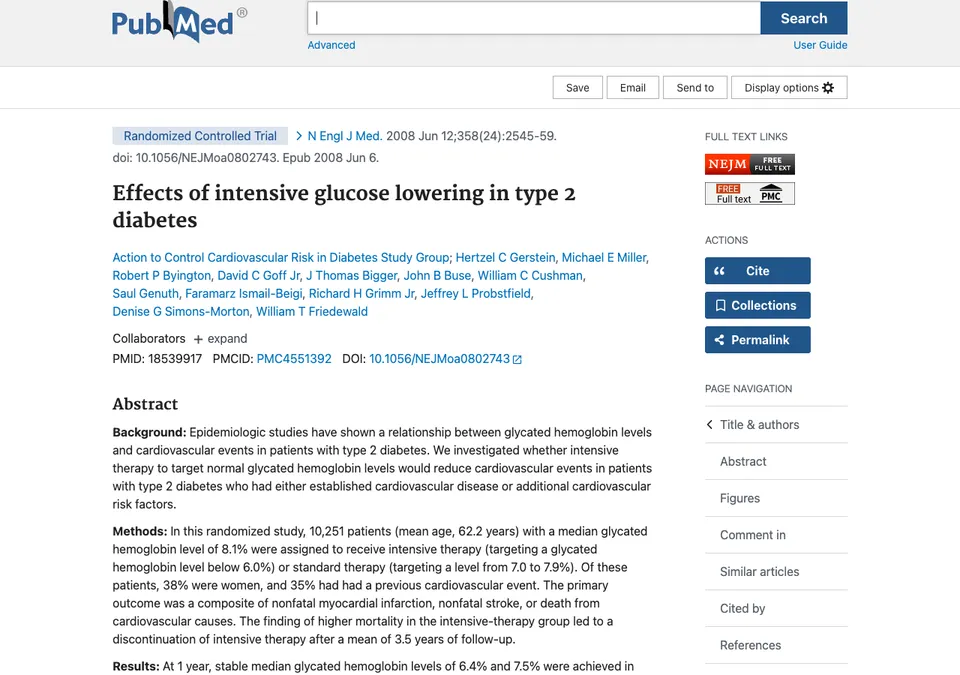
ACCORD (NEJM 2008): intensive glucose lowering raised all-cause mortality 22% in 10,251 type 2 patients, prompting early trial stop.
During follow-up, 257 patients in the intensive-therapy group died, as compared with 203 in the standard-therapy group (HR 1.22; P=0.04). The finding of higher mortality led to discontinuation of intensive therapy after a mean of 3.5 years.
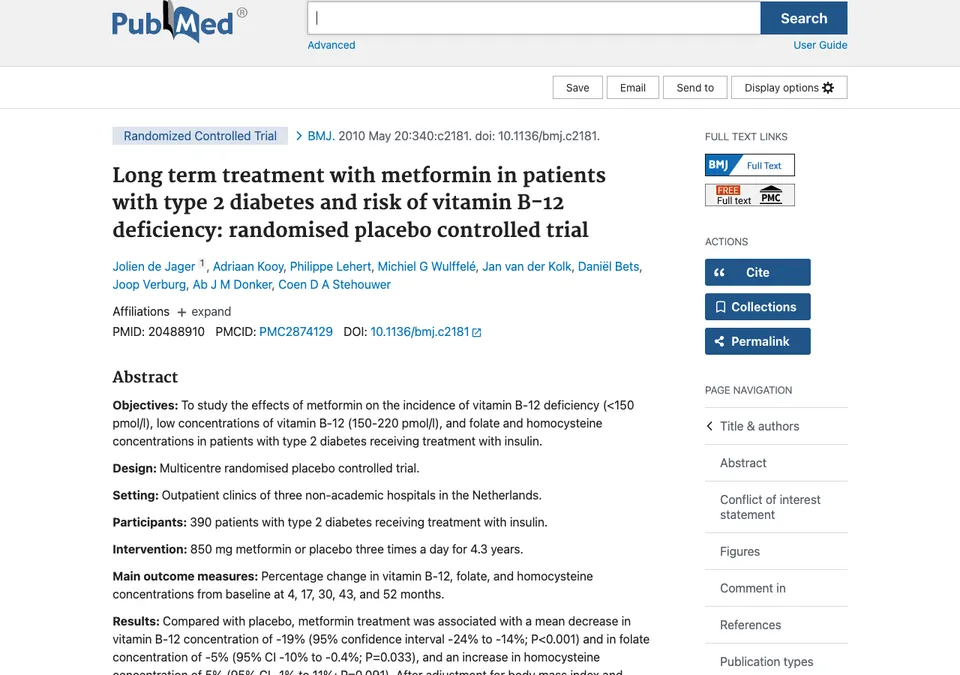
de Jager RCT in 390 insulin-treated type 2 diabetics: metformin cut serum B12 by 19% and increased absolute deficiency by 7.2 percentage points over 4.3 years.
Metformin treatment was associated with a mean decrease in vitamin B-12 concentration of −19% (P<0.001). The absolute risk of vitamin B-12 deficiency at study end was 7.2 percentage points higher in the metformin group than in the placebo group, with a number needed to harm of 13.8 per 4.3 years.
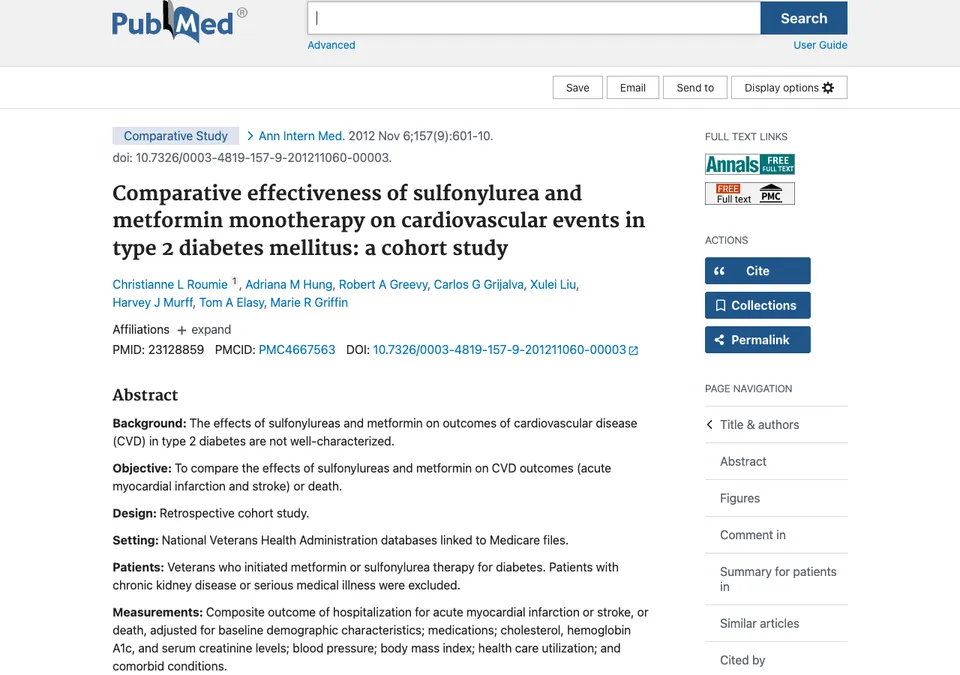
Veterans cohort of 253,690 patients: sulfonylurea therapy carried a 21% higher hazard of MI, stroke, or death versus metformin.
Among 253,690 patients initiating treatment (98,665 sulfonylurea, 155,025 metformin), crude rates of the composite outcome were 18.2 per 1000 person-years with sulfonylureas versus 10.4 with metformin (adjusted HR 1.21).
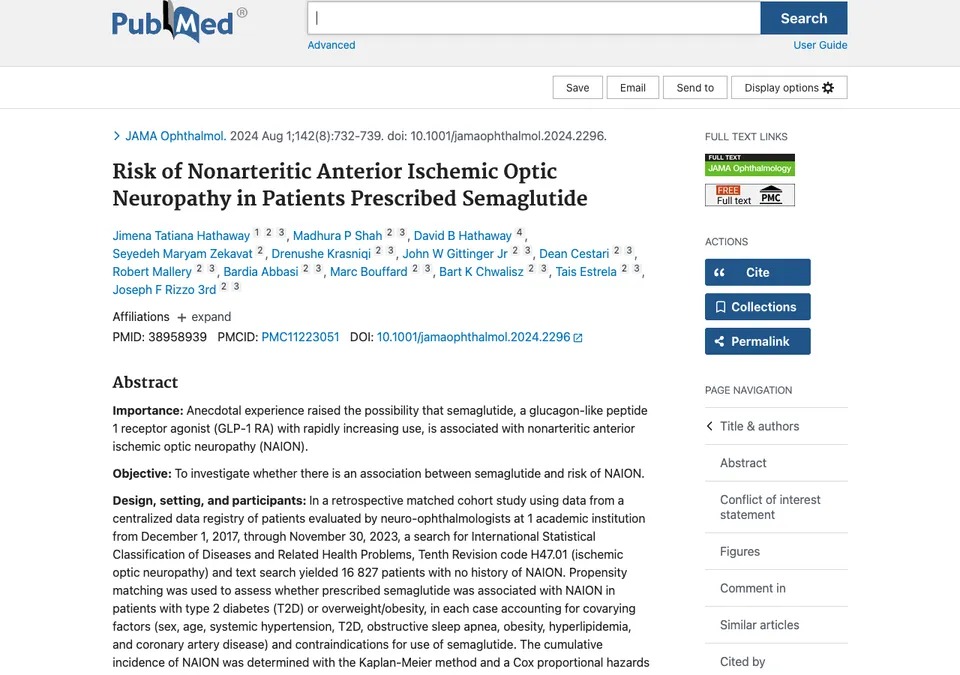
Mass Eye and Ear cohort: semaglutide associated with markedly higher risk of NAION in both diabetic (HR 4.28) and obese populations.
In the type 2 diabetes population, the cumulative incidence of NAION over 36 months was 8.9% in the semaglutide cohort versus 1.8% in the non-GLP-1 RA cohort (HR 4.28; P<0.001).