Medications & supplements
The hazards of oral dietary supplements
When the best-selling oral supplements — calcium, beta carotene, vitamin E, omega-3, multivitamins, glucosamine, selenium, vitamin A — were finally subjected to large, long, placebo-controlled trials, most failed to deliver the benefits promised by their marketing, and several caused clear-cut harm: excess mortality, more lung and prostate cancer, more myocardial infarctions, more atrial fibrillation, more hip fractures, more kidney stones. What was sold as 'prevention' turned, in trial after trial, into a source of injury.
Dr. Diaa's words
Dr. Diaa Al-Awady warns sharply against oral dietary supplements, calling them unnecessary and potentially harmful to the liver, and insists that proper food is the foundation. He rejects whey protein, collagen, creatine and omega-3 capsules alike.
The supplement industry promises what it cannot prove. In Bolland's 2010 BMJ meta-analysis, calcium supplements without vitamin D raised the risk of myocardial infarction by 31%, and the 2011 WHI reanalysis confirmed that adding vitamin D does not erase that harm. Miller's 2005 meta-analysis showed that high-dose vitamin E (≥400 IU/day) increases all-cause mortality by 39 per 10,000 persons. These are not technical footnotes; they are warning flares lit by trials on tens of thousands of people.
For cancer, the CARET trial was stopped early after beta carotene plus vitamin A raised lung cancer incidence in smokers by 28%, and the Finnish ATBC trial reached the same verdict. SELECT found a 17% rise in prostate cancer with 400 IU/day vitamin E. In the Iowa Women's Health Study, multivitamins, iron, copper and folic acid were each linked to higher mortality across 22 years of follow-up. The 2022 USPSTF statement now formally recommends against beta carotene and vitamin E for prevention. When these products are tested rigorously, they fail — or hurt.
What the research shows
7 / 30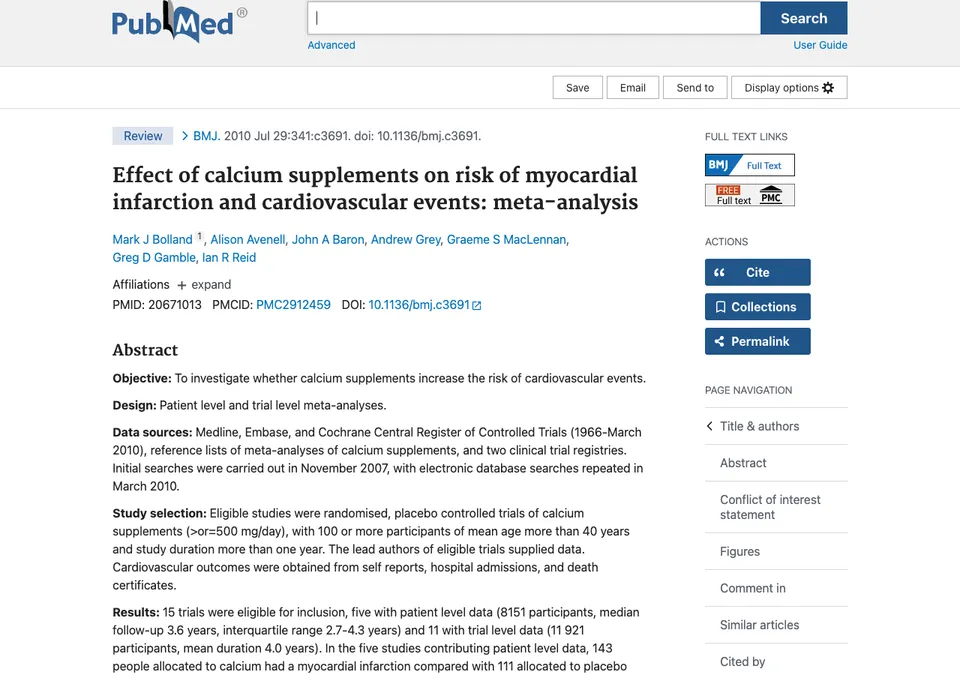
Calcium supplements without vitamin D raised myocardial infarction risk by about 31% in a randomized-trial meta-analysis (Bolland, BMJ 2010).
143 people allocated to calcium had a myocardial infarction compared with 111 allocated to placebo (HR 1.31, P=0.035). Calcium supplements without coadministered vitamin D are associated with an increased risk of myocardial infarction.
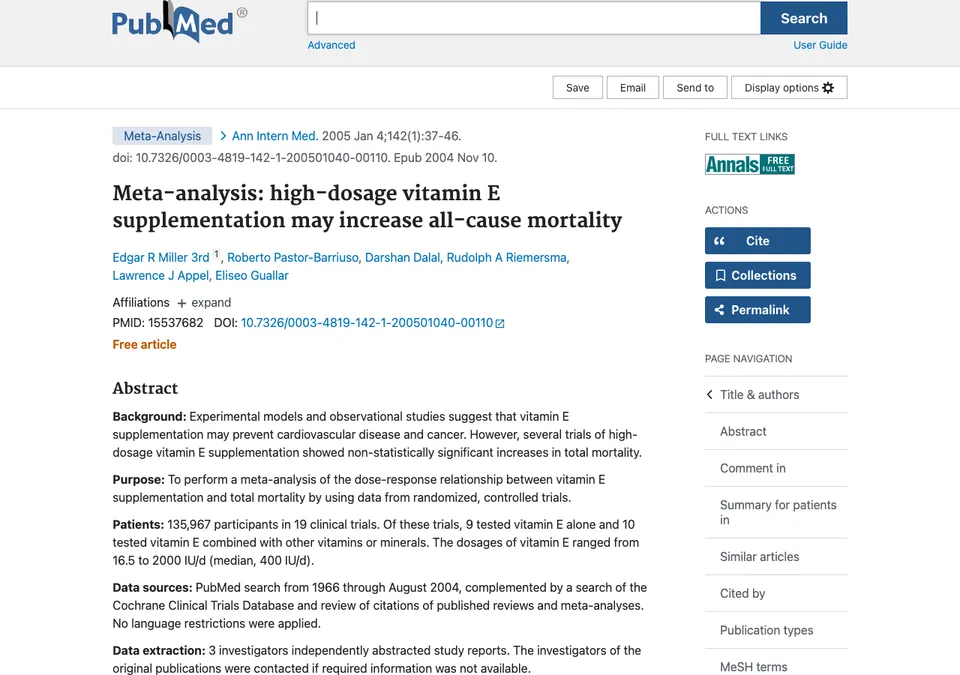
High-dose vitamin E (≥400 IU/day) increased all-cause mortality by 39 per 10,000 persons across 19 trials (Miller, Ann Intern Med 2005).
9 of 11 trials testing high-dosage vitamin E (≥400 IU/d) showed increased risk for all-cause mortality. The pooled risk difference was 39 per 10,000 persons (P=0.035). High-dosage vitamin E supplements may increase all-cause mortality and should be avoided.
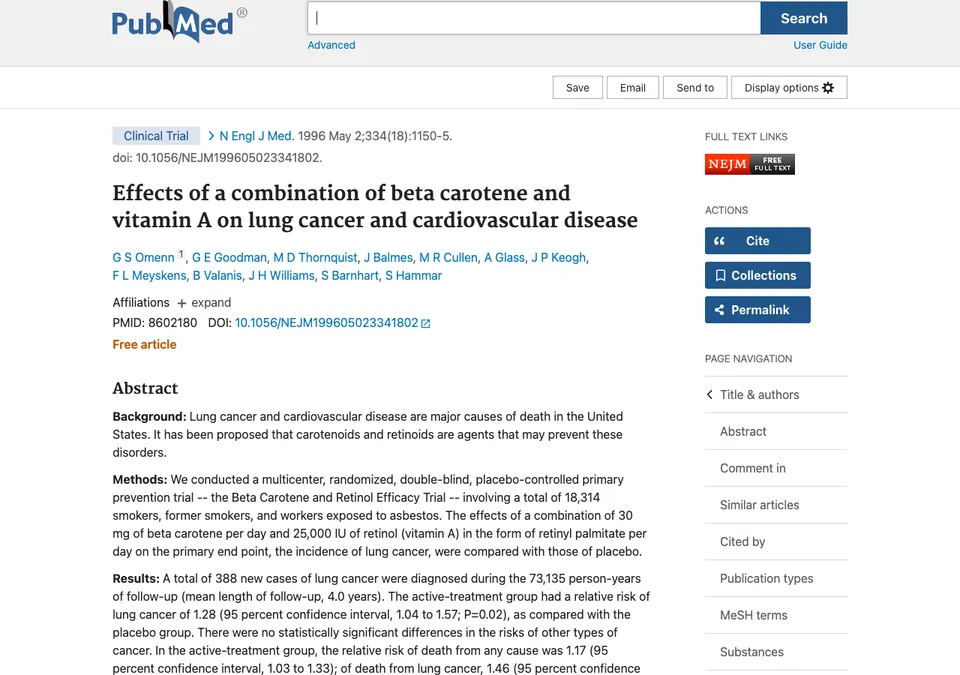
The CARET trial was stopped early after beta carotene plus vitamin A raised lung cancer and overall mortality in smokers (Omenn, NEJM 1996).
The active-treatment group had a relative risk of lung cancer of 1.28 (P=0.02); the relative risk of death from lung cancer was 1.46. On the basis of these findings, the randomized trial was stopped 21 months earlier than planned.
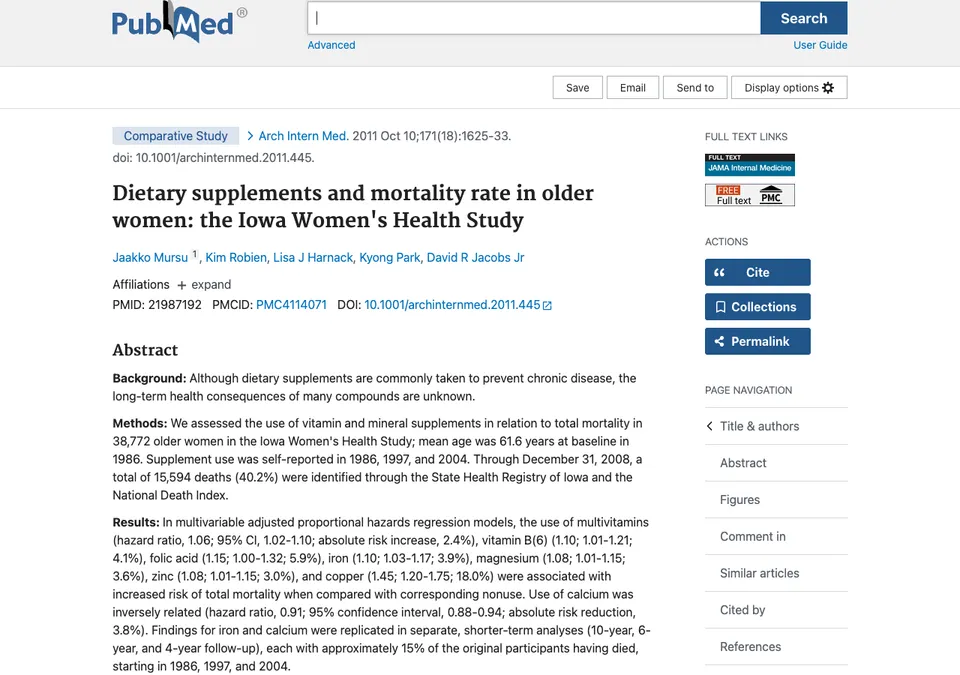
Across 22 years in the Iowa Women's Health Study, multivitamins, iron, folic acid, B6, magnesium, zinc and copper were associated with higher mortality.
Use of multivitamins (HR 1.06), vitamin B6 (1.10), folic acid (1.15), iron (1.10), magnesium (1.08), zinc (1.08) and copper (1.45) were associated with increased risk of total mortality versus nonuse.
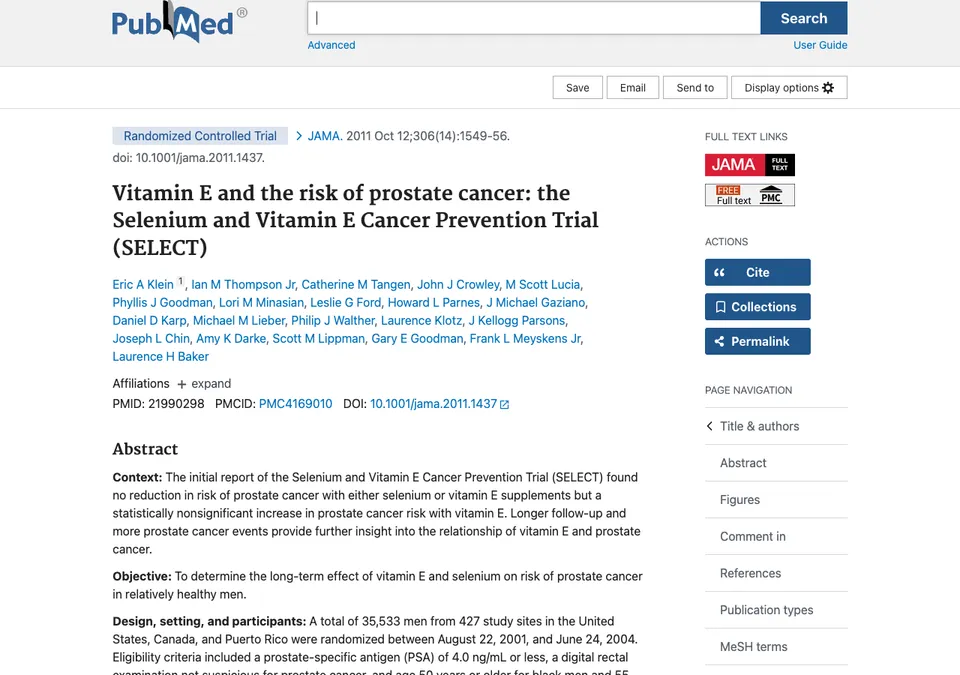
SELECT found vitamin E 400 IU/day significantly increased prostate cancer risk in 35,533 healthy men.
Compared with placebo, 620 men in the vitamin E group developed prostate cancer vs 529 in placebo (HR 1.17, P=0.008). Dietary supplementation with vitamin E significantly increased the risk of prostate cancer among healthy men.
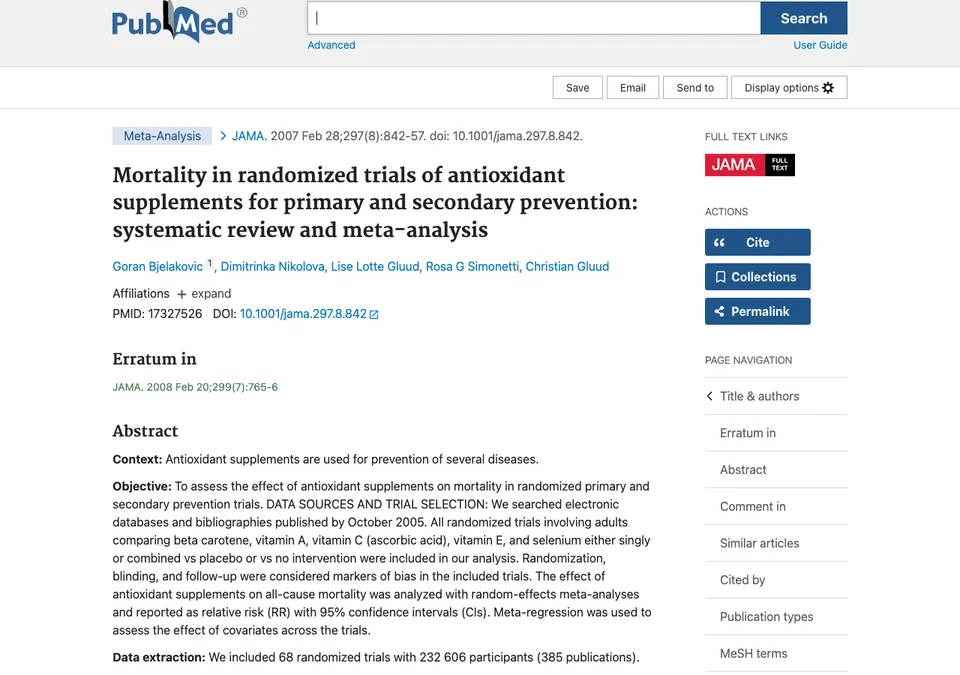
In low-bias trials, beta carotene, vitamin A and vitamin E significantly increased mortality.
In 47 low-bias trials with 180,938 participants, antioxidant supplements significantly increased mortality (RR 1.05). Beta carotene (RR 1.07), vitamin A (RR 1.16), and vitamin E (RR 1.04) significantly increased mortality.
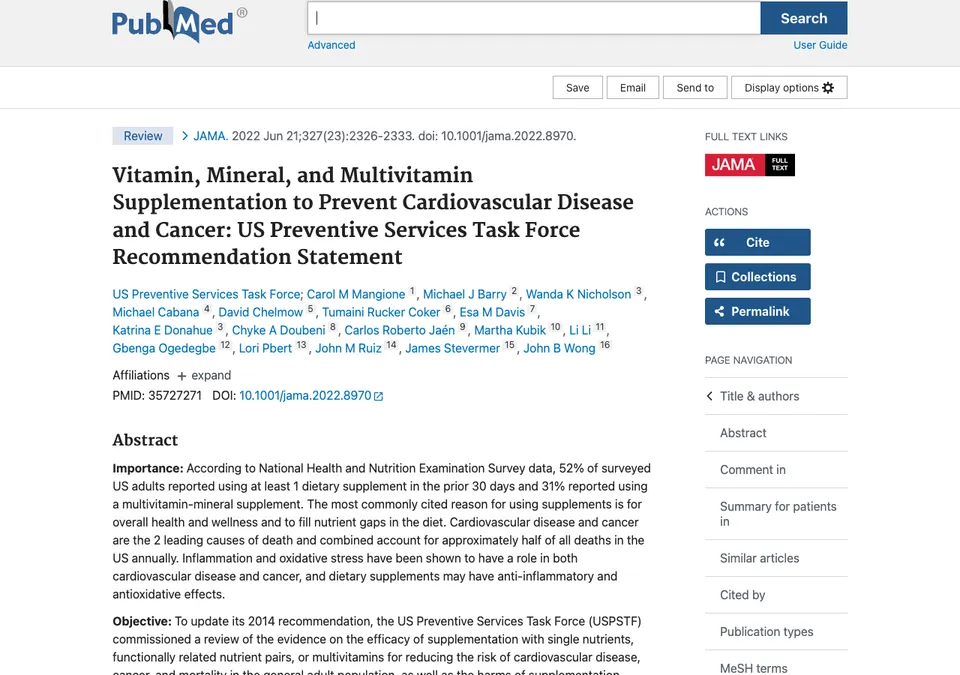
USPSTF 2022 recommends against beta carotene and vitamin E for prevention of cardiovascular disease or cancer (D recommendation).
The USPSTF concludes with moderate certainty that the harms of beta carotene supplementation outweigh the benefits for the prevention of cardiovascular disease or cancer. The USPSTF recommends against the use of beta carotene or vitamin E supplements for the prevention of cardiovascular disease or cancer (D recommendation).