Foods
Cut Out Refined Wheat
Refined white flour turns into a sticky gel inside the gut, and heavy intake is tied in the largest population studies to higher rates of death, heart disease, type 2 diabetes, fatty liver, and obesity.
Dr. Diaa's words
Refined white flour sticks to the stomach wall, blocks its motion, and causes reflux and indigestion — whereas whole-grain flour digests easily and leaves no gummy residue behind.
Dr. Diaa Al-Awady treats white bread not as ordinary food but as one of the central drivers of modern chronic disease. When wheat is milled and sifted, the bran and germ are stripped away along with the fiber and minerals; what remains, once it meets water and stomach acid, behaves like a sticky gel that clings to the gut wall and smothers the absorptive villi of the small intestine. It is a simple mechanical claim he has repeated for years on his channel — and the twenty-first-century evidence on millions of people lines up behind it surprisingly well.
A 137,000-person prospective cohort from 21 countries, published in BMJ in 2021 (the PURE study), found that people eating 350 g or more of refined grains per day — roughly seven slices of white bread — had a 27% higher risk of death and a 33% higher risk of major cardiovascular events than those eating less than 50 g. A separate BMJ meta-analysis of 45 studies and nearly 700,000 participants showed that swapping refined grains for whole grains cut all-cause mortality by 17% and coronary heart disease by 19%, while refined grains themselves offered no protective benefit at all.
The diabetes picture is identical. Pooled data from three large U.S. cohorts (the Nurses' Health Studies and the Health Professionals Follow-Up Study) covering more than 200,000 people showed that a diet high in glycemic index or load combined with low cereal fiber raised type 2 diabetes risk by about 50%. The European EPIC-InterAct study, with 19 cohorts in its meta-analysis, found that every additional 10 g per day of cereal fiber dropped diabetes risk by 25% — the very fiber that ends up on the milling-room floor when wheat is refined. Framingham Heart Study imaging adds another twist: refined-grain eaters carry more visceral fat around the internal organs, the most dangerous depot of all.
These numbers help explain what Dr. Diaa sees clinically — reflux, spastic colon, anemia, fatty liver, hair loss — symptoms he traces to malabsorption caused by that pasty residue coating the intestinal lining. His standing prescription is almost a dare: stop white-flour bread for five to ten days and judge the result for yourself.
What the research shows
7 / 18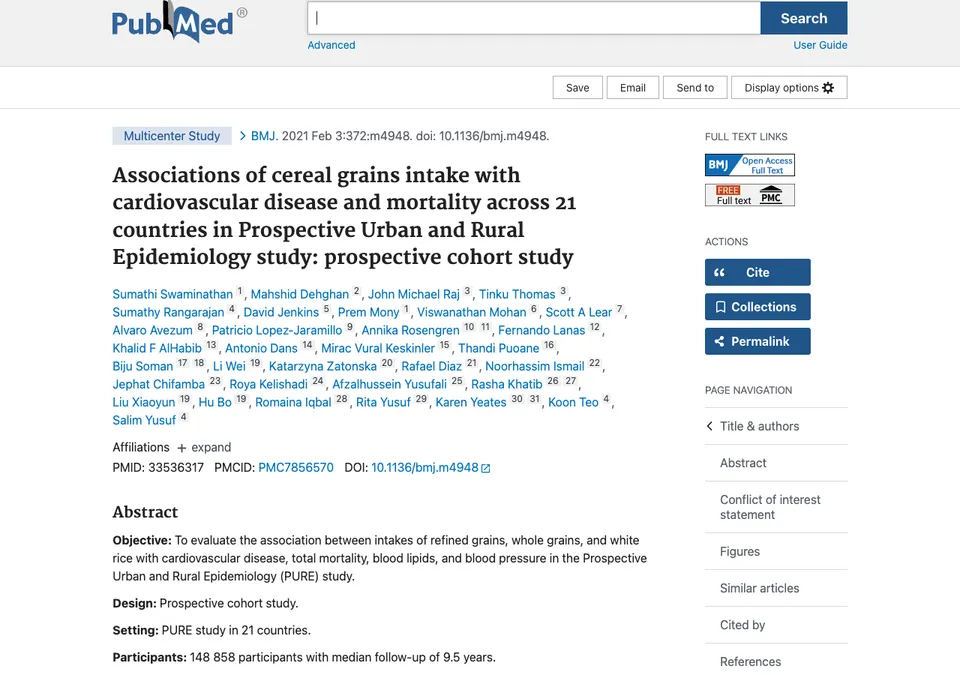
Massive meta-analysis of 137,000 people across 21 countries: eating 350 g/day or more of refined grains (such as white bread) raised all-cause mortality by 27% and major cardiovascular events by 33%.
In the PURE prospective cohort following 137,130 participants across 21 countries for a median 9.5 years, the highest intake of refined grains (350 g/day or about 7 servings/day) was associated with a 27% higher risk of total mortality (HR 1.27, 95% CI 1.11–1.46), a 33% higher risk of major cardiovascular events (HR 1.33, 1.16–1.52), and a 28% higher risk of the composite outcome compared with the lowest intake (<50 g/day).
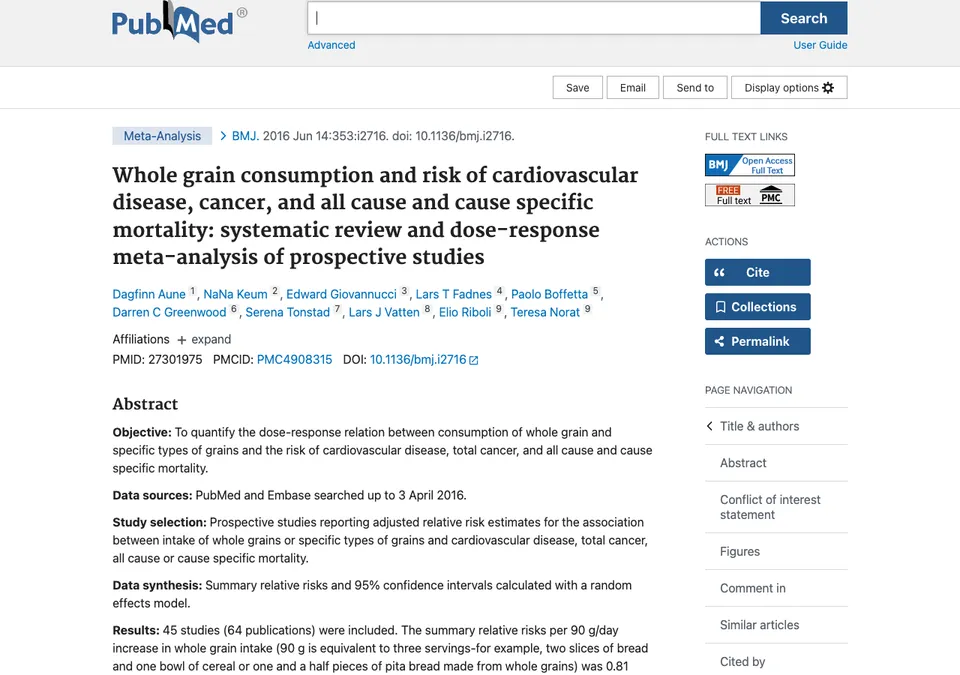
Systematic review and meta-analysis of 45 studies and nearly 700,000 people: swapping refined grains for whole grains lowered death from heart disease, cancer, and any cause, while refined grains showed no protective benefit.
A systematic review and dose-response meta-analysis of 45 prospective studies found that each 90 g/day increase in whole-grain intake (roughly three servings) was associated with a 19% lower risk of coronary heart disease, a 22% lower risk of cardiovascular disease, a 17% lower risk of all-cause mortality, and a 15% lower risk of cancer mortality. In contrast, the same analysis found little evidence of benefit from refined grains or white rice.
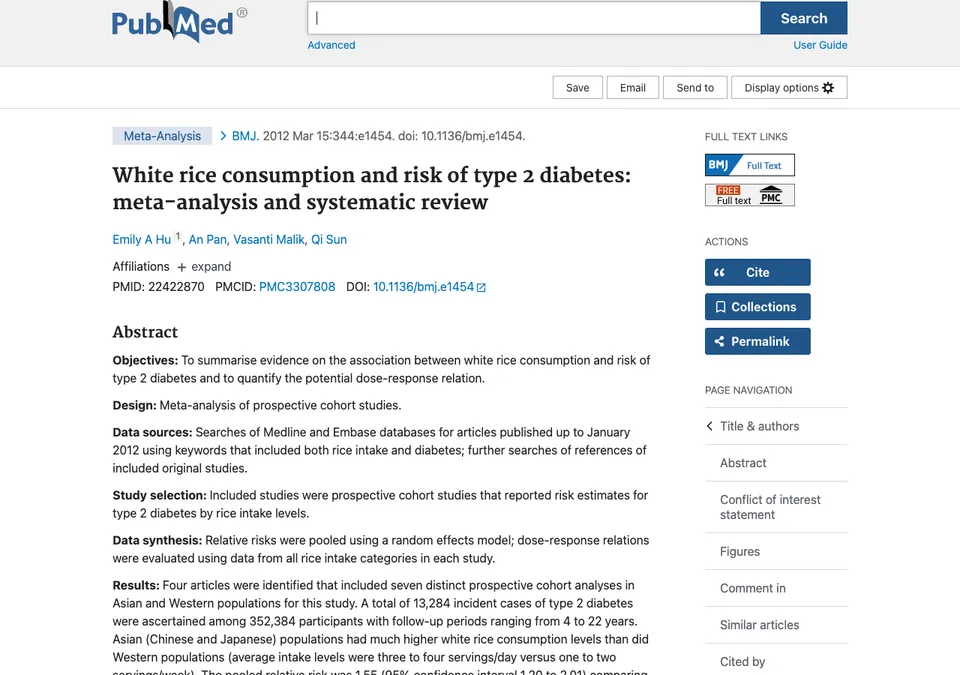
Meta-analysis of 352,000 people: each additional daily serving of white rice raised type 2 diabetes risk by 11%, climbing as high as 55% in Asian populations who depend on it.
A meta-analysis of seven prospective cohorts including 352,384 participants and 13,284 incident cases of type 2 diabetes found that, in Asian populations consuming 3–4 servings/day of white rice, the pooled relative risk was 1.55, versus 1.12 in Western populations. Across all populations, each additional daily serving of white rice raised type 2 diabetes risk by 11%.
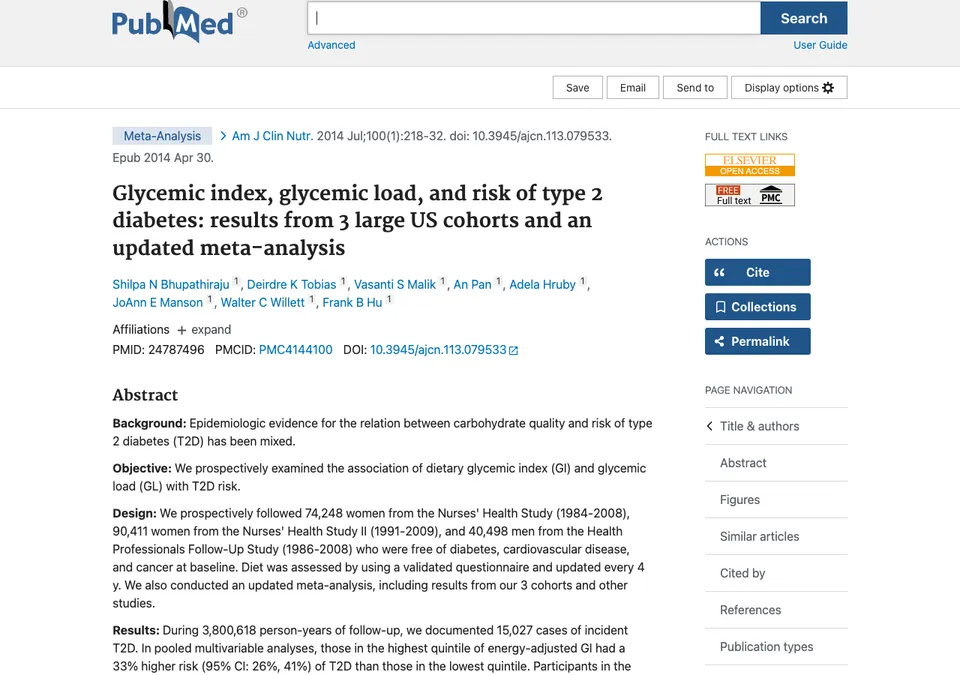
Analysis of three U.S. cohorts totaling 204,000 people: a diet high in glycemic index/load and low in cereal fiber raised type 2 diabetes risk by about 50%.
Pooling three large U.S. cohorts covering 205,157 participants and 15,027 incident cases of type 2 diabetes, those in the highest quintile of glycemic index had a 33% higher diabetes risk than the lowest. Participants combining a high-glycemic-index/load diet with low cereal fiber had an approximately 50% higher risk.
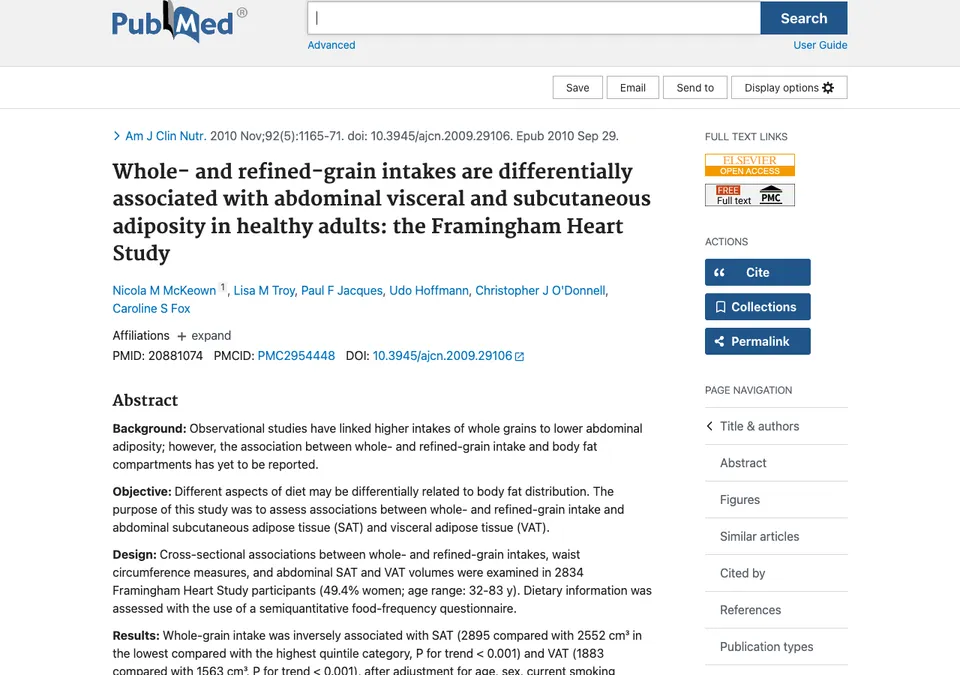
Framingham Heart Study: higher refined-grain intake was linked to more visceral fat around internal organs, the most dangerous depot, while whole grains were tied to less.
In a Framingham Heart Study sample of 2,834 adults imaged for abdominal fat, whole-grain intake was inversely associated with visceral adipose tissue (1,883 cm³ in lowest quintile vs 1,563 cm³ in highest, p<0.001), while refined-grain intake was positively associated (1,727 vs 1,928 cm³, p<0.001).
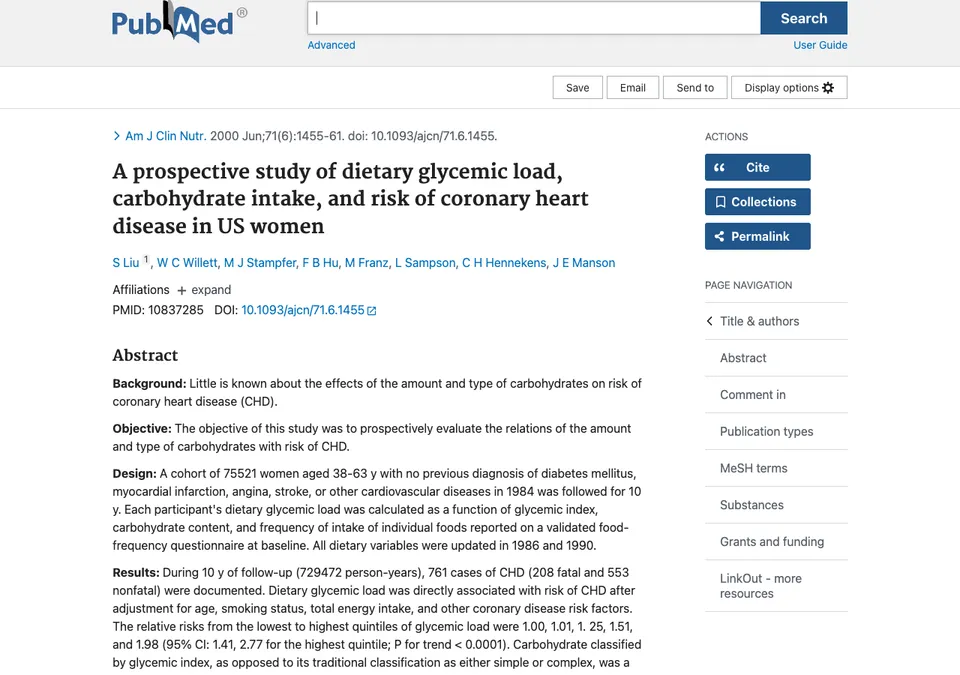
Prospective study of 75,000 nurses followed for 10 years: women in the highest quintile of rapidly absorbed carbs had nearly double the risk of coronary heart disease.
The Nurses' Health Study followed 75,521 women for ten years and documented 761 cases of coronary heart disease. Women in the highest quintile of dietary glycemic load — driven by rapidly absorbed carbohydrates such as white bread — had a relative risk of 1.98, nearly double the risk.
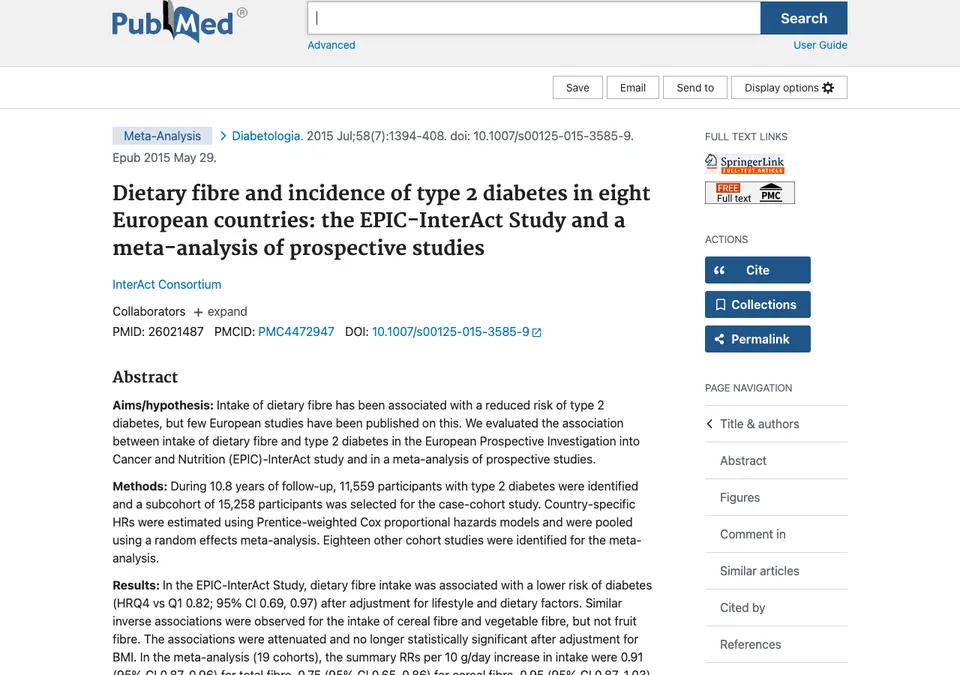
European EPIC-InterAct study (19 cohorts): each additional 10 g/day of cereal fiber dropped type 2 diabetes risk by 25% — the very fiber stripped out when wheat is milled.
The European EPIC-InterAct study across eight countries documented 11,559 cases of type 2 diabetes over 10.8 years of follow-up. In the meta-analysis of 19 cohorts, each additional 10 g/day of cereal fiber was associated with a 25% lower diabetes risk, whereas fruit and vegetable fiber showed no comparable significant effect.