Medical procedures
The Hidden Costs of Removing Organs We Once Called Expendable
Tonsils, appendix, gallbladder, uterus, ovaries, and spleen are not vestigial spare parts; each contributes immune, metabolic, or hormonal work the body never fully replaces after surgery. Long-term registry data link these removals to higher rates of respiratory disease, autoimmunity, cardiovascular events, gastrointestinal cancers, and dementia, while screening-driven thyroid surgery has produced a genuine epidemic of overdiagnosis.
Dr. Diaa's words
He criticised the removal of adenoids, tonsils, and the gallbladder, regarding them as organs that should not be excised, and called for correcting the diet as the foundation of treatment.
When a surgeon offers organ removal as a clean and final answer, the patient rarely hears about the work that organ was quietly doing. Tonsils and appendix are active lymphoid tissue, the gallbladder is an endocrine-metabolic station, the uterus and ovaries sit inside a hormonal network that protects heart, brain, and bone, and the spleen is an immune filter with no full functional substitute.
Byars and colleagues followed 1.19 million Danish children up to age 30 (JAMA Otolaryngology 2018) and found a 2- to 3-fold increase in upper respiratory disease after adenoidectomy or tonsillectomy. Ji et al. (179,875 Swedish patients) added a 34% rise in autoimmune disease after tonsillectomy. Andersson's NEJM 2001 cohort of 212,963 patients showed that appendectomy for true inflammation before age 20 correlated with a lower risk of ulcerative colitis — a measurable immune footprint for an organ once called vestigial. Lagergren (Gastroenterology 2001) tracked 278,460 cholecystectomy patients for up to 33 years and documented a persistent excess of proximal small-bowel adenocarcinoma.
For uterus and ovaries the signal is even harder to ignore. Parker's analysis of 30,117 Nurses' Health Study participants linked bilateral oophorectomy at benign hysterectomy with higher all-cause mortality, coronary disease, and lung cancer. Rocca (Neurology 2007) tied premenopausal oophorectomy to a 1.46-fold rise in dementia. Kristinsson's 27-year veterans cohort found splenectomy raised pneumonia, sepsis, venous thrombosis, and cancer risk well beyond the first decade after surgery.
Layered on top of all of this is a uniquely modern problem: Davies and Welch (JAMA Otolaryngology 2014) showed thyroid cancer diagnoses tripled from 1975 to 2009 while mortality held flat near 0.5 — an epidemic of diagnosis, not of disease. The honest position is balanced: when an operation is genuinely indicated, do it without hesitation. When it is offered as a quick or precautionary fix, the patient deserves to know the long-term price before signing the consent form.
What the research shows
8 / 20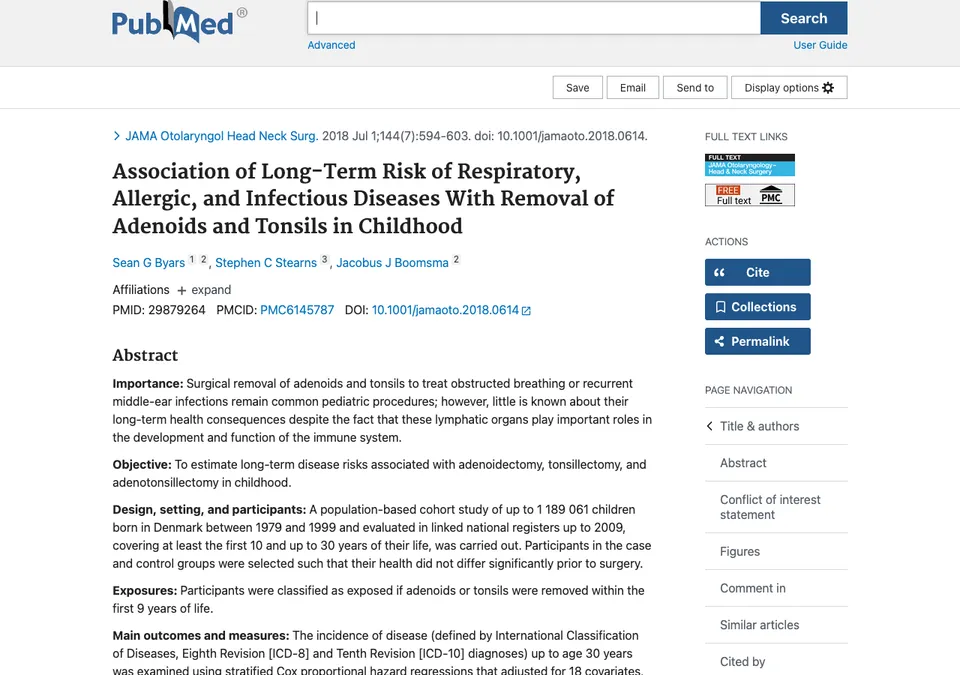
Byars 2018 — In 1.19M Danish children, adenoidectomy and tonsillectomy doubled to tripled the risk of upper respiratory disease.
In a study of almost 1.2 million children, adenoidectomy and tonsillectomy were associated with a 2- to 3-fold increase in diseases of the upper respiratory tract (RR 1.99 and RR 2.72).
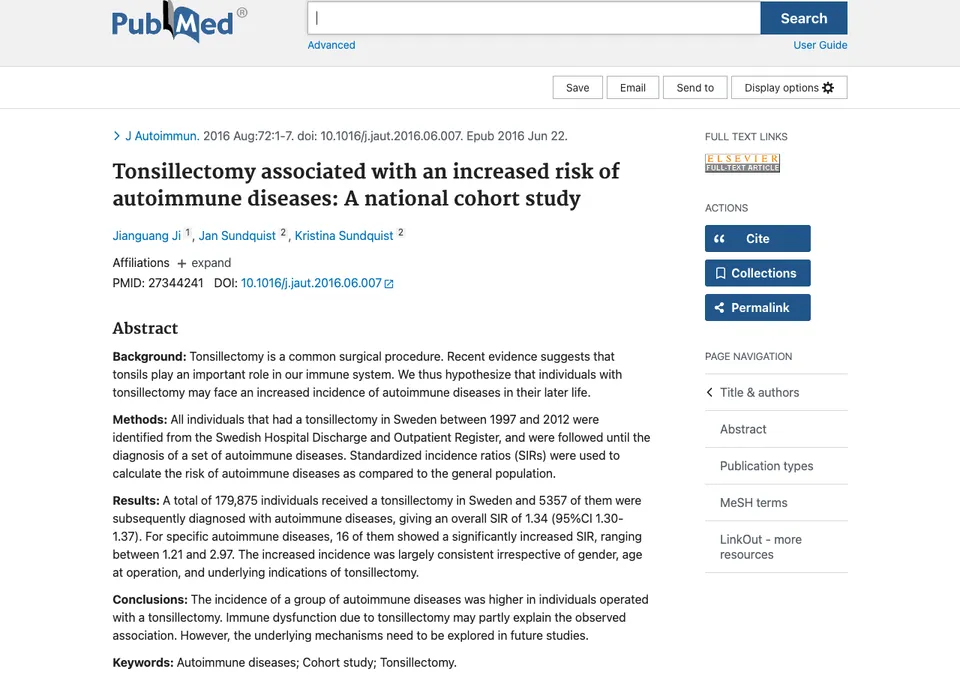
Ji 2016 — Swedish cohort of 179,875 tonsillectomy patients showed a 34% increase in autoimmune disease.
Of 179,875 individuals tonsillectomised in Sweden, 5,357 were later diagnosed with autoimmune disease, giving an overall standardised incidence ratio of 1.34.
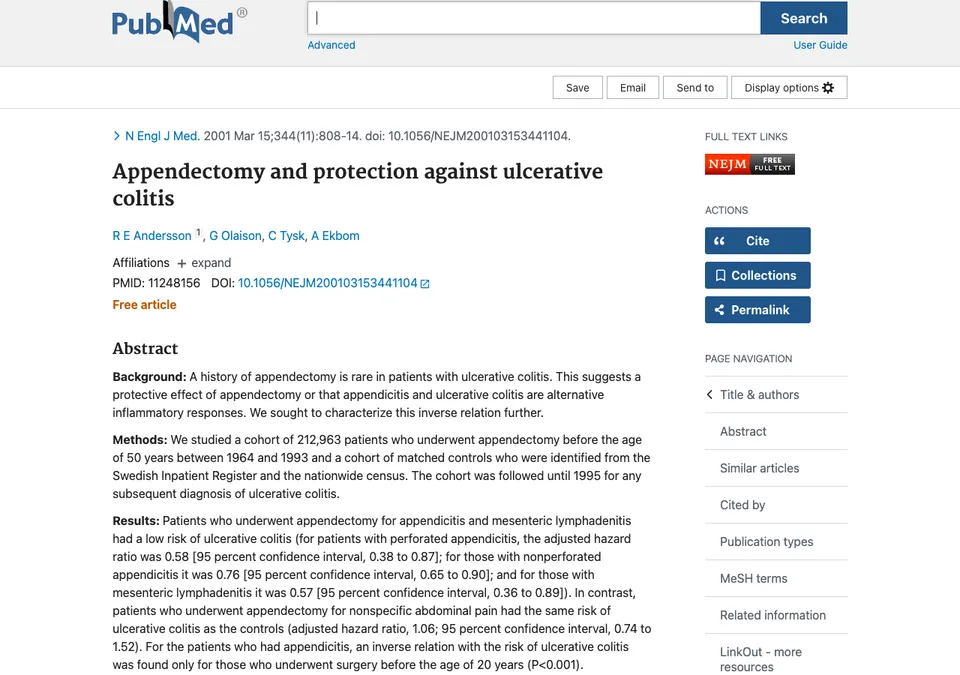
Andersson 2001 — Appendectomy for true inflammation before age 20 was inversely associated with later ulcerative colitis, proving an immune function for the appendix.
Among 212,963 Swedish patients, appendectomy for true appendicitis carried a reduced risk of subsequent ulcerative colitis (HR 0.76), but only when surgery occurred before age 20 — a measurable immune role for the appendix.
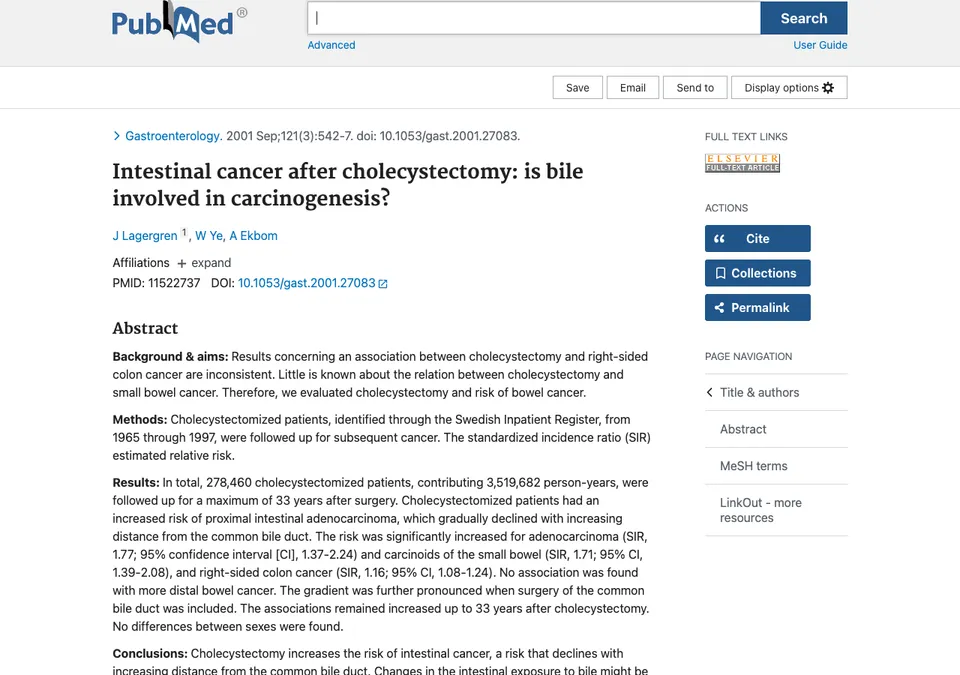
Lagergren 2001 — 278,460 cholecystectomy patients followed up to 33 years showed elevated small-bowel adenocarcinoma (SIR 1.77).
Following 278,460 cholecystectomy patients for up to 33 years, the risk of small-bowel adenocarcinoma rose (SIR 1.77) and right-sided colon cancer (SIR 1.16), with a gradient declining with distance from the common bile duct.
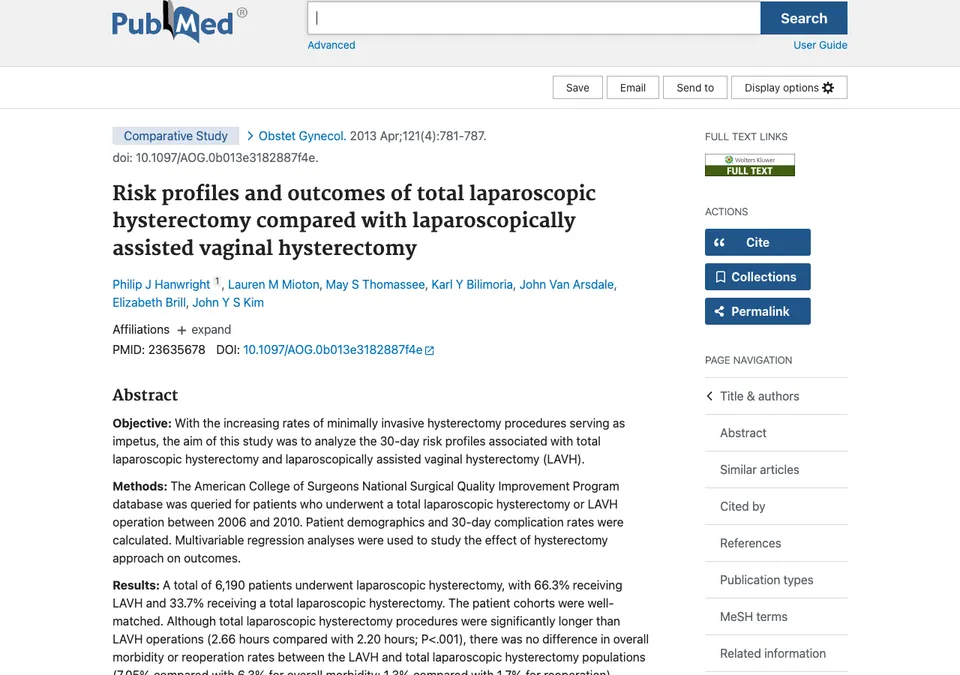
Parker 2013 — Nurses' Health Study: bilateral oophorectomy raised all-cause mortality, CHD, and lung cancer — roughly one extra death per 9 operations.
Among 30,117 nurses, bilateral oophorectomy at hysterectomy for benign disease was associated with increased all-cause mortality, coronary heart disease, and lung cancer — roughly one additional death per nine operations over 35 years.
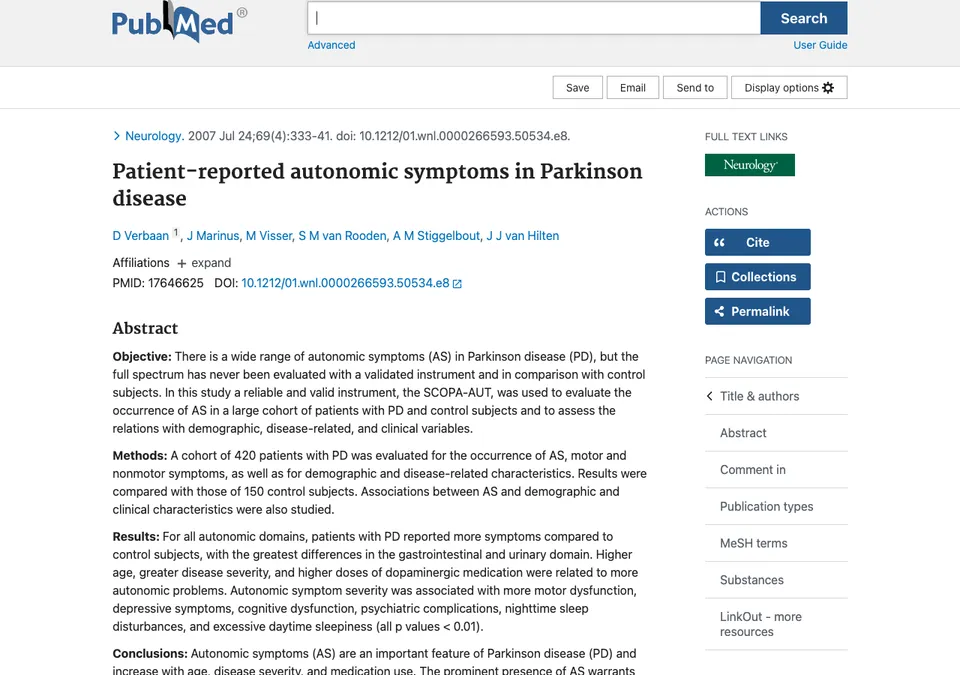
Rocca 2007 — Premenopausal oophorectomy raised cognitive impairment or dementia 1.46-fold, with risk rising the younger the age at surgery.
Women who underwent oophorectomy before menopause faced an increased risk of cognitive impairment or dementia (HR 1.46), with the risk climbing the younger the age at surgery.
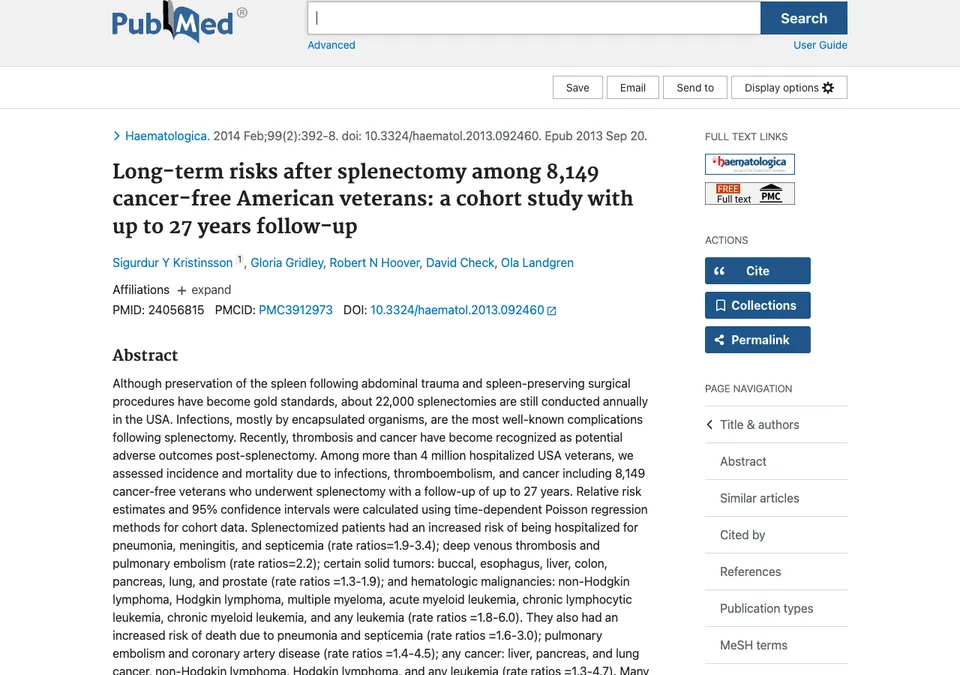
Kristinsson 2014 — 8,149 cancer-free US veterans: splenectomy raised pneumonia, sepsis, VTE, and cancer risks persisting beyond 10 years.
Among 8,149 cancer-free US veterans followed up to 27 years, splenectomy raised the risk of pneumonia, meningitis, and septicaemia (RR 1.9-3.4), venous thromboembolism (RR 2.2), and several solid and haematologic cancers — many risks persisting more than ten years after surgery.
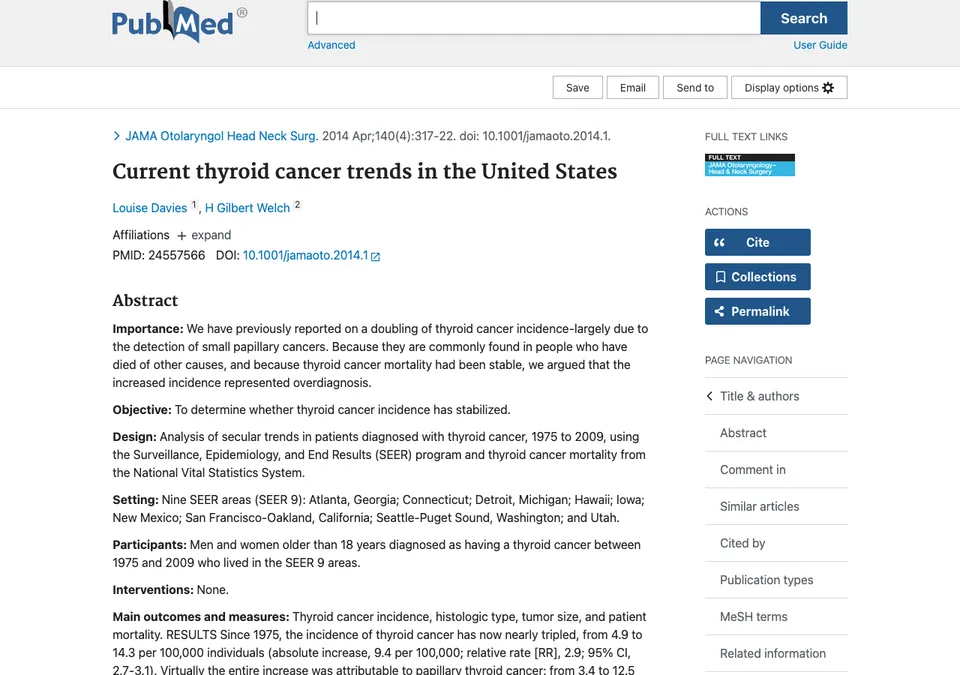
Davies & Welch 2014 — US thyroid cancer incidence tripled while mortality stayed flat — an epidemic of diagnosis driving avoidable thyroidectomies.
Thyroid cancer incidence nearly tripled since 1975, from 4.9 to 14.3 per 100,000, while mortality stayed flat at about 0.5 per 100,000 — an epidemic of diagnosis rather than disease.